Singer Island, end to end
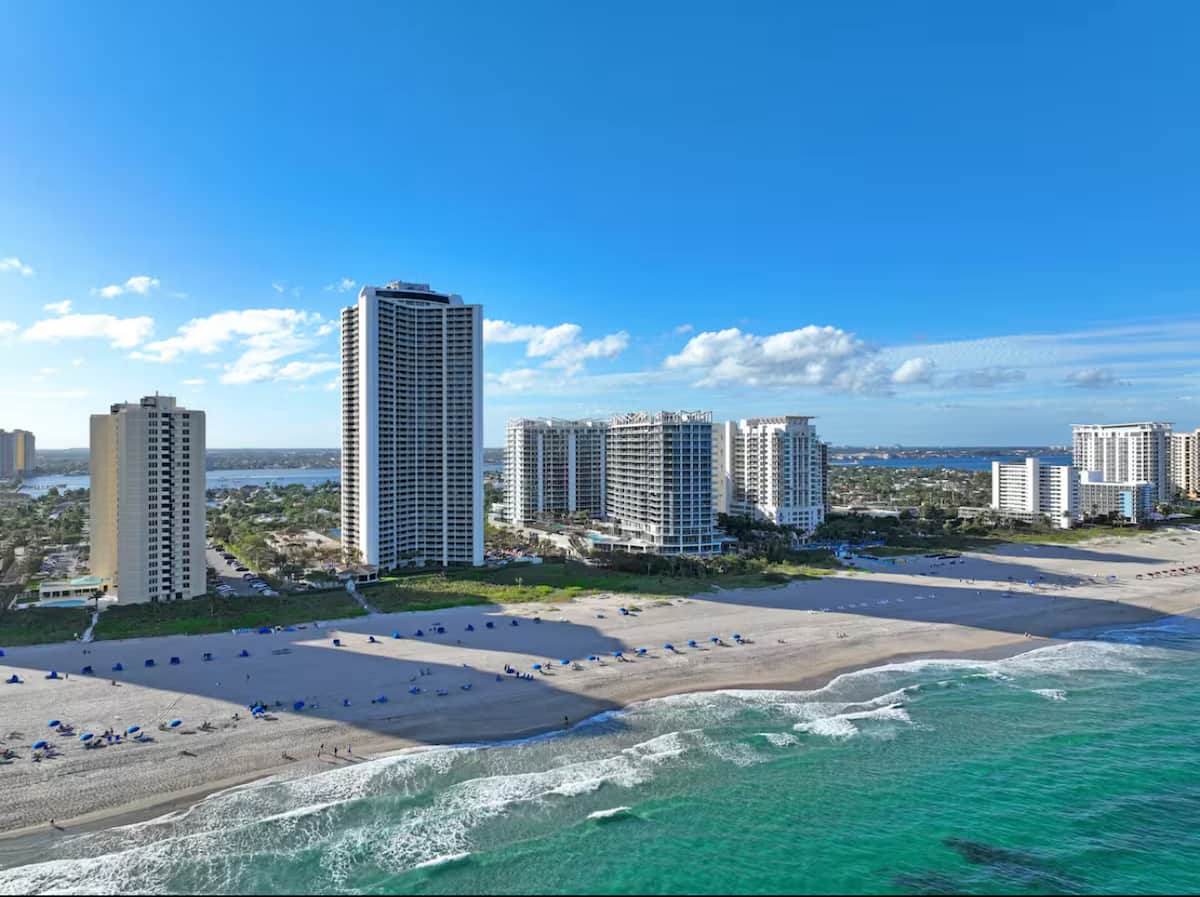
Three miles of barrier island between the Atlantic and the Intracoastal — quieter than Palm Beach, wilder at its edges, and close to everything. Here is the whole of it: the history, the shoreline, the water in the middle, and how to make it your base in the Palm Beaches.
There is a moment on the drive over the Blue Heron Bridge when the mainland falls away and the world turns to water on both sides. To the south, the Lake Worth Inlet cuts a clean channel to the sea, cruise ships and sailfish boats sliding through it. To the north, the Intracoastal widens into a pale, shallow lagoon. And straight ahead, low against the horizon, is the island — a three-mile ribbon of sand with the Atlantic on one shoulder and the lagoon on the other. That is Singer Island, and once you have crossed to it, the pace of everything changes.
Most first-time visitors arrive expecting Palm Beach and find something gentler. Singer Island is not a scene. It is a residential barrier island in the city of Riviera Beach, in the northern half of Palm Beach County, and for the most part it keeps to itself: condominium towers and low-rise resorts along the ocean, a state park at the top, a small beach town at the bottom, and a long public shoreline in between. The glamour is next door, twenty minutes away, whenever you want it. The island itself is for slower things.
This guide is the overview — the lay of the land before you go deeper into any one corner of it. Read it first, and the rest of the island guides will click into place.
IA barrier island, drawn in two colors
Singer Island is a classic Florida barrier island: a narrow strip of sand thrown up parallel to the coast, separated from the mainland by a lagoon. Understanding that shape is the key to understanding the place, because everything here is organized around two very different bodies of water.
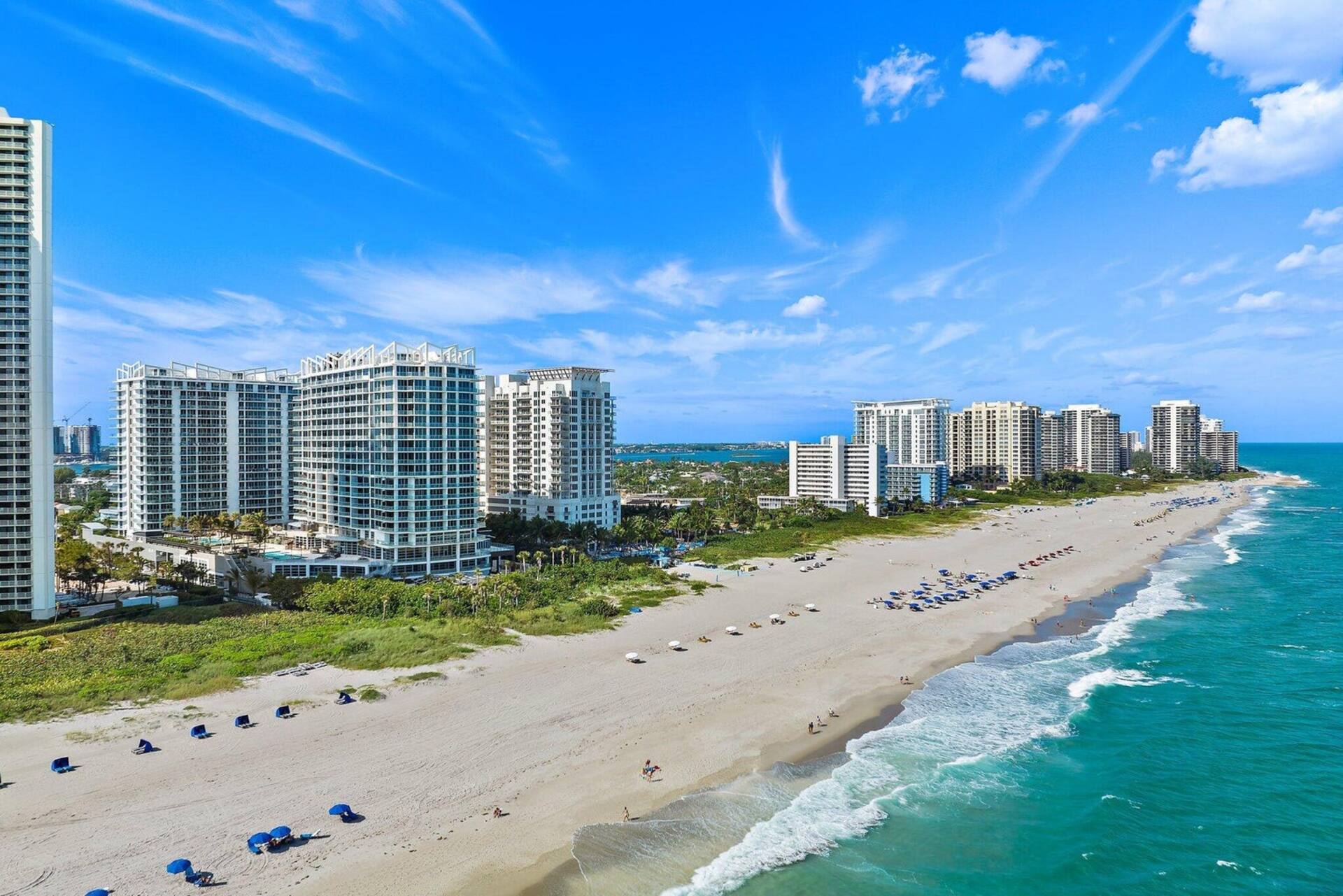
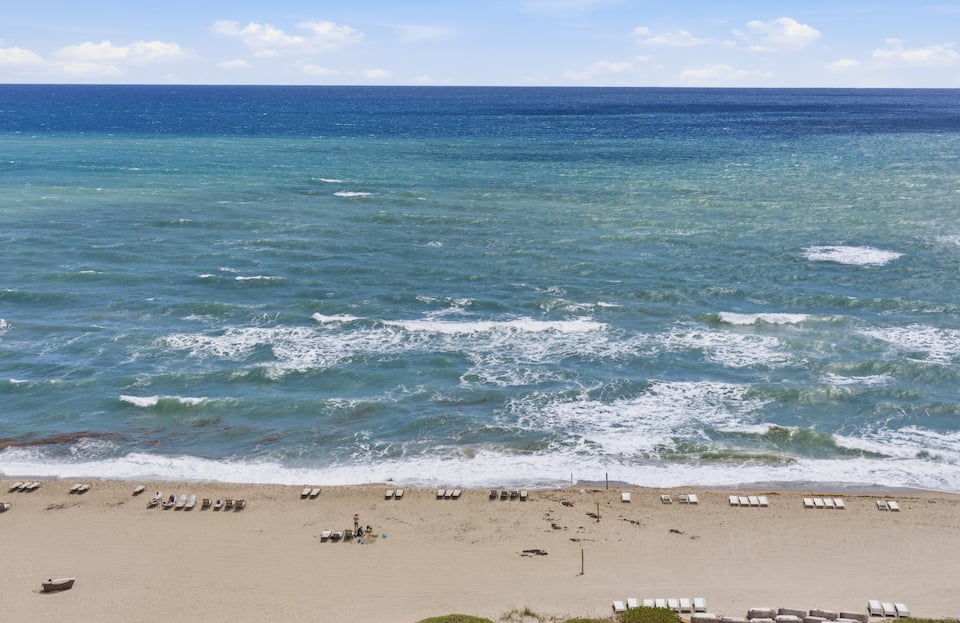
On the east side is the Atlantic Ocean — open, deep-blue, and honest. This is the surf side, the sunrise side, the side with the wide public beaches and the reef close enough to swim to. The sand runs almost the entire length of the island, and because so much of the oceanfront is either park or resort, long stretches of it stay uncrowded even in high season.
On the west side is the Lake Worth Lagoon — the local name for this reach of the Intracoastal Waterway. It is shallow, warm, and sheltered, threaded with seagrass and mangrove islands and busy with small boats. This is the sunset side, the paddleboard-and-kayak side, the side where manatees drift in on winter mornings and where the fishing boats tuck in for the night. Where the ocean is grand, the lagoon is intimate.
Between the two, the island is rarely more than a few hundred yards wide. You can stand on the beach at sunrise, walk across in ten minutes, and watch the sun go down over the lagoon from a dock on the other side. That narrowness is the whole appeal. There is water in every direction, and you are never far from either kind.
Get your bearings
North is the wild end — John D. MacArthur Beach State Park, sea-grape hammock, and quiet sand. South is the social end — Palm Beach Shores, the Sailfish Marina, and the inlet. East is the Atlantic. West is the Intracoastal and the sunset. Keep that compass in your head and the island reads like a map.
IISinger's Folly: how the island got its name
The island is named for Paris Singer, an heir to the Singer sewing-machine fortune and one of the more colorful figures of the 1920s Florida land boom. Singer was a patron of the arts, a friend of architects, and — for a few heady years — a developer with grand plans. He looked at this undeveloped barrier island north of Palm Beach and imagined a resort to rival anything on the coast.
The centerpiece was to be the Blue Heron Hotel, a vast oceanfront palace rising over the sand. Construction began in the mid-1920s. And then, in quick succession, the whole dream came apart: the great Florida land bubble burst, and the catastrophic 1928 hurricane tore through the region. The money evaporated, the guests never came, and the half-finished hotel was left standing empty on the dunes — a concrete skeleton the locals took to calling "Singer's Folly." It loomed there unfinished for years before it was finally demolished.
The name stuck to the island even though the hotel never opened. There is something fitting in that. Singer Island still carries a faint sense of a place that resisted being turned into a spectacle — that stayed a little raw, a little residential, a little to itself. The grand resort era arrived here eventually, but slowly, and in a quieter key than the one Paris Singer had in mind.
That history is written into the map today. The Blue Heron Bridge, the main crossing onto the island, carries the lost hotel's name. So does Blue Heron Boulevard, the road that runs the width of the island. You will drive both without thinking about it — and now you will know why.
For decades after the boom collapsed, the island grew the way much of coastal Florida did: a scatter of fishing camps, cottages, and low motels, with the working boats of Palm Beach Shores tied up along the lagoon. The oceanfront towers that define the skyline today arrived mostly from the 1960s onward, as the barrier island filled in with the condominiums that now house its year-round and seasonal residents. Even so, Singer Island never tipped into the wall-to-wall commercialism of some Florida beach towns — the state park at the north end and the residential zoning through the middle kept large stretches of it low-key.
The most recent chapter is the one you can see from the beach: a turn toward wellness and residences rather than pure resort tourism. The island's newest oceanfront address leans into spa, longevity, and quiet luxury — a fitting evolution for a place that was never quite built to be a spectacle. A century after Paris Singer's palace failed on these dunes, the island finally got its grand hotel era. It simply took the scenic route.
The grand resort era arrived on Singer Island eventually, but slowly, and in a quieter key than the one Paris Singer had in mind.
IIIThe shore, north to south
The best way to hold the island in your mind is to travel its ocean side from top to bottom. It changes character as you go.
The wild north — MacArthur Beach State Park
At the northern tip is John D. MacArthur Beach State Park, and it is the reason many people fall for Singer Island. This is a protected stretch of subtropical coast — nearly two miles of undeveloped beach, a rare coastal hammock of sea grape and cabbage palm, and a long boardwalk over the estuary that connects the parking to the sand. Loggerhead and green sea turtles nest here through the summer; the rangers run night walks in season. It is the kind of Florida shoreline that has mostly disappeared elsewhere, and it is a five-minute drive from the condos. The full story is in our guide to MacArthur Beach State Park.
The reef at Ocean Reef Park
A little south, Ocean Reef Park holds one of the island's small secrets: a rock reef close enough to shore that you can snorkel it straight off the beach on a calm day. It is not the Keys, but it is genuine reef — parrotfish, sergeant majors, the occasional ray — and it is free. There is a picnic area under the pines and lifeguards in season. We cover it, along with every other place to get in the water, in the beaches guide.
The middle — the resort shoreline
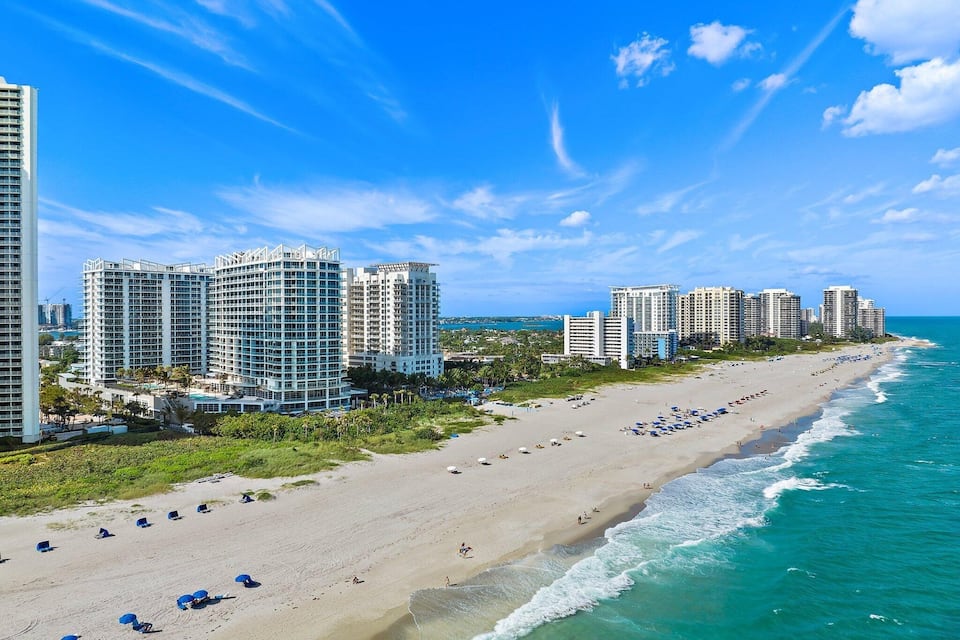
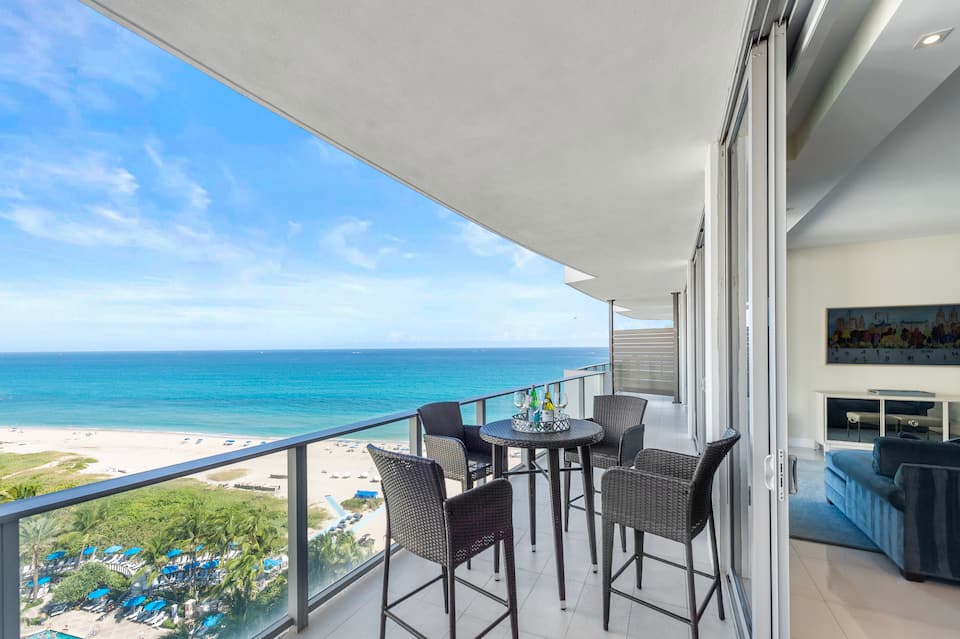
Through the center of the island runs the resort and condominium stretch, and this is where the modern Singer Island lives: oceanfront towers, a public municipal beach with a boardwalk, and the wellness-and-hospitality address where OASENA sits, twelve floors up. The beach here is wide and groomed, the water calm behind the sandbars, and the sunrises — because the whole island faces east into open ocean — are the reason to set an alarm at least once.
The social south — Palm Beach Shores
At the bottom of the island is the small town of Palm Beach Shores, a walkable grid of low houses, a public beach, and the Sailfish Marina on the lagoon side. This is the island's front porch: charter boats, a marina restaurant, the fish-feeding docks where tarpon roll under the lights, and the water taxi to Peanut Island. Beyond it, the land ends at the Lake Worth Inlet, where the ocean pours in and out twice a day and everything that floats — cruise ships, sailboats, sportfishers — makes its passage.
IVThe water in the middle
If the ocean is the island's public face, the lagoon is its private life — and it is arguably the more interesting of the two.
The Lake Worth Lagoon is a shallow estuary, brackish where fresh water meets the sea, and it functions as a nursery for an astonishing amount of marine life. Seagrass meadows shelter juvenile fish; oyster beds and restored mangrove islands filter the water; and in the cool months, manatees gather here in numbers. The best place to meet them is Manatee Lagoon on the mainland shore, where warm water draws them in through the winter and a free education center tells their story.
The lagoon is also the island's highway. Because it is protected from the ocean swell, it stays boatable when the Atlantic is rough, and a whole life plays out on it: paddleboarders at dawn, center-console skiffs running to the inlet, sailboats swinging on their moorings, and pontoons headed for the sandbar that appears off Peanut Island at low tide — the closest thing the county has to a floating town square on a Sunday. Our guides to boating and the marinas and to watersports cover how to get out on it, whether you bring a captain or paddle it yourself.
All of that water funnels through one gap: the Lake Worth Inlet at the island's southern tip. It is a working channel as much as a scenic one — cargo ships and the occasional cruise vessel move through it to the Port of Palm Beach on the mainland side, threading past the sportfishing fleet heading out to blue water. Stand on the jetty at Palm Beach Shores and you can watch the whole parade, close enough to read the names on the hulls.
Two landmarks sit in this middle water, and both are worth a day of your trip.
The first is Peanut Island, the 79-acre man-made island in the mouth of the inlet, built from sand dredged to keep the channel open. It has a snorkeling lagoon with a protected reef, a shaded loop trail, campsites, and — improbably — a decommissioned Cold War fallout bunker built for President Kennedy when he wintered in Palm Beach. You reach it by a short water-taxi hop. The whole strange, wonderful story is in our Peanut Island guide.
The second is the Blue Heron Bridge itself, and specifically the water beneath it at Phil Foster Park. At high tide, when the inlet pushes clear ocean water up under the span, the shallows here become one of the finest shore dives in the world — a designated snorkel trail, seahorses and octopus and flying gurnards among the pilings, all in water shallow enough to stand up in. Divers fly in from other countries for it. It is ten minutes from your door. See the Blue Heron Bridge guide.
VA day on Singer Island
The island rewards an unhurried rhythm. Here is one version of a good day, start to finish — not a checklist, just a sense of how the hours move.
Early. Because the whole island faces east, sunrise over the Atlantic is the local ritual. Walk down to the sand with a coffee before the beach fills. The light comes up fast and pink over flat morning water, and for half an hour the beach is yours.
Morning. Get in the water while it is calm. Snorkel the reef at Ocean Reef Park, or drive ten minutes to Phil Foster Park and time the high tide under the bridge. If the wind is up on the ocean side, cross to the lagoon — the water there stays glassy when the surf is rough.
Midday. The Florida sun is serious between eleven and three, especially in summer. This is the hour for shade and air-conditioning: a long lunch, the pool, a spa treatment, or a drive to the galleries and shops of Worth Avenue, twenty minutes south. Locals treat midday the way Spaniards treat the siesta — you go out again when it cools.
Afternoon. Back to the water as the heat breaks. Paddle the lagoon, take a drift-fishing boat out of the marina, or simply move to the beach for the second, softer half of the beach day.
Evening. The island's great trick is that it faces the ocean for sunrise and the lagoon for sunset. End the day on the west side — a dock, a marina table, a balcony — and watch the sky go gold over the Intracoastal while the tarpon roll under the lights. Dinner is either steps away on the water or a short drive to West Palm Beach when you want a night out.
VIReading the seasons
South Florida has two seasons, not four, and knowing which one you are in changes everything about a visit.
The dry season (roughly November to April) is the high season, and it earns the title. Days are warm and bright, humidity drops, rain is rare, and the ocean settles. Mornings can be cool in January. This is when the snowbirds arrive, the social calendar fills, and the whole coast is at its best — and busiest. Book ahead.
The wet season (roughly May to October) is hotter, greener, and far quieter. Mornings are often clear; afternoons bring tall thunderstorms that roll through in an hour and clear the air. The water is bath-warm, which is why sea-turtle nesting season runs right through these months — one of the great, free spectacles of the coast (more in our sea turtles guide). This is also the official Atlantic hurricane season; serious storms are uncommon on any given week, but it is worth watching a forecast and buying travel insurance.
If you can choose, the shoulder weeks reward you twice over. Late April and May give you warm water, thinning crowds, and the first turtle nests without the deep summer heat. October and early November bring the storms' end, empty beaches, and rates that soften before the winter rush returns. The island in these in-between weeks — warm, quiet, a little sleepy — is arguably at its best, and it is the version of Singer Island the regulars keep to themselves.
Good to know
Whatever the season, pack for the sun: reef-safe sunscreen (regular sunscreen harms the coral you came to see), a hat, and something long-sleeved for midday. Afternoons in summer can flip from blue sky to downpour in twenty minutes — carry a light layer and don't cancel your plans over it. The rain rarely lasts.
VIIWhere the island sits
Part of Singer Island's quiet magic is how close the rest of the Palm Beaches are while feeling a world away. From the middle of the island:
- Palm Beach International Airport (PBI) is about fifteen minutes away — one of the easiest major-airport arrivals in Florida.
- Palm Beach and Worth Avenue — the mansions, the shopping, the Breakers — are about twenty minutes south.
- Downtown West Palm Beach, with its restaurants, museums, and waterfront, is fifteen to twenty minutes across the bridge.
- Jupiter and its lighthouse are a twenty-five-minute drive north up the coast.
- Fort Lauderdale is under an hour south; Miami about ninety minutes, close enough for a day and far enough to leave behind.
You will want a car. The island itself is small and walkable in parts, and the water taxi handles the inlet crossing, but the region spreads out and public transit is limited. The upside is that everything — airport, beach, city, wilderness — is inside a half-hour arc. Our getting here and getting around guide covers the practicalities in full.
VIIIA base for the Palm Beaches
Here is the case for Singer Island in a sentence: it gives you a genuine barrier-island beach life — reef, turtles, manatees, sunrise over open ocean — with Palm Beach's restaurants, culture, and airport all inside twenty minutes. Few places on the Florida coast strike that balance. The famous islands are either overrun or so remote you spend the trip driving. This one is neither.
That is why it works so well as a home base for exploring the whole region. Stay here, and your days can swing from wild to polished and back without much effort: a morning under the Blue Heron Bridge, an afternoon on Worth Avenue, dinner on the water, and a turtle walk after dark. The island absorbs all of it and still feels calm.
It suits an unusually wide range of travelers for that reason. Families come for the gentle, lifeguarded beaches and the reef a child can snorkel; couples come for the sunrise-and-sunset symmetry and the short hop to Palm Beach dining; wellness travelers come for the spa culture that now anchors the island; and a growing number of remote workers come simply because it is a beautiful, well-connected place to answer email between swims. What unites them is the same thing that has defined the island since Paris Singer's palace went dark: a preference for the quiet version of paradise over the loud one.
The guides that follow break the region down piece by piece — the beaches, the water, the wildlife, the table, and the wider Palm Beaches beyond the bridge. Start wherever your curiosity points. And when the day is done, the island will be right where you left it, three miles of sand between two kinds of water, waiting for the tide to turn.
Stay at OASENA
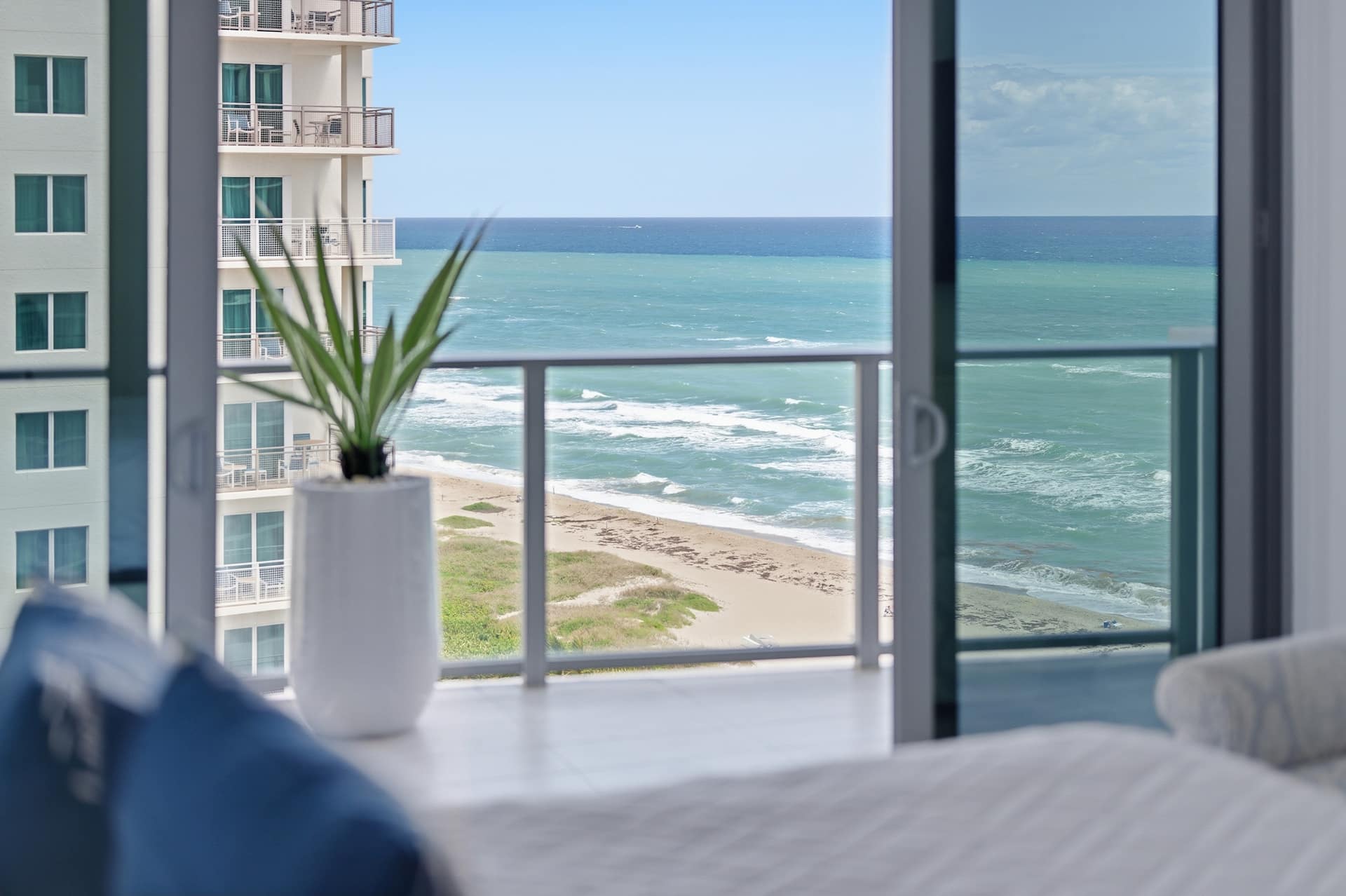
OASENA is a private two-bedroom home on the twelfth floor of the Happiness Tower — floor-to-ceiling ocean views, a sweeping balcony, and every guide on this page within a short drive or a shorter walk.
OASENA is a privately owned residence within Amrit Ocean Resort & Residences and is not operated by, affiliated with, or endorsed by the resort. See credits & notes. Details in this guide are provided for general orientation and can change; confirm hours and conditions locally before you set out.