Shopping: Worth Avenue, Rosemary Square and Beyond
Singer Island keeps you barefoot; the real shopping sits about twenty minutes south, across the bridge. Here is how to spend an afternoon among the fashion houses of Worth Avenue, the quiet courtyard vias, and the open-air blocks of downtown West Palm Beach.
01The island is casual; the shopping is across the bridge
Singer Island does not really do shopping, and that is part of its charm. Life on this barrier island runs on flip-flops and swim trunks, on a cooler packed for the beach and a linen shirt thrown on for dinner at the marina. You could spend a whole week here without setting foot in a store more demanding than the Publix down the road, and plenty of guests do exactly that. But when the mood turns toward something finer — a dress for a dinner out, a gift to carry home, a slow afternoon of browsing under the palms — the real shopping sits about twenty minutes south, across the bridge, in Palm Beach and West Palm Beach.
That short drive is the whole geography you need. The island where the residence stands is residential and quiet by design. Cross the Intracoastal Waterway and head south, and within a few miles you reach two very different worlds sitting side by side. Palm Beach, the slender island of old money and older gardens, holds Worth Avenue, one of the most storied luxury shopping streets in the country. Directly across the water, mainland West Palm Beach is younger and looser, with the open-air blocks of Rosemary Square, the boutiques of Clematis Street, and antique rows and galleries scattered north and south of downtown.
What this guide covers
The aim here is to help you match the shopping to your mood and your afternoon, without pretending the choices are harder than they are. In broad strokes, there are four places worth knowing:
- Worth Avenue, Palm Beach — the grand fashion houses along the street and, tucked behind them, the quiet courtyard alleys called the vias, where small shops, galleries and cafes hide from view.
- Rosemary Square, West Palm Beach — the walkable, open-air lifestyle center downtown, known for years as CityPlace before it was renamed.
- Clematis Street, West Palm Beach — the city’s original main street, home to independent boutiques and Pioneer Linens, a family linens shop trading here since 1912.
- The edges — antiques along South Dixie Highway, art galleries, and the seasonal markets and art walks that come alive in the winter months.
A word on seasons before you go, because it shapes everything down here. The Palm Beaches run on a winter rhythm. From roughly November through April the town is full, the shops are fully stocked, and the social calendar hums along. In the deep heat of summer some smaller boutiques keep shorter hours or close for a stretch, while the big names stay open but quieter. If you are visiting off-season, it is worth a quick call ahead before making a special trip; our guide to when to visit lays out the calendar in more detail.
None of this requires much of a plan. You can drive over with no particular destination, park once, and let the afternoon unfold on foot. Bring a hat and comfortable shoes, because the pleasure of shopping here is as much about the walking as the buying — the fountains, the courtyards, the shade of a live oak. And build in a meal, since every one of these districts is ringed with good tables; our companion guide to Palm Beach dining covers where to eat between stops. What follows is simply the local’s version of that day out.
02Worth Avenue and the great fashion houses
Worth Avenue is the reason people say Palm Beach in the same breath as Rodeo Drive or Madison Avenue. It runs a little under a quarter-mile across the island of Palm Beach, from the Atlantic at its east end to the Intracoastal at its west, and along that short, sun-warmed stretch you will find several hundred shops, galleries and restaurants. The street was largely shaped in the 1920s by the architect Addison Mizner, whose Mediterranean Revival style — stucco walls, red barrel-tile roofs, wrought iron, arched loggias — still sets the look of the whole avenue. It does not feel like a mall. It feels like a small, moneyed Spanish town that happens to sell handbags.
At the ocean end stands the landmark clock tower, a good place to start and an easy spot to agree to meet. From there you walk west, and the great names come one after another. Saks Fifth Avenue anchors the street as its department store. The European fashion houses line the blocks — Louis Vuitton and Gucci among the most familiar — alongside fine jewelers, watch houses, shoe salons and art dealers. Window displays here are done properly, and no one minds if you only look.
How to walk it
The avenue rewards a slow, unhurried pass rather than a march with a shopping list. A few things worth knowing before you set off:
- Start at the clock tower and drift west. The blocks nearest the ocean are the most concentrated; keep going and you will pass galleries and smaller shops as the street quiets toward the Intracoastal.
- Look up and look in. Much of Mizner’s charm is above eye level — the tilework, the balconies, the little towers — and behind the main storefronts are the vias, the courtyard passages covered in the next section.
- Dress is resort-smart. There is no dress code, but Palm Beach leans put-together even in the daytime. A collared shirt or a sundress never feels out of place; damp beach cover-ups do.
- Take your time with service. The shops here are staffed to help, not to rush you. It is perfectly normal to browse, ask questions and leave empty-handed.
What Worth Avenue is honestly good for is the top end — designer fashion, fine jewelry and watches, serious art, and the kind of gift that comes in a memorable box. It is also, quietly, one of the best window-shopping walks in Florida, and that costs nothing. If your taste or your afternoon runs more casual, you may do more actual buying across the bridge in West Palm Beach, and there is no shame in treating the avenue as a beautiful stroll with an ice cream at the end.
The street is at its liveliest in the winter season, when the town is full and the shops are showing their new collections. In summer it is calmer and quieter, the sidewalks shaded and slow under the awnings. Either way, give yourself a couple of hours, wear something you can walk in, and let the architecture do half the entertaining. When you are ready to sit down, the avenue and the streets around it hold some of the best lunch tables in town — again, the Palm Beach dining guide has the details.
03The vias: courtyards behind the storefronts
The best-kept secret of Worth Avenue is not on Worth Avenue at all. It is behind it. Threaded between and behind the main storefronts is a network of narrow courtyard alleys known as the vias — the Italian word for streets — and stepping into one is like finding a door in a wall that opens onto somewhere older and calmer. Fountains trickle, bougainvillea spills over balconies, and small shops, galleries, ateliers and cafes ring quiet plazas that most people on the main street walk right past.
The vias are Addison Mizner’s doing. In the 1920s he began building these courtyard passages beside his own quarters on the avenue, and the idea stuck and spread. The original and best known is Via Mizner, named for the architect himself; over the years more vias were added until the block became a small maze of interconnected courts. Wandering them is among the most rewarding things you can do on the avenue, and it is free.
What you find in the vias
Because the rooms are smaller here, the vias tend to hold the more personal, independent side of Palm Beach retail rather than the global flagships out front. Expect a changing cast of:
- Small boutiques and specialty shops — resort wear, jewelry, accessories, stationery and the occasional shop you cannot quite categorize.
- Art galleries and antique dealers tucked into ground-floor rooms, often with the owner at the desk and happy to talk.
- Cafes and courtyard tables where you can sit with a coffee or a light lunch in the shade and simply watch the fountain.
- Quiet corners to rest — benches, shade, the sound of water — which make the vias the natural halfway point of a Worth Avenue walk.
The pleasure of the vias is partly that they are a little hard to find, which keeps them peaceful even when the avenue is busy. There is no single grand entrance; look for the archways and passages set into the storefronts on both sides of the street, and simply step through. One via often connects to the next, so you can wander a surprising distance without returning to the sidewalk. Give yourself permission to get slightly turned around — that is the whole experience, and you are never more than a minute from the main street.
A practical tip: the vias are best in the morning or the late afternoon, when the sun is off the courtyards and the air is cool enough to linger. Midday can be warm in the enclosed spaces, though the fountains and the shade help. Wear easy shoes, since the paving is old and uneven in places, and do not rush; the whole point of a via is that it slows you down and rewards you for paying attention to the small things.
These courtyards are also the most photogenic spot in the Palm Beaches, so bring a camera even if you buy nothing. The light in the late afternoon, filtering down between the pastel walls and the palms, is worth the trip on its own. And because the vias mix shops with galleries, they blur the line between shopping and looking at art in a way that suits a slow day; if the galleries pull you in, our arts & culture guide picks up that thread with the museums and the wider art scene. Of everything in this guide, the vias are the piece most guests remember, and the piece most first-time visitors miss. Do not be one of them.
04Rosemary Square, open to the sky
Cross back to the mainland and the mood changes. West Palm Beach is a real, working city, and its most popular shopping is Rosemary Square, an open-air lifestyle center in the heart of downtown. For most of its life it was known as CityPlace, and you will still hear locals call it that; it was renamed Rosemary Square a few years ago, but the place itself — blocks of shops and restaurants arranged around a central plaza, all under the open sky — is the same one people have been coming to for years.
The design is Mediterranean in spirit, with warm-toned buildings, palm-lined walkways, and a central plaza built around a fountain that puts on a small water-and-light show. Unlike an enclosed mall, everything here happens outdoors, which suits the climate for most of the year. You stroll from shop to shop in the fresh air, duck into a restaurant when you get warm, and generally treat it as a pleasant few hours rather than a mission. Families like it because there is room for children to run in the plaza; couples like it for the easy dinner-and-a-movie evening.
What it is good for
- Familiar brands, gathered in one place — the kind of national apparel, beauty and home stores you already know, which makes it the practical choice when you need something.
- Dining and a drink — a broad range of restaurants and cafes, from quick bites to sit-down dinners, all within a short walk.
- An evening out — a movie theater, occasional live music and events in the plaza, and a comfortable after-dark buzz that Worth Avenue does not have.
- A historic landmark — the restored Harriet Himmel Theater, a graceful old building anchoring the square and used for events, worth a look as you pass.
Practically speaking, it is the most family-friendly and weather-proof of the districts. The open plan means you are never far from shade, a restroom or a place to sit, and the central plaza gives restless children somewhere to burn off energy while the adults browse. In the evening the lighting comes up, the fountain show draws a small crowd, and the whole square takes on a gentle, festive feel that makes it a natural place to end a day.
Rosemary Square is the easiest shopping in the area to recommend without caveats, because it asks nothing of you. There is no dress code, the parking is simple, and you can go from browsing to lunch to a matinee without moving your car. It is not where you go for one-of-a-kind treasures — that is Worth Avenue and the vias, or the antique shops — but it is where you go when you want to get some real shopping done in comfort, or fill an evening after the beach day is over.
It also sits within easy walking distance of Clematis Street and the waterfront, so you can fold all of downtown West Palm Beach into a single outing. Park once near Rosemary Square, shop and eat there, then walk a few blocks north to Clematis for the independent boutiques. The whole downtown is compact and flat, made for wandering on foot. And because the Kravis Center for the Performing Arts stands right beside the square, an afternoon here pairs naturally with a show at night; the arts & culture guide covers what is on. For a day that mixes shops, a meal and a little culture without ever getting back in the car, downtown West Palm Beach is hard to beat.
Barefoot by the ocean in the morning, then browsing under the palms of Worth Avenue in the afternoon — all without ever leaving the same easy day.
On a shopping day in the Palm Beaches
05Clematis Street and Pioneer Linens
Clematis Street is West Palm Beach’s original main street, and it still feels like one. It runs from the downtown waterfront inland, and where Rosemary Square is planned and polished, Clematis is a little more lived-in and independent — a spine of boutiques, cafes, bars and music venues housed in older storefronts. This is the walkable social heart of the city, best enjoyed at a stroll, with a coffee in hand and no particular agenda. By day it is for browsing; by evening it fills with people out for dinner and live music.
The anchor for anyone who cares about shopping with a story is Pioneer Linens, a family-owned business that has been trading on Clematis Street since 1912. It began as a hardware and dry-goods store and grew into one of the finest linens shops in the South, and it is still run by the same family generations later. Walking in is a small history lesson in itself: fine bed linens, bath towels, table settings and the sort of quality goods that used to fill a proper downtown department store. Even if a set of sheets is not on your list, it is worth stepping inside to see a genuine piece of the city’s history that is still very much open for business.
Beyond Pioneer Linens
The rest of Clematis rewards the wanderer. Because the shops here are largely independent, the lineup changes over time, but the character holds. On a typical walk you can expect:
- Independent boutiques — clothing, accessories and gifts from smaller owners, the kind of finds you will not see back home.
- Cafes and coffee bars for a mid-walk break, plus casual restaurants for lunch.
- Bars and music venues that make the street a nighttime destination as much as a daytime one.
- The waterfront at the foot of the street — the downtown library, the Great Lawn and the docks — a fine place to end a walk looking out over the Intracoastal.
Clematis is the most affordable and the most personable of the shopping districts, and it is the one where you are most likely to strike up a conversation with the person who owns the shop. It does not have the marquee names of Worth Avenue or the tidy convenience of Rosemary Square, but it has character in a way neither of them can match, and it is only a few blocks from both the square and the water.
Clematis is also the easiest downtown street to fold into a single parking spot, which makes it a natural pairing with Rosemary Square just to the south. Do the square first for the familiar brands, then drift up to Clematis for the one-off finds and the coffee, and finish at the waterfront where the street meets the Intracoastal. It is a loop you can walk in an afternoon without ever touching the car again, and it takes in the best of downtown along the way.
Time your visit well and you can catch the street at its best. Downtown holds a long-running free evening event on the waterfront with live music, and on Saturday mornings in season a green market sets up nearby — both covered in the markets section below. If you are the kind of traveler who likes a place that feels real rather than resort-perfect, put Clematis at the top of your list. Pair it with a table from the Palm Beach dining guide and an easy afternoon becomes an easy evening.
06Antiques on Dixie and the gallery scene
Some of the most interesting shopping in the Palm Beaches is not about fashion at all. Head to South Dixie Highway in West Palm Beach and you reach the district long known to locals as Antique Row — a stretch of the highway lined with antique dealers, estate shops, art galleries and interior-design showrooms. This is where the great houses of Palm Beach are quietly furnished and refurnished, and browsing it is a window into that world whether or not you are buying.
The pleasure of Antique Row is the range. One shop might be full of formal European furniture and gilt mirrors; the next, mid-century modern pieces, vintage lighting, estate jewelry or old maps and prints. Because Palm Beach has been a winter home for wealthy families for more than a century, remarkable things pass through these shops, and the dealers tend to know their stock intimately. Even a browse is an education, and the owners are generally happy to talk about a piece whether you are a serious collector or just curious.
How to shop the antiques
- Go with an open mind, not a list. The joy of antiquing is stumbling onto something you did not know you wanted; treat it as treasure-hunting rather than errand-running.
- Ask about shipping. If you fall for a piece of furniture, most dealers can arrange to crate and ship it home, so you are not limited to what fits in a suitcase.
- Small is portable. Estate jewelry, silver, prints, ceramics and vintage accessories make excellent, packable finds when large furniture is not practical.
- Prices can move. In the world of antiques and estate goods, a polite question about the best price is expected, not rude.
Antique Row is a browsing district first and a buying one second, and there is no pressure either way. Many of the shops are single rooms run by their owners, so the pace is unhurried and the conversation is part of the fun. Go slowly, ask questions, and treat the whole street as a rotating museum where the exhibits happen to be for sale. Even on a day you buy nothing, you come away knowing a little more about how the grand houses across the bridge are furnished and dressed.
The galleries of the Palm Beaches overlap with the antique trade and spill well beyond it. You will find serious art dealers along Worth Avenue and in its vias, contemporary galleries downtown near Clematis Street, and the crown jewel of the whole scene, the Norton Museum of Art, a short drive south in West Palm Beach. For a visitor, the galleries are a low-pressure pleasure: the doors are open, the looking is free, and a good gallery is as rewarding to walk through as a small museum. If a piece speaks to you, all the better.
Antiques and galleries are the corner of local shopping most people overlook, and the one most likely to turn up something unique to carry home — a small painting, an estate ring, a piece of silver with a history behind it. If that is your idea of a good afternoon, set aside a couple of hours for Dixie Highway and let one shop lead you to the next. Antique Row is easy to reach and calmer to park at than the busy downtown blocks, which makes it a relaxed way to spend the middle of a day. To build a whole outing around art rather than shops, our arts & culture guide covers the Norton and the wider cultural scene in full.
07Seasonal markets and art walks
Shopping in the Palm Beaches is not only about stores. Some of the best of it happens outdoors, on a particular morning or evening, when a street or a waterfront lawn fills with vendors, music and neighbors. These seasonal markets and art walks are free to wander, they change with the calendar, and they are the most local thing on this whole list. If your visit lines up with one, it is worth planning around.
The green market
The best known is the downtown West Palm Beach green market, which sets up on the waterfront on Saturday mornings through the cooler months, roughly from the fall into the spring. It is the classic farmers-and-makers market: stands of local produce, flowers and plants, baked goods, honey, coffee and prepared food, plus artisans selling soaps, candles and crafts. Families come early, walk the stalls with a coffee, and let the children loose on the Great Lawn by the water. It is as much a Saturday-morning ritual as a shopping trip, and it captures the easy, outdoor spirit of the place better than any store can.
Evenings and art walks
After dark, downtown has its own rhythm. Clematis Street has hosted a long-running free evening event on the waterfront for years, with live music, a lively crowd and food and drink close at hand — a fine, low-cost way to spend a warm evening among locals. Around the season, neighborhood art walks bring galleries and studios together for open-house evenings, when doors stay open late, artists are on hand, and the streets take on a festival feel.
- Saturday mornings, in season — the downtown waterfront green market for produce, makers and breakfast in the open air.
- Weekly evenings — the long-running Clematis Street waterfront music series, free and family-friendly.
- Seasonal art walks — gallery open-house nights, strongest in the winter season when the town is full.
- Holiday markets and fairs — craft fairs, food festivals and holiday markets that pop up through the winter across the county.
The one caveat is timing. Nearly all of these events follow the season. The green market and most art walks run heaviest from late fall through spring and go quiet or pause in the deep summer, when the heat and the afternoon storms thin out the crowds. If you are visiting between June and September, do not count on a full calendar; check what is on before you build a day around it. Our when to visit guide lays out that seasonal rhythm month by month, which is the single most useful thing to know when you are hoping to catch a market or a walk.
What makes these outings worth the effort is that they cost nothing and give you the real texture of the place — the local farmer, the local band, the local painter — which no luxury avenue can. Even if you buy only a coffee and a bunch of flowers to brighten the residence, a morning at the market is one of the nicest, least expensive things you can do here. Carry a little cash for the smaller vendors, wear a hat, and go early before the heat builds.
08Shopping by interest and budget
With four districts and a scattering of markets, it helps to sort the shopping by what you are after rather than by where it sits. Here is the honest breakdown, matched to interests and budgets, so you can point yourself at the right afternoon instead of driving in circles.
By what you want to buy
- Luxury and designer. Worth Avenue, without question — the fashion houses, fine jewelers and watch salons, with Saks Fifth Avenue as the anchor. This is the top end, and the window-shopping alone is worth the drive.
- Resort and beach wear. The boutiques in the Worth Avenue vias and along Clematis Street are strong for sundresses, linen, swimwear and the light, bright clothing that suits the climate. Rosemary Square covers the familiar national brands.
- Gifts to carry home. The vias and Clematis boutiques for the personal and unexpected; Pioneer Linens for something with a story; the markets for local honey, soaps and crafts.
- Home, decor and antiques. South Dixie Highway’s Antique Row for furniture, art and estate finds, and Pioneer Linens for fine linens and table settings.
- Art. The galleries of Worth Avenue and its vias, the dealers on Dixie Highway, and the contemporary spaces downtown near Clematis Street.
- Books and stationery. Small independent shops turn up in the vias and along Clematis; stationery and paper goods are a quiet specialty of the courtyard boutiques.
One honest note on all of it: the categories blur, and that is fine. A single afternoon in the vias can turn up resort wear, a gift, a small painting and a good coffee, all within a few steps of one another. Use the list to point yourself in the right direction, not to box yourself in, and let a promising shop pull you off course when it wants to.
By budget
Every one of these districts can be enjoyed on any budget, because the best thing about all of them — the walking, the architecture, the fountains, the sea air — costs nothing. But if you are matching your spending to a place:
- Splurge. Worth Avenue and the antique dealers, where a single memorable piece is the point.
- Middle ground. Rosemary Square and the Clematis boutiques, for real, everyday shopping without sticker shock.
- Spend little or nothing. The vias as a walking tour, the Saturday green market, an evening of free waterfront music, and window-shopping the avenue with an ice cream in hand.
A sensible way to plan is by mood. If you want to feel the glamour of Palm Beach, give the morning to Worth Avenue and the vias, then lunch on the island. If you want to get real shopping done and end with a movie or dinner, point yourself at downtown West Palm Beach — Rosemary Square and Clematis together. If you are a hunter of the unusual, spend the afternoon among the antiques and galleries on Dixie Highway. And if you simply want the local flavor for the price of a coffee, catch a weekend market.
The reassuring truth is that none of these are far apart or hard to combine. The whole shopping world of the Palm Beaches fits inside a compact triangle — Palm Beach island on one side, downtown West Palm Beach on the other, the Dixie Highway antiques just to the south — all within about fifteen minutes of one another. You can taste more than one of them in a single afternoon without hurry, which is exactly how a relaxed shopping day here should feel.
09Getting there and parking
All of this is an easy trip from the residence, and the logistics are simpler than first-time visitors expect. From Singer Island you cross back to the mainland and drive south; depending on traffic and which district you are heading for, plan on about twenty minutes to Worth Avenue or to downtown West Palm Beach. The route is flat, well-signed and scenic in stretches, running near the water for much of the way.
Driving and parking
A car is the simplest way to do a shopping day, and the residence has valet parking to make coming and going painless at your end. Once you are across the bridge, each district handles parking a little differently:
- Worth Avenue, Palm Beach. There is metered street parking along and around the avenue, plus nearby lots. Spaces fill quickly in the winter season, so arrive earlier in the day, be ready to circle a block or two, and mind the posted time limits on the street meters.
- Rosemary Square, West Palm Beach. The easiest parking of the lot — there are parking garages built right into the center. Park once, and everything is a short walk.
- Clematis Street and downtown. A mix of parking garages, lots and metered street spaces; the garages near Rosemary Square put you within an easy walk of both districts, so you rarely need to move the car.
- Antique Row on Dixie Highway. Generally straightforward street and lot parking in front of the shops, easier than the busier downtown blocks.
Florida’s toll roads use the SunPass system, but for a straightforward hop down to Palm Beach you will mostly be on surface streets and can avoid tolls altogether; if you have a rental car, ask about its toll package just in case. Keep small bills or a card handy for the street meters, and pay attention to posted limits on Worth Avenue in particular, where enforcement is brisk.
Without your own car
You do not need to drive if you would rather not. A few alternatives work well for a shopping day:
- Rideshare. Uber and Lyft are widely available across the area and are an easy, low-stress way to reach Worth Avenue or downtown and be dropped at the door — no parking to worry about.
- The Brightline train. If you are combining shopping with a bigger day out, the West Palm Beach Brightline station sits right downtown, within walking distance of Rosemary Square and Clematis Street, and connects south to Fort Lauderdale and Miami.
- Taxi or car service. A pre-arranged car is a comfortable option for an evening out, when you would rather not think about parking after dinner and a show.
However you go, the golden rule is to build the day around one parking spot if you can. Downtown West Palm Beach in particular is compact enough that a single garage near Rosemary Square puts Clematis Street, the waterfront and the square all within a comfortable walk. Palm Beach and Worth Avenue take a little more patience with parking in high season, so the calmer months, or an earlier start, make for a smoother trip. Time your visit with the when to visit guide and you can dodge the busiest afternoons entirely.
10What to buy to take home
The nicest souvenirs from a place like this are the ones that carry a bit of it home with you — a taste, a texture, a small object that brings back the light on the water. You do not need to spend a fortune, and the best keepsakes are often the least expensive. Here is what is worth carrying back from the Palm Beaches.
Small and packable
- Fine linens. A set of good bath towels, table linens or bed linens from Pioneer Linens is both useful and a piece of the city’s history, and it packs flat in a suitcase.
- Resort wear. A sundress, a linen shirt or a good straw hat bought in the vias or on Clematis will always call back the trip when you wear it at home.
- Estate jewelry and silver. The antique shops on Dixie Highway are full of small, portable treasures with a story — a vintage ring, a piece of old silver, a pair of cufflinks.
- Art and prints. A small painting, a print or an old map from a gallery or antique dealer travels easily and hangs as a lasting memento.
Local flavors and everyday finds
- Market goods. Local honey, hot sauce, coffee from a nearby roaster, handmade soaps and candles — the weekend green market is the place for these, and they make easy, affordable gifts.
- Citrus, in season. Florida is citrus country, and depending on the time of year you can find local oranges and grapefruit, or citrus preserves and marmalades that survive the trip better than the fruit.
- Stationery and paper goods. The courtyard boutiques do a nice line in notecards, journals and stationery — small, light and personal.
- Books. A book about the region’s history, architecture or wildlife makes a thoughtful keepsake and a good read on the flight home.
If you are shopping for other people, the markets and the courtyard boutiques are your best friends. A jar of local honey, a bar of handmade soap, a set of notecards or a small print says more about where you have been than anything off a mall shelf, and each one fits in a corner of the bag. Buy a few small things rather than one big one, and you can have gifts for the whole list checked off before you leave.
A gentle word on shipping and packing. If you fall for something large — a piece of antique furniture, an oversized work of art — do not talk yourself out of it on the grounds that it will not fit in your bag. Most antique dealers and galleries can crate and ship, so a treasure found here can be waiting at your door a few weeks after you get home. For everything smaller, leave a little room in your suitcase before you go, or pack a soft, foldable extra bag for the way back.
In the end, the best thing you take home from a stay here may not come from a store at all. It is the rhythm of the days — the easy island mornings, the twenty-minute drive across the bridge into a different, dressier world, and the return each evening to the quiet of the residence above the beach. The shopping is a pleasure, but it is the contrast that makes it memorable: barefoot by the ocean, then browsing under the palms of Worth Avenue, all in the same unhurried afternoon. Buy a little, walk a lot, and let the place itself be the souvenir.
Common questions
Is there any real shopping on Singer Island itself?
Not much, and that is part of the appeal — the island is casual and residential, built for the beach. For anything beyond groceries and beach basics, the shopping is about twenty minutes south, across the bridge in Palm Beach and West Palm Beach.
What is the difference between Worth Avenue and downtown West Palm Beach?
Do I need a car, and where do I park?
A car is easiest, and the residence has valet parking. Rosemary Square has garages built right in and is the simplest place to park; Worth Avenue relies on metered street parking that fills in winter, so arrive early. Rideshare and the downtown Brightline station are good car-free options.
When is the best time to shop the Palm Beaches?
The winter season, roughly November through April, when every shop is open and fully stocked and the markets and art walks are running. In deep summer some smaller boutiques keep shorter hours, so call ahead before a special trip. See our <a href="/guides/when-to-visit/">when to visit</a> guide for the full calendar.
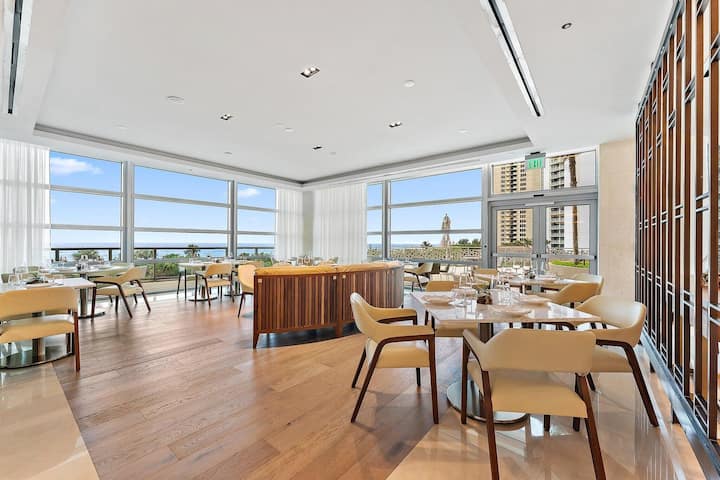
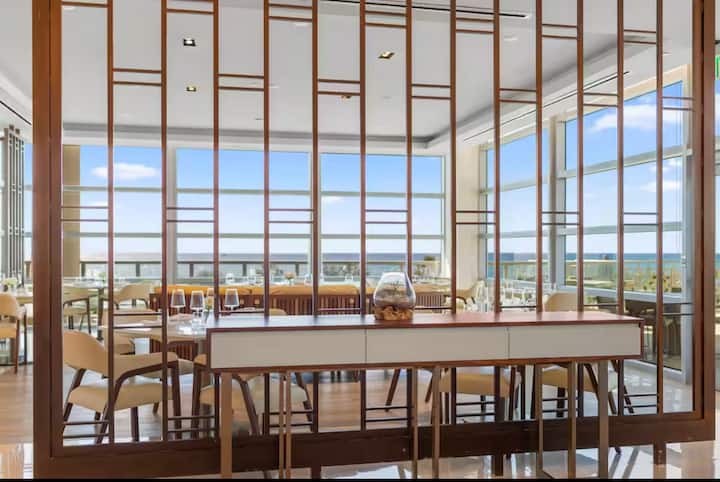
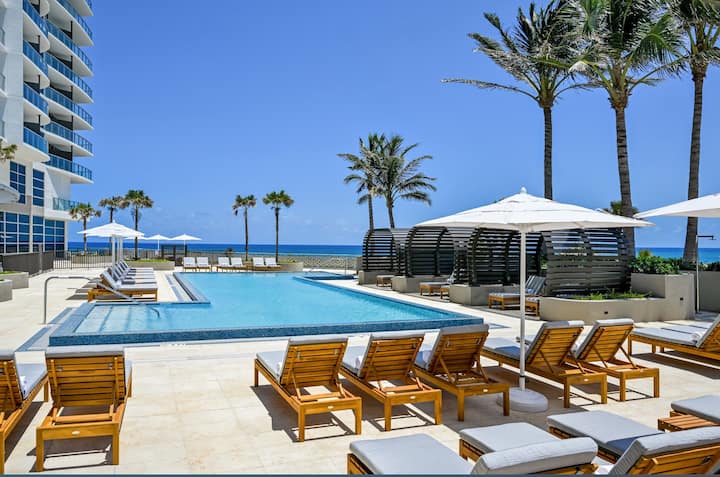
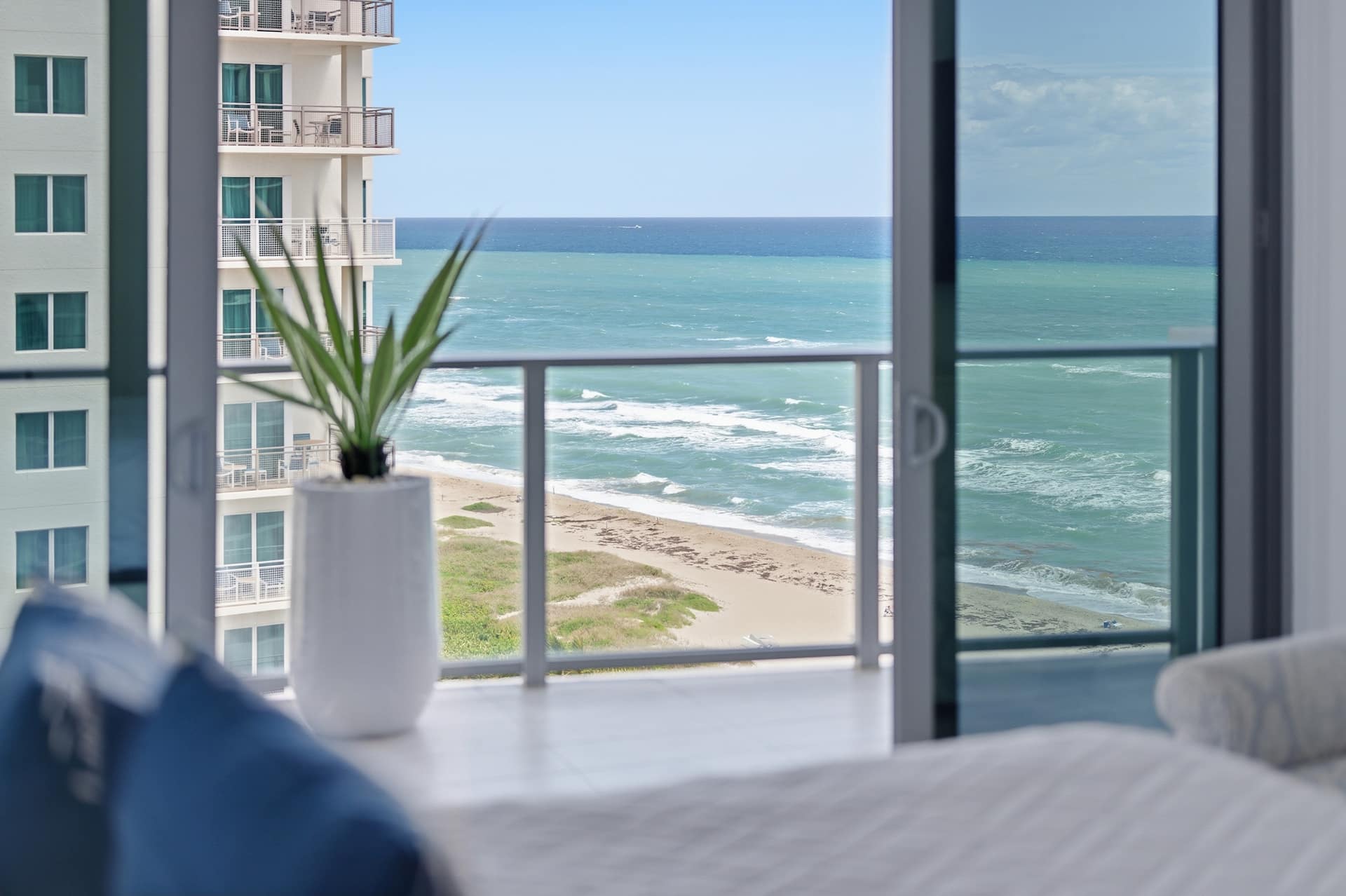
Your quiet address above the Atlantic
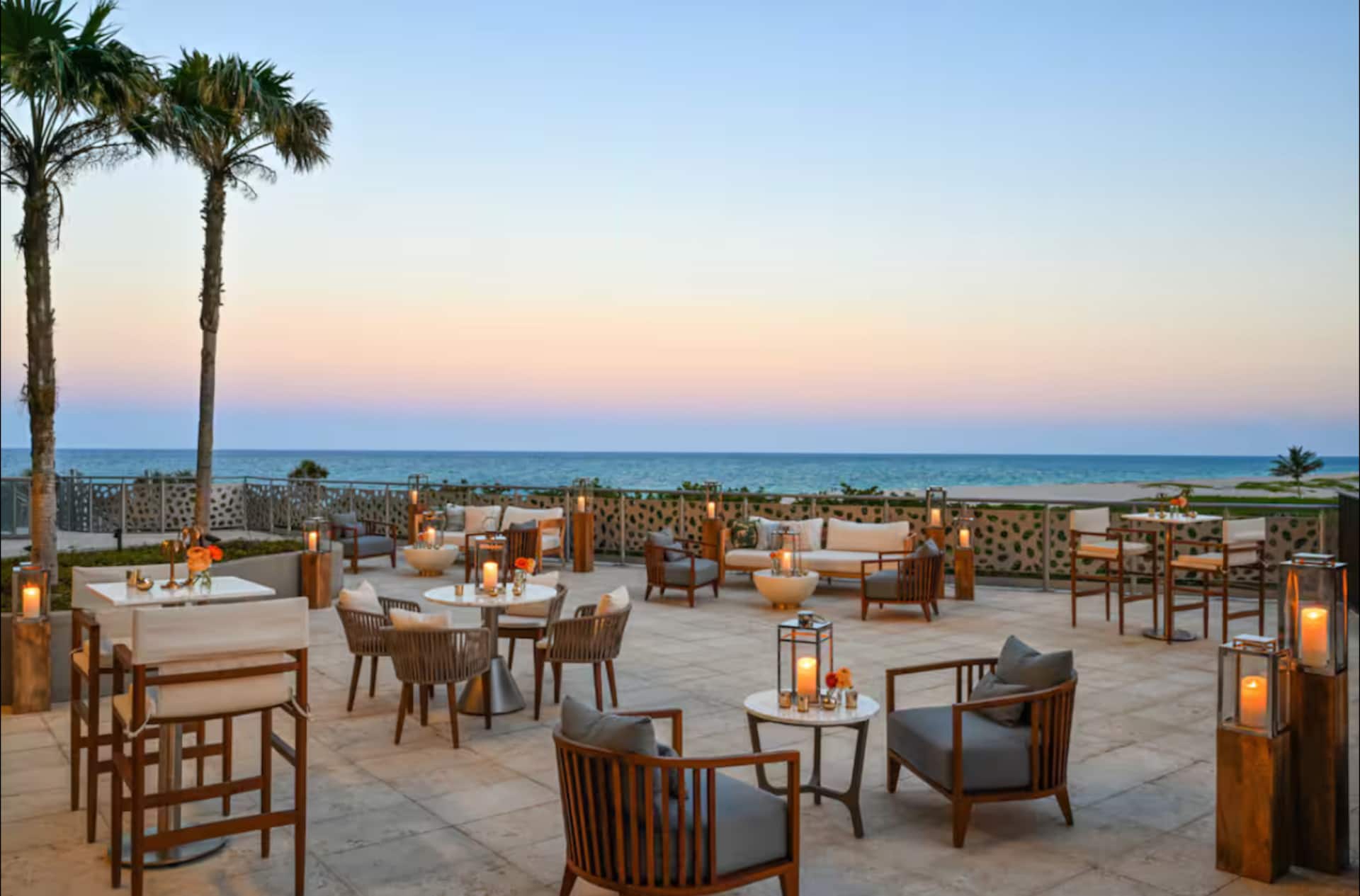
OASENA is a private two-bedroom home on the twelfth floor of the Happiness Tower — floor-to-ceiling ocean views, a sweeping balcony, and this entire wellness world an elevator ride below.
OASENA is a privately owned residence within Amrit Ocean Resort & Residences and is not operated by, affiliated with, or endorsed by the resort. See credits & notes.