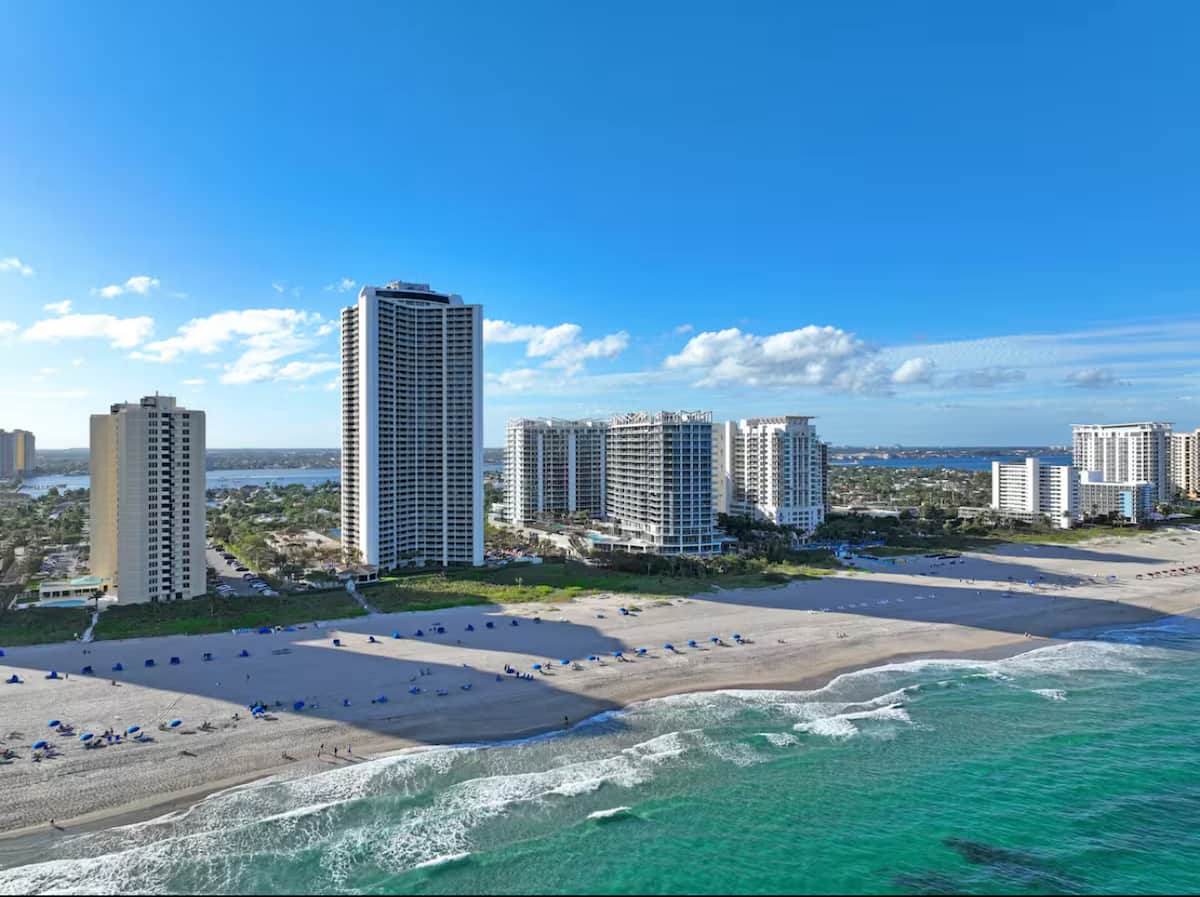
Getting to Singer Island: Airports, Drives and Transfers
Singer Island is quieter than it is remote. Palm Beach International sits about fifteen minutes from the front door, and there is a smooth way here whether you fly, take the train, or drive down the coast. This is how each one works, and which suits which kind of trip.
01The short version of getting here
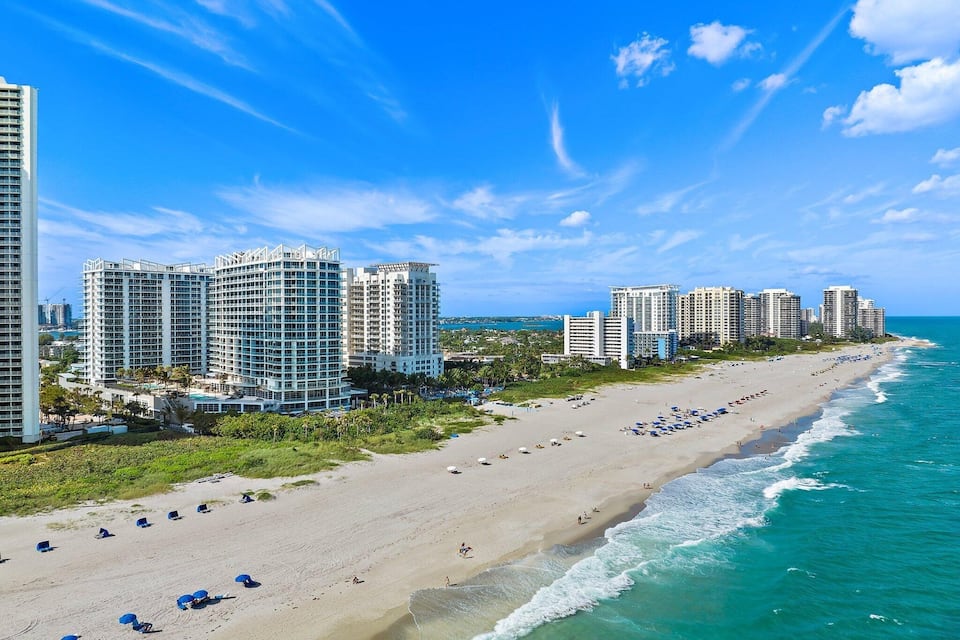
Singer Island is a barrier island in Riviera Beach, at the northern end of the Palm Beaches, laid out on a narrow strip of sand between the Atlantic Ocean and the Intracoastal Waterway. It feels tucked away, and in the best sense it is — but reaching it asks very little of you. The county’s own airport, Palm Beach International, sits only about fifteen minutes from the front door, which is one of the quiet luxuries of the address. You can go from the jet bridge to the balcony in less time than it takes to reach a lot of city hotels from their own airports, and the residence sits on roughly seven beachfront acres, so the last turn of the trip delivers you straight to the water rather than to a parking structure two neighborhoods away.
There are really three ways in, and none of them is complicated. You can fly into Palm Beach International and cover the short distance north by car, rideshare or private transfer. You can take the Brightline train up from Miami, Aventura, Fort Lauderdale or Boca Raton, or down from Orlando, step off at the West Palm Beach station, and finish with a quick ride across to the island. Or you can drive the whole way, down Interstate 95 or Florida’s Turnpike, if you are coming from elsewhere in the state or turning the journey into a road trip along the coast.
What this guide covers
- The airports — why PBI is the easy default, and the times Fort Lauderdale or Miami earn the longer drive.
- The last leg — the short run north across the Intracoastal, and how to choose between a private car, a rideshare, and your own rental.
- The train — how Brightline fits into an arrival, and when it is the calmest way to travel.
- The road — driving down yourself, plus the one thing to know about Florida’s tolls before you go.
- The first evening — what tends to happen once you are standing in the lobby, and how to make the first morning easy.
Everything below is written to help you match the arrival to the trip, honestly, without pushing one answer on everyone. If you would rather skip a rental entirely, that is a real and comfortable choice here; there is a full companion guide to getting around without a car once you have landed. And if a car is clearly the plan, the guide to renting a car covers the counters, the tolls and the parking in detail. Think of this page as the map that ties all of those together, so that by the time you reach the bridge to the island you already know exactly how the day is going to go.
There is no wrong choice among these routes — only the one that fits your trip best. A couple in for a weekend, a family down for a week of beach days, and a traveler flying in from overseas will each land on a different answer, and all three answers work. What follows treats each option on its own terms, with the drive times, the trade-offs and the small practical details that make the difference between an arrival that drains the first day and one that quietly hands it back to you. Read the sections that apply to you and skim the rest; by the end you will have a plan that carries you from wherever you are starting to the twelfth floor with as little friction as the distance allows, and with the first evening still yours to spend.
02Palm Beach International, the obvious choice
For almost everyone, the right answer is Palm Beach International Airport (PBI). It is close, it is calm, and it is pleasant to move through — a mid-sized airport that never turns the last stretch of a trip into a marathon. From the terminal to Singer Island is roughly fifteen minutes and around fifteen miles, most of it a straight run north. That distance is the whole argument. You land, you gather your bags, and you are on the island before the coffee you bought at the gate has gone cold.
PBI is served by the major United States carriers, so nonstop options are broad from the country’s main hubs. It is worth knowing how the airport behaves across the year:
- American Airlines, Delta and United all fly here, alongside several other domestic carriers, with strong seasonal service from the Northeast, the Midwest and the mid-Atlantic.
- Winter is high season in the Palm Beaches, so flights fill and fares climb from roughly November through April. Book those months earlier than you think you need to, and be flexible on the day of the week if you can.
- The airport is small enough that the walk from gate to curb, and the loop to the rental-car center, are both quick. A shuttle runs to the rental center every twenty to thirty minutes, so even that step rarely costs you real time.
Why it wins on time
The value of PBI is not only the mileage, it is the shape of the drive at the end of it. There is no long crawl through a metro core to escape the airport; within a couple of turns you are already pointed toward the water. Families with tired children, couples arriving for a long weekend, and anyone landing in the late afternoon who wants to catch the sunset from the balcony all benefit from the same thing — the final leg is measured in minutes, not hours.
It is worth saying clearly: the airport you choose shapes the entire first day. Fly into a hub two hours away and you have effectively spent your arrival day in transit. Fly into PBI and the trip starts the moment you land. For a short escape especially, that difference is the whole point, and it is why the great majority of guests never look past the county airport. If you are arriving by private aircraft, PBI has a busy general-aviation side and there are additional executive fields in the county, all of which put you on the same short road north.
A few practical notes at PBI
- The rental-car companies — Alamo, Enterprise, Hertz, Avis and the rest — are gathered at the airport’s car-rental center, reached by a shuttle that loops from the terminal every twenty to thirty minutes.
- Rideshare pickup is clearly signed and usually quick, and a pre-booked private car can meet you just outside baggage claim if you would rather not wait at all.
- Because the terminal is compact, you rarely face the long internal treks that big hubs demand, which matters more than it sounds after a red-eye or a tight connection.
All of this is part of why regulars keep coming back to PBI even when a southern airport shows a slightly cheaper fare. The airport is not a destination in itself, but it is an easy front door, and an easy front door sets the tone for everything that comes after it — the drive, the arrival, and the first evening on the balcony.
03When Fort Lauderdale or Miami make sense
Palm Beach International is the closest airport, but it is not the only one, and there are times when flying into one of the larger South Florida airports is the smarter call. Both sit to the south, down an easy and familiar stretch of interstate, and both are worth keeping in mind when you shop for flights rather than assuming PBI is always the answer.
- Fort Lauderdale–Hollywood International (FLL) is roughly fifty minutes to an hour south by car. It often carries more flights and, at times, better fares, particularly on the budget carriers and on certain leisure and international routes that do not serve the county airport.
- Miami International (MIA) is about an hour and a half south. It has the widest international network of the three by a good margin, so for travelers arriving from overseas it is frequently the natural gateway into the region.
How to weigh the trade
The math is simple, and it is worth doing honestly. A bigger airport may hand you a cheaper or more convenient flight, but it adds an hour or more of driving on each end of the trip. For a short stay, that extra road time eats into the days you came for, and PBI almost always wins. For a longer stay, an international arrival, or a fare that is meaningfully better, the drive up from Fort Lauderdale or Miami is easy highway and well worth it.
There is a second reason to keep the southern airports in play: both cities connect to the Palm Beaches by the Brightline train. That turns the transfer from a chore into the most restful part of the day — you land, ride a short distance to a downtown station, and let someone else handle the miles while you sit with a coffee and watch the coast go by. If you are landing at FLL or MIA and the idea of an hour behind the wheel after a flight does not appeal, the train is often the better answer than the rental counter.
A last practical note on choosing an airport: check the fare, but also check the arrival time. A late-night landing at Miami means a late-night drive north, while an afternoon arrival at PBI leaves the whole evening intact. When two flights cost about the same, the one that lands earlier at the closer airport is almost always the better trip, even if the fare is a touch higher, simply because it gives you back the first day.
A quick decision rule
If your stay is three nights or fewer, fly into PBI and stop weighing it — the closest airport is almost always right for a short trip. If your stay runs a week or longer, or you are arriving internationally, price out all three airports and factor the drive or the train into the total travel time rather than just the fare on the screen. More often than not the answer for a long, relaxed stay is still PBI, but Fort Lauderdale and Miami are close enough that a real bargain or a smoother international connection can tip the balance. The one combination to avoid is a bargain fare into a distant airport paired with a late-night arrival; the savings rarely survive the two-hour drive that follows, and you pay for them in a lost first evening.
04The drive from the airport to the island
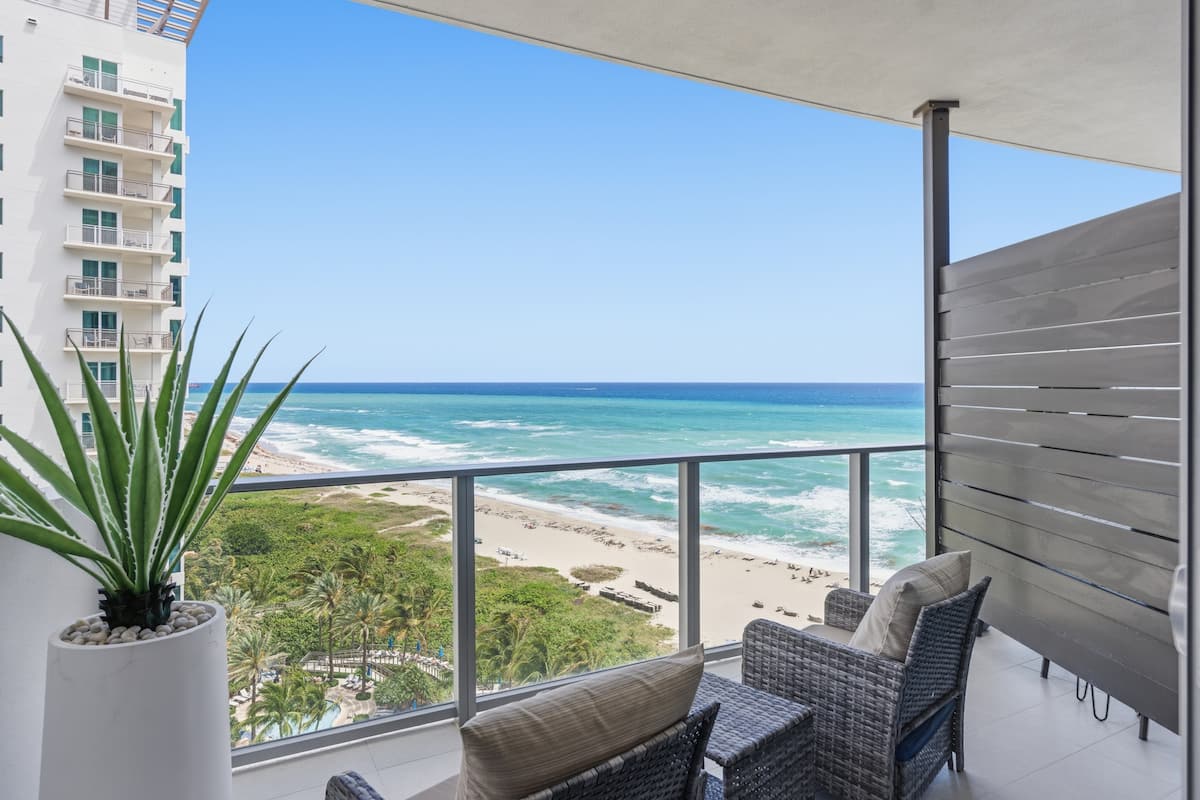
However you reach Palm Beach International, the final stretch to Singer Island is short and, in its own low-key way, a pleasant introduction to the place. You head north out of the airport and work your way toward the coast, then cross from the mainland over to the barrier island on one of the bridges that span the Intracoastal Waterway. The moment you cross the water the light changes — it opens up, the horizon widens, and you get your first real sense that you have arrived somewhere on the ocean rather than merely somewhere near it.
What the route feels like
- The drive is almost entirely on wide, well-signed roads. There is nothing technical about it, and a first-time visitor will not put a foot wrong following the signs.
- You pass marinas and the waterway on the approach to the island, a good preview of the boating and fishing world you can dip into later in the stay.
- Traffic in the Palm Beaches is generally mild compared with Miami or Fort Lauderdale, though winter afternoons and event weekends can slow the bridges a little.
- The bridge crossing itself is the moment the trip changes character. Mainland gives way to island, and the address you are heading for is on Singer Island in Riviera Beach.
If you are using a rideshare or a car service, this is a leg they will handle without a second thought — it is a standard, popular run that drivers make constantly, so you can simply sit back. If you are driving yourself, your navigation app will route you cleanly; the only thing worth holding in mind is that you are heading for the residential lobby of a private building, not a public hotel entrance, so watch for the residence address rather than the resort’s main drive.
A note on arriving after dark
Singer Island is a barrier island, and during sea-turtle nesting season, from roughly March into October, the beaches are kept dark at night to protect nesting and hatching turtles. That has no real effect on your drive in, but it is a nice thing to understand before you arrive: the low lighting near the sand is deliberate and protective, not a sign that anything is closed. Once you are across the bridge and pulling up to the building, valet takes the car, and the last few steps of the journey are handled for you. There is more on choosing between driving yourself and being driven in the renting a car guide, and more on the island’s own walkable layout in the car-free guide.
The last mile
As you near the island you will notice the water is never far on either side — the Intracoastal on one hand, the ocean building on the other. The bridges here are part of the character of the place rather than an obstacle, and the crossing is one of the small pleasures of arriving. Keep an eye out for the marina activity below; it is the same waterfront world you can return to later for a charter, a sunset cruise, or a short run out to Peanut Island. Once the building comes into view the drive is effectively over: you turn in, valet steps out to take the car, and the final stretch of the whole journey is measured in a single elevator ride up to the twelfth floor.
The best arrivals here are short ones. Fifteen minutes after the wheels touch down at Palm Beach International, you can be standing on the balcony with the ocean in front of you.
On landing in the Palm Beaches
05Private transfer, rideshare, or rental
Once you are on the ground at PBI, there are three sensible ways to cover that last fifteen minutes to the island, and the right one depends far less on the arrival itself than on how you plan to spend the days that follow. It helps to decide this before you fly, because the choice changes what you do at the airport — walk straight to a waiting car, open an app at the curb, or head for the rental-car shuttle.
A private car or pre-arranged transfer
The most seamless arrival is a car waiting for you. A pre-booked black-car service or private transfer means you step off the plane, meet your driver, and are delivered to the residential lobby with no apps, no lines, and no parking to think about. It is the easiest choice after a long travel day, and a particularly good one if you are landing late in the evening, arriving with a group, or traveling with more luggage than a rideshare would comfortably swallow. You pay for the ease, but on the first day the ease is often exactly what you want.
Rideshare
Uber and Lyft both operate reliably at Palm Beach International and throughout the Palm Beaches. For a couple arriving with a few bags, a rideshare to the island is quick and inexpensive relative to the distance, and it spares you the rental counter entirely if you do not intend to drive much during the stay. Pickup at PBI is well organized, and cars are usually plentiful; the main exception is a very late arrival, when a pre-booked private transfer can be the safer bet.
A rental car
If you want the freedom to chase beaches farther afield, tee times, dinners across the bridge in Palm Beach and West Palm, and day trips up and down the coast, pick up a rental at the airport’s car-rental center. The residence has valet parking, so once you arrive the car is handled and you are never circling for a space. The full case for and against a car — and where to rent one — lives in the renting a car guide. The short version is that a car makes the wider county easy, while the island itself is completely comfortable without one.
If you are torn, a useful rule of thumb is this: count the days you plan to leave the island. One or two dinners across the bridge do not justify a week of valet fees when a couple of rideshares would do; a plan full of golf, day trips and far-flung beaches almost certainly does. Match the wheels to the itinerary and you rarely regret the call.
Booking ahead versus deciding at the curb
Rideshare and a rental you can sort out on the spot, but a private transfer is worth arranging in advance, especially for a late arrival or a larger party. If you are landing after most of the day is gone, a car that is already waiting removes the one variable that can sour a tired arrival — standing at the curb hoping a driver accepts the trip. For daytime arrivals with light bags, none of this is a concern; a rideshare will have you on the island in minutes. The honest rule is to match the level of planning to how tired you expect to be when you land, and to lean toward a pre-arranged car whenever the flight gets in late or the group is large.
06Arriving by Brightline
One of the nicest surprises about this corner of Florida is the train. Brightline is a modern, higher-speed passenger line that connects a downtown West Palm Beach station with Boca Raton, Fort Lauderdale, Aventura and Miami to the south, and with Orlando to the north. If you are already in one of those cities — or flying into their airports — the train can be the calmest and most civilized way to reach the Palm Beaches, and it removes the one part of the journey most people dislike, which is driving a rental on an unfamiliar interstate after a flight.
How it fits an arrival
- The West Palm Beach station sits downtown, roughly fifteen to twenty minutes from Singer Island by car or rideshare, so the final hop across to the island is short.
- From Miami the ride runs around seventy minutes; from Orlando it is about two hours — both without a single mile of driving yourself, and both roughly hourly across the day, with something like sixteen round trips daily.
- Trains carry free Wi-Fi, power at every seat, food and drink service, and comfortable lounges, so the journey becomes time to unwind rather than endure.
- There are two classes of service, SMART and PREMIUM. Fares vary and are best booked ahead for the better price; the exact difference and the day-trip possibilities are laid out in the dedicated guide.
The pattern that works well for arrival is this: fly into a larger airport if it saves you money or suits your route, ride Brightline up to West Palm Beach, then take a short rideshare across to the island. You skip the highway drive completely and arrive rested. It also means you can leave the rental question for later, or answer it with a clear no, and still reach everything you came for.
There is a full breakdown of the route, the classes of service, booking and timing tips, and a set of day-trip itineraries in the Brightline guide. It is worth reading even if you fly straight into PBI, because the train is one of the best ways to spend a day away from the beach once you are here — a lunch in Fort Lauderdale, an afternoon in Miami, or a longer run up to Orlando — all without the stress of parking a car at the other end. In other words, Brightline is useful twice: once as a way in, and again as a way out for a day, and many guests who fly in end up riding it anyway before the trip is over.
Getting from the station to the island
Once you step off at West Palm Beach, the last leg is a short rideshare or a pre-booked car across to Singer Island — roughly fifteen to twenty minutes, mostly a straight run toward the coast and over the Intracoastal. The station sits right in the walkable downtown, so if your schedule is loose it is easy to pause for a coffee or an early dinner on Clematis Street before the final hop across. The train removes the highway, the rideshare handles the bridge, and you arrive without ever having taken a wheel in your hands. For anyone who finds driving after a flight the least pleasant part of travel, that combination is hard to beat, and it is the reason the train converts so many first-time skeptics.
07Driving down for the stay
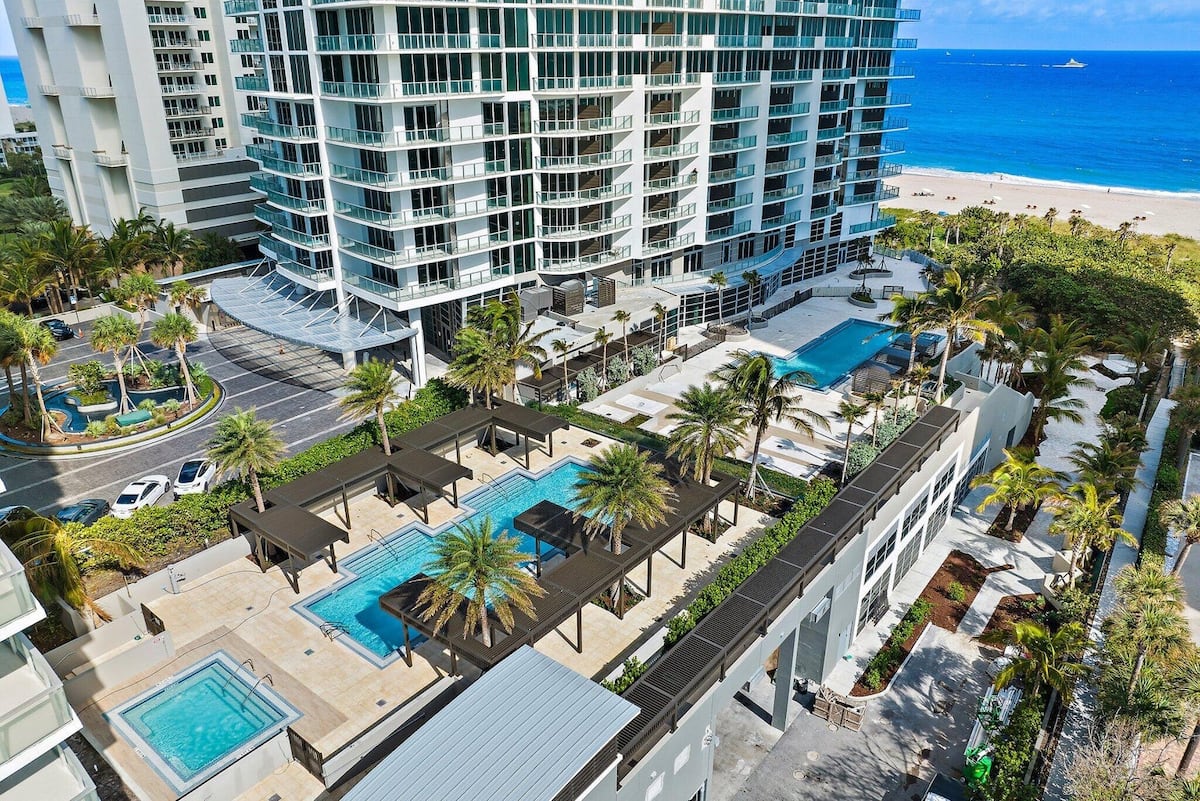
Plenty of guests simply drive, whether from elsewhere in Florida or as part of a longer road trip down the coast. It is a fine way to arrive, especially if you are bringing gear, a dog, or a crowd, and the routes into the Palm Beaches are two of the most familiar highways in the state. Both are simple to follow and well signed all the way to Riviera Beach.
- Interstate 95 runs the length of Florida’s east coast and is the most direct route to Riviera Beach from both the north and the south. You exit toward Singer Island and cross the Intracoastal on one of the bridges to reach the barrier island.
- Florida’s Turnpike is the toll alternative, running roughly parallel but a little inland. It is often the smoother choice if you are coming from Orlando or the center of the state, and it connects easily across to the coast near the Palm Beaches.
Tolls and the one thing to check
Florida’s Turnpike and many of the region’s toll points use the electronic SunPass system, and this is the single detail worth sorting out before you leave. If you are driving your own car from out of state, your transponder may or may not be compatible with SunPass, and unmanned toll gantries bill by reading your license plate and mailing the charge afterward. That can turn a small toll into an annoying piece of mail weeks later, so it is worth checking your transponder’s compatibility, or your options for paying by plate, before you set off.
If you are in a rental, the agency will offer a toll package that handles all of this automatically for a daily fee — whether that is worth taking depends on how much toll driving you expect to do, and it is covered in more detail in the renting a car guide. Beyond the tolls, the drive in is straightforward: aim for Singer Island in Riviera Beach, follow the signs across the bridge, and pull up to the residential lobby, where valet takes the car.
Breaking up a long drive
If you are coming from far up the coast, the run down I-95 is long but uneventful, and it is easy to break with a stop in one of the coastal towns along the way. Arriving in daylight is the nicest option if you can manage it, both because the bridge crossing onto the island is prettier by day and because it leaves you an evening to settle in rather than a scramble in the dark. After hours on the road, handing the keys to valet and taking the elevator up is a small but real mercy, and it is the moment the driving officially ends and the stay begins.
Once you are on the island
Arriving in your own car changes nothing about how the building handles it: you pull up to the residential lobby and valet takes over, so there is no garage to find and no space to circle for. If you are driving an electric car, plan your charging around the trip the way you would any Florida road trip, and line up charging options for the stay rather than assuming a plug at the door. Otherwise the practical picture is simple — a full tank at the start of a long drive, a SunPass sorted for the tolls, and a daylight arrival if you can arrange it. Do those three things and driving down becomes one of the more relaxed ways to arrive, luggage, cooler, beach chairs and all.
08The first evening, once you arrive
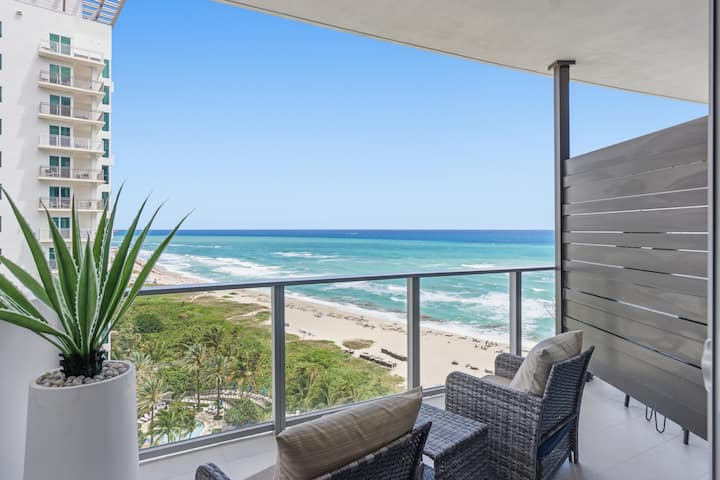
Arrival at the building is deliberately calm. You come in through the residential lobby — not a bustling hotel check-in with a line of arriving tour groups — where valet handles the car and the elevator carries you up to the twelfth floor. The first thing most people do is slide open the balcony doors and stand there for a minute; after a travel day, the Atlantic does a great deal of the work of arriving for you. There is no rush to do anything at all, which is rather the point of getting here quickly in the first place.
Settling in
- Provisioning. If you would like the kitchen stocked before you land, grocery delivery reaches the residence, and Publix and Whole Foods are both a short drive away. A simple first-night plan — coffee, breakfast things, a few basics — makes the next morning effortless, and the kitchen is a full Miele suite with an island that seats eight, so it rewards a little stocking. The full approach is in the guide to provisioning the residence.
- Dinner. If you would rather not cook on the first night, casual seafood on Singer Island is only minutes away, and the resort’s own plant-forward restaurant, TULĀ Oceanfront, is downstairs. Johnny Longboats on the municipal beach and the classic Sailfish Marina are both easy, unfussy first-night options.
- An arrival soak. For a truly gentle landing, the wellness centre and its Aayush hydrothermal circuit are an elevator ride below the residence. A warm soak, a short sauna, a few minutes in the salt room — any of it is a fine way to reset after hours of travel, and residence guests reach the spa at preferred rates.
The real advantage of a short arrival is that the trip starts the same day. You do not lose the first evening to logistics; you spend it on the balcony, watching the light fall over the water while someone else parks the car. A little planning ahead — a stocked kitchen, a loose dinner idea, maybe a spa slot — is all it takes to make the first night feel like the start of the holiday rather than the tail end of the journey. Many guests find the first evening becomes a small ritual of its own: unpack a little, pour something cold, step out onto the balcony as the sky goes pink, and let the pace of the island take over from the pace of the airport.
A gentle first night
There is no need to plan the first evening down to the minute; the nicest version of it is loose. Some guests head straight down for a soak and come back up for a quiet dinner in; others drop the bags, walk a few minutes to a beachfront table for oysters and a drink, and save the spa for the morning. Either way, the short arrival means you are choosing how to spend an evening rather than recovering from a journey. If you have traveled with children, the same logic helps — a stocked kitchen and an early, casual dinner nearby beat hunting for a restaurant with tired kids in an unfamiliar place. Keep the first night simple, let everyone sleep well, and the rest of the stay opens up from there.
09Which arrival suits which traveler
Every traveler weighs time, cost and effort a little differently, and the good news is that there is no single right way to get here. Here are a few honest recommendations to match the arrival to the trip, so you can pick the version that fits how you travel rather than how a brochure says you should.
Couples on a short escape
Fly into Palm Beach International and take a rideshare or a private car to the island. Skip the rental unless you already know you want to drive to dinners across the bridge; the island and the resort will hold you happily for a long weekend, and a car left sitting in valet all week is a car you are paying to ignore. For a two- or three-night stay, the least you have to think about, the better, and PBI plus a short ride is about as little thinking as arrival gets.
Families and groups
Consider a rental or a larger private transfer for the space and for car seats, and lean on PBI for the short final drive. A car earns its keep once you are hauling beach gear to different shores, running to the grocery store, and chasing a day trip or two with children in tow. The residence’s valet means the car is out of your way the moment you arrive, so the usual downside of driving on a beach trip — parking — mostly disappears.
Longer stays and international arrivals
If you are here for a week or more, or arriving from overseas, it can pay to fly into Fort Lauderdale or Miami for the flight, then either drive up or ride Brightline to West Palm Beach. Over a longer trip, the extra hour of transfer time all but disappears against the days you gain, and an international itinerary often simply routes more naturally through Miami. The train, in particular, makes the longer approach feel like part of the holiday rather than a tax on it.
The car-free traveler
Going without a car is entirely doable here, and more relaxing than it sounds. Fly into PBI or ride the train in, use rideshare for the occasional trip across the water, and let the island’s walkable stretch — the beach, the marina, a handful of restaurants — carry the rest of the days. The guide to going car-free maps out a whole week without a rental. For many couples and solo travelers it is not a compromise at all; it is quietly the nicest way to do the trip.
Mixing and matching
These profiles are starting points, not rules, and plenty of stays blend them. It is perfectly reasonable to fly into PBI, skip the rental for the first few days, and add a car later for a run of day trips — or to keep a car the whole week but ride Brightline down to Miami for a single day to skip the drive and the downtown parking. The island rewards this kind of flexibility because so much of what you came for is either downstairs or a short ride away. Decide your default before you fly, stay open to swapping it for a day here and there, and let the trip tell you what it needs once you have settled in.
10Timing your arrival, and a smooth-arrival checklist
A little forethought turns a good arrival into an effortless one. None of it is complicated, and most of it comes down to timing the trip well and lining up a few small things before you land. The season you are traveling in shapes some of these choices, so it helps to know how the calendar behaves in the Palm Beaches before you book.
Timing across the year
- High season, November through April. The weather is mild and dry, the social season is in full swing, and demand is at its peak. Book flights and any transfers well ahead, and expect the bridges and roads to be a touch busier on winter afternoons and event weekends.
- Summer, June through August. Hot, humid, and prone to afternoon thunderstorms that pass quickly. Flights are often easier to come by, and an early-in-the-day arrival helps you dodge the late-afternoon storms on the drive in.
- Shoulder seasons, April to May and September to October. Fewer crowds and softer demand, with September the quietest month of all. This is hurricane season in name — June 1 to November 30 — and while direct hits are rare, it is sensible to keep an eye on the forecast and to build a little flexibility into travel dates during that stretch.
Before you leave home
- Decide the wheels question first. Rental, rideshare, private transfer or train — settling this before you fly changes what you do the moment you land, and saves a decision when you are tired.
- Sort tolls if you are driving your own car. Check your SunPass compatibility or your pay-by-plate options so a small toll does not follow you home as a surprise bill.
- Line up the first morning. Arrange grocery delivery or plan a quick store run so the kitchen is ready; the guide to provisioning has a simple first-night list.
- Hold a loose plan for dinner. A stocked kitchen or a casual seafood spot nearby means night one takes care of itself.
When you arrive
- Head for the residential lobby, not the resort’s main hotel entrance, and let valet take the car.
- Aim to arrive in daylight if you can — the bridge onto the island is prettier by day, and it leaves the evening for settling in.
- Open the balcony doors before you do anything else. It is the fastest way to feel like the trip has begun.
Packing for the climate
Whatever the month, pack for warmth and sun — light clothing, swimwear, a hat and good sun protection are the year-round basics this close to the water. In winter, add a light layer for cool evenings and the breeze coming off the ocean; in summer, plan around the midday heat and the brief afternoon storms rather than fighting them. If you intend to use the spa and the hydrothermal circuit, you need nothing special beyond yourself. And because the residence has a full kitchen, you can travel with less and simply stock up once you arrive, which makes every version of the arrival — car, rideshare, or train — that much easier to manage with fewer bags in hand.
Get those few things right and the journey ends the way it should: quietly, on the twelfth floor, with the ocean doing the talking and nothing left on your list but to enjoy being here.
Common questions
What is the closest airport to Singer Island?
Do I need to rent a car to stay on Singer Island?
No. Rideshare, a private transfer and the Brightline train cover most needs, and the island’s beach, marina and some dining are walkable. A car mainly helps with beaches farther afield and day trips — see the guides to <a href="/guides/rental-car-guide/">renting a car</a> and going <a href="/guides/getting-around-without-a-car/">car-free</a>.
How long is the drive from the airport?
From Palm Beach International, plan on roughly fifteen minutes to the island, traffic depending. It is a short, well-signed run north that crosses the Intracoastal Waterway on a bridge to Singer Island, and it ends with valet at the residence.
Can I reach Singer Island by train?
Yes. <strong>Brightline</strong> connects Miami, Aventura, Fort Lauderdale, Boca Raton and Orlando to the West Palm Beach station, about fifteen to twenty minutes from the island by car or rideshare. It is a relaxed, car-free way in — details in the <a href="/guides/brightline-train-guide/">Brightline</a> guide.
Your quiet address above the Atlantic
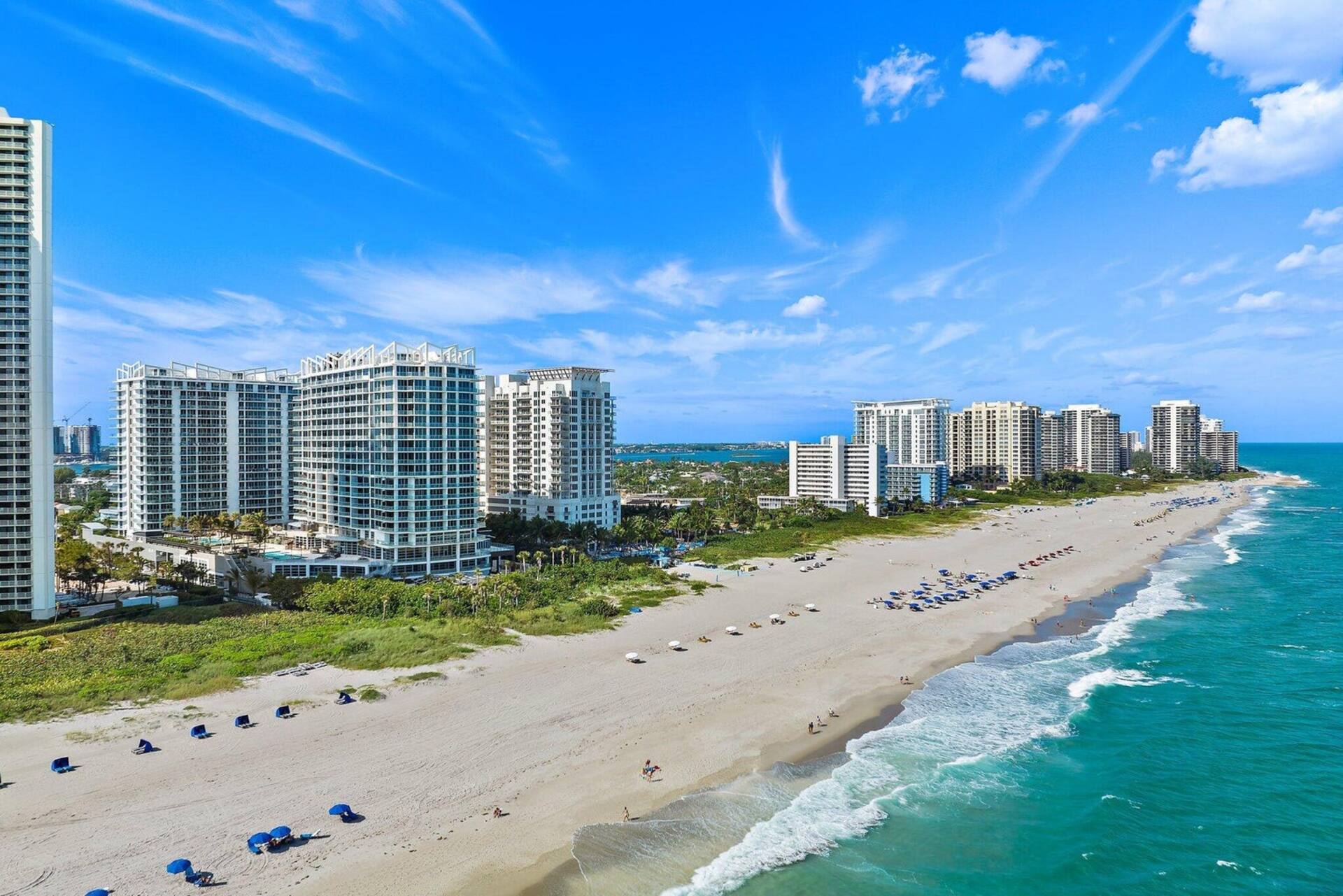
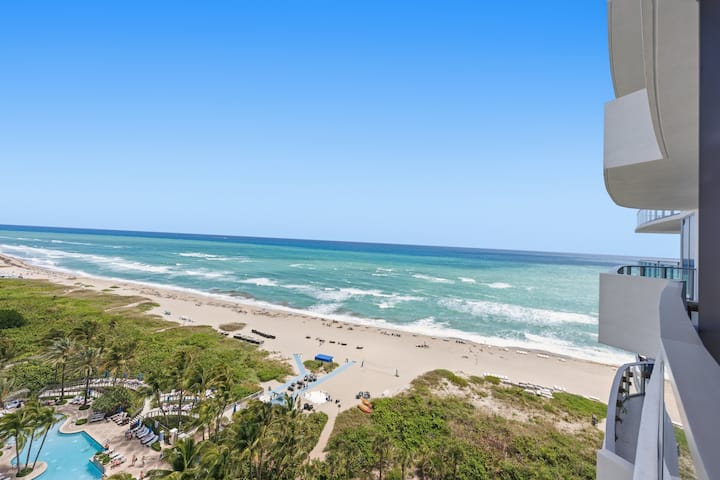
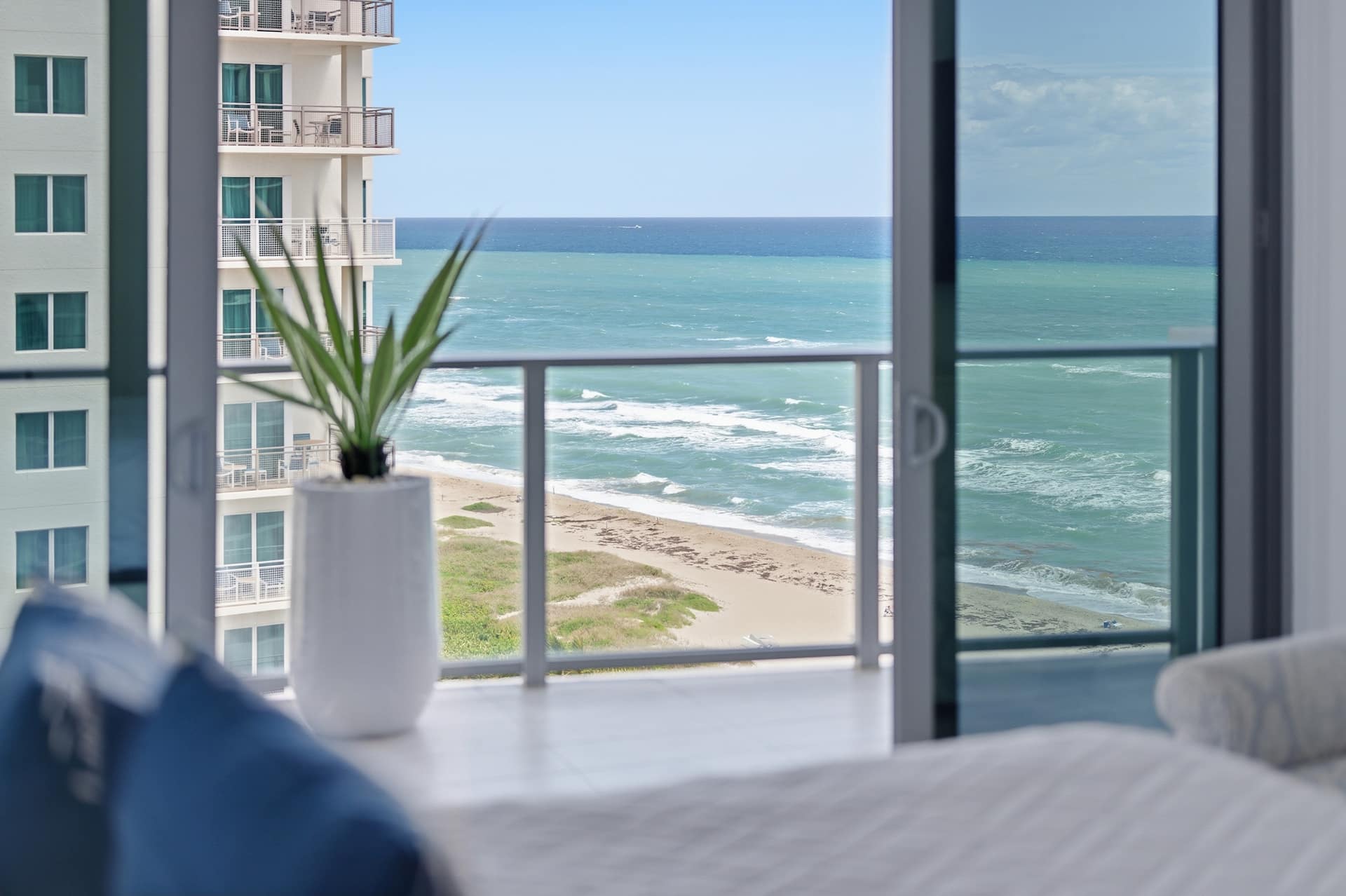
OASENA is a private two-bedroom home on the twelfth floor of the Happiness Tower — floor-to-ceiling ocean views, a sweeping balcony, and this entire wellness world an elevator ride below.
OASENA is a privately owned residence within Amrit Ocean Resort & Residences and is not operated by, affiliated with, or endorsed by the resort. See credits & notes.