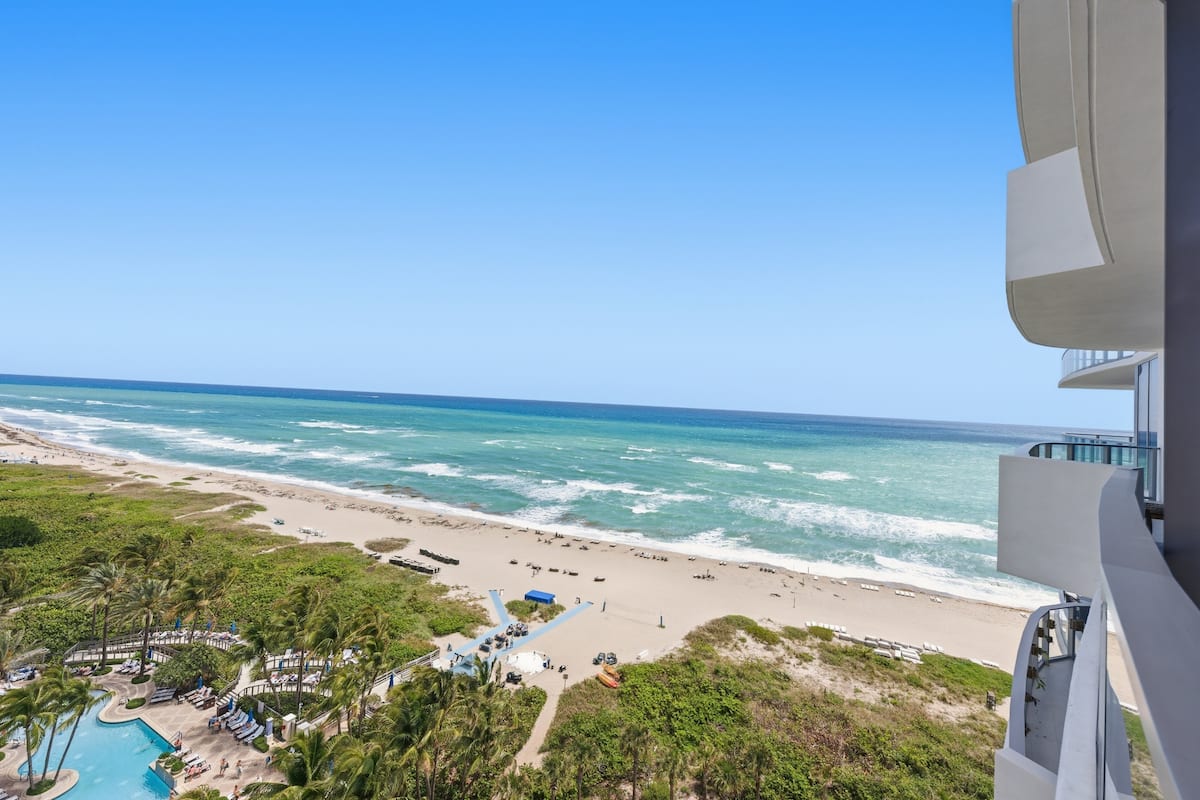
The Brightline Train Guide: Miami, Orlando and Everywhere Between
Florida's higher-speed train runs from a downtown West Palm Beach station a short drive from the residence, reaching Miami in a little over an hour and Orlando in about two. Here is how to ride it well, which trips it's made for, and when to just take the car.
01What Brightline is
Brightline is Florida's higher-speed passenger railroad, and it happens to run straight through the stretch of coast you're visiting. From a modern station in downtown West Palm Beach, a short drive from the residence, it carries you south to Miami in a little over an hour, or north to Orlando in about two, with none of the stop-and-go on I-95 to wear you down. It is the first privately owned intercity passenger train the country has built in generations, and most guests who try it once end up shaping the rest of their week around it.
The trains are bright, quiet and comfortable — wide seats, big windows, tables, air conditioning that works, and a smooth ride at highway speeds and then some. You buy a ticket for a specific departure, walk into a clean station, and step aboard a few minutes before it pulls out. There are no security lines, no gates to clear an hour early, and no baggage carousel at the far end. For anyone used to the friction of Florida airports and rental-car counters, the ease of it is the first thing you notice.
It is worth being clear about what Brightline is and is not. It is a regional train built for exactly the kind of trips you'll want to take from Singer Island: a day in Miami, dinner in Fort Lauderdale, a shopping run to Aventura, or a longer push up to the Orlando theme parks. It is not a subway or a commuter line that stops every few blocks, and it does not reach Singer Island itself — you get to the West Palm Beach station by car or rideshare first. Think of it as the fast, painless spine of a car-light trip, something you pair with a short ride at each end.
Why guests like it here
- No traffic, no parking. You skip the worst of I-95 and the hunt for a garage in a strange city.
- Downtown to downtown. Stations sit in the middle of the places you're going, not out by the highway.
- Time you keep. On the train you can read, work, nap or watch the coast go by instead of gripping a wheel.
- Easy with a group. Nobody has to be the designated driver, and you can all sit together at a table.
A quick word on the name. Higher-speed rail isn't the same as the bullet trains of Europe or Japan — Brightline runs fast on the open stretches but shares its corridor with freight and road crossings along the coast, so it's brisk rather than record-setting. What matters for your trip isn't the top speed anyway; it's that the train is reliably quicker and far less tiring than the same drive, and that it drops you in the center of wherever you're headed. That combination is the whole appeal, and it's why a train that isn't technically the fastest in the world still feels like a small luxury every time you ride it.
The company has been running trains between West Palm Beach, Fort Lauderdale and Miami since 2018, and the long-awaited extension up to Orlando opened in 2023, tying the theme-park city to the coast for the first time by modern rail. Stations have been added along the way — Boca Raton and Aventura among them — so the line now touches most of the places a visitor to the Palm Beaches wants to reach. It has quietly become one of the simplest ways to see South Florida without a car, and it is one reason a stay here doesn't have to mean a rental parked downstairs the whole time. If skipping the car appeals to you, it pairs well with everything in our guide to getting around car-free.
02Getting to the station from Singer Island
The one leg Brightline can't do for you is the first one: getting from Singer Island to the West Palm Beach station. It's an easy hop, though — roughly fifteen to twenty minutes by car, depending on traffic and which end of the island you start from. You cross the Blue Heron Bridge off the island, pick up the road south, and drop down into downtown West Palm, where the station sits a block or two off Clematis Street in the middle of the city's walkable core.
For most guests, a rideshare is the simplest way to do it. Uber and Lyft are quick to arrive on Singer Island, and being dropped at the station door means you're not paying to leave a car parked all day while you're off in Miami. On the way home, cars are usually waiting outside when your train pulls in at night, which beats walking to a distant garage in the dark.
Your options to the station
- Rideshare (easiest). Fifteen to twenty minutes, door to door, no parking to worry about. Order it as you're heading down in the elevator.
- Drive and park. The station has paid parking if you'd rather take your own car — a reasonable choice for an early train, or when you want the car waiting on your return.
- Private car or taxi. The residence can point you to local car services for a pre-arranged pickup, which some travelers prefer for an early start.
- Resort or airport transfer. If you've arranged any town-car service, most will happily run you to the station instead.
Give yourself a little cushion. The beauty of Brightline is that you don't need to be there an hour ahead the way you would at an airport — ten to fifteen minutes before departure is plenty to park or be dropped, walk in, and find your platform. But downtown West Palm has its own rhythms: a bridge opening for boat traffic on the Intracoastal, a lunchtime rush, an event letting out. On a day when timing matters, leave the island twenty-five to thirty minutes before your train and you'll never feel rushed.
If you're arriving in Florida for the first time and thinking about how the train fits your whole trip — airport, transfer, first night — it's worth reading alongside our guide to getting here. Some guests even ride Brightline in from the Fort Lauderdale or Miami airports if they've flown into one of those instead of Palm Beach International, then rideshare the last stretch to the island. It isn't the fastest way to reach the residence, but it can be a pleasant one, and it saves a long highway drive after a flight.
A couple of practical notes about the West Palm station itself. It's a real destination in its own right, steps from Rosemary Square and Clematis Street, so if your train isn't for a while you can get a coffee, browse a shop or grab a bite without going far. And because it sits downtown, it's the same station you'd use for an evening out in West Palm — you can take a car over, walk the district, and never touch the train at all.
If you'd rather not think about any of the logistics, the residence can help sort out a car to the station and back, so all you carry down in the elevator is a beach bag and your phone. That's the version most guests settle into after the first trip — a short ride to the platform, a smooth run down the coast, and someone else worrying about the road.
03The route and its stations
Brightline runs a single line up and down Florida's southeast coast, and understanding its handful of stops is most of what you need to plan a day out. From West Palm Beach, your home station, the train heads south through the region's biggest towns before ending in downtown Miami. In the other direction it runs north and then west, inland across the state, to Orlando. There are no branches or transfers to puzzle over — you're simply picking a direction and a stop.
The stations, north to south
- Orlando — the northern end of the line, at the Orlando airport, the gateway to the theme parks. About two hours from West Palm Beach.
- West Palm Beach — your station, downtown, a short drive from Singer Island.
- Boca Raton — a newer stop by Mizner Park, handy for shopping and dining.
- Fort Lauderdale — downtown, a short ride from Las Olas Boulevard and the beach.
- Aventura — right beside Aventura Mall, one of the country's great shopping centers.
- Miami — the MiamiCentral station, the southern end, in the heart of downtown near Brickell.
The trains run frequently. On a typical day there are around sixteen round trips along the South Florida stretch, roughly one an hour from early morning until late evening, so you're never building your whole day around a single departure. If you miss one or linger over lunch, the next train is usually not far behind. The Orlando runs are less frequent than the short coastal hops, so those are the ones to plan around most carefully.
Travel times are quick because the train doesn't crawl through every neighborhood. West Palm to Miami runs about seventy minutes end to end — faster than the same trip by car on a bad afternoon, and far calmer. West Palm down to Fort Lauderdale is roughly half that. Boca and Aventura fall in between, each a short, easy ride. And the long haul from West Palm up to Orlando takes about two hours, covering ground that would be a tedious three-hour-plus drive up the turnpike.
Getting from each station to where you're going
- Miami: MiamiCentral connects to the free Metromover for Brickell and downtown; Wynwood and South Beach are a short rideshare away.
- Fort Lauderdale: the station is downtown, a five-minute car ride from Las Olas and about fifteen from the beach.
- Aventura: the station sits essentially at the mall, so you can walk straight into the shopping.
- Boca Raton: a quick ride to Mizner Park's restaurants, shops and green.
- Orlando: the station is inside the airport complex; rideshares and park shuttles take you the rest of the way.
One more thing the map won't tell you: the ride down the coast is pleasant in stretches, running behind the towns and crossing the Intracoastal waterways, with glimpses of marinas, backyards and the occasional drawbridge going up. It isn't a wilderness tour, but it beats the wall of concrete sound barriers you'd stare at from the interstate. Sit on the east side heading south and you'll catch the best of the water views along the way.
Because every station drops you in the middle of things rather than out by a highway interchange, the train tends to make the destinations feel closer and simpler than the map suggests. For a fuller rundown of where to point yourself once you step off, see our guide to day trips from the island.
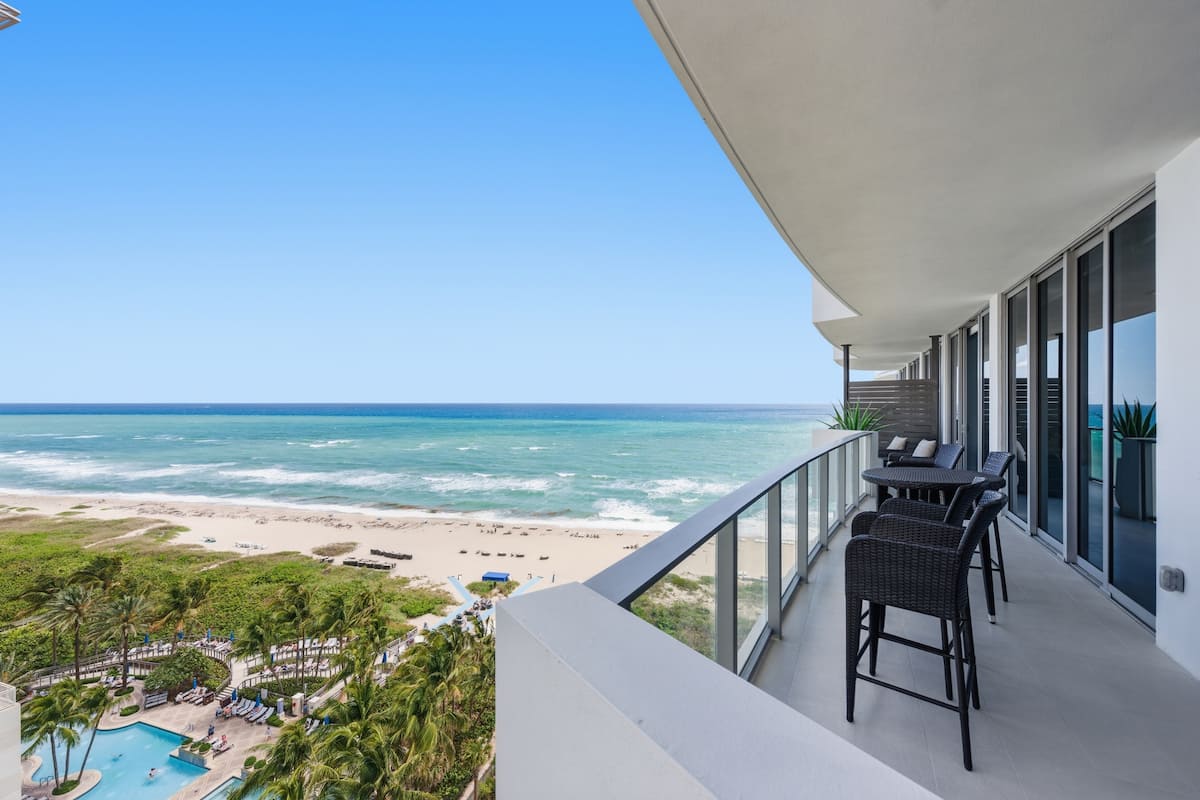
04SMART versus PREMIUM: which class to pick
Every Brightline train offers two classes of service, SMART and PREMIUM, and choosing between them is mostly a question of how much comfort and ease you want for the ride. Both travel in the same clean, modern cars and arrive at exactly the same time — nobody gets there faster by paying more. What changes is the seat, the space around you, and a few extras at the station and onboard.
Here's the reassuring part: there is no bad seat on a Brightline train. Both classes get the free Wi-Fi, the power outlets, the smooth ride and the same friendly onboard crew. So the decision is never between comfortable and uncomfortable — it's between comfortable and a little more indulgent. That makes it an easy call to size to the trip rather than agonize over.
SMART — the standard, and it's nice
SMART is Brightline's base fare, and calling it economy undersells it. The seats are wide and comfortable, with plenty of legroom, a power outlet, free Wi-Fi and big windows on the passing scenery. Most guests riding down for a day in Miami or Fort Lauderdale find SMART is all they need — it's a step up from most domestic first-class air seats, and for a seventy-minute trip it's more than comfortable. You can also buy food and drinks from the onboard service or the station market.
PREMIUM — the lounge and the extras
PREMIUM buys you a larger seat in a quieter, less crowded car, and — the part regulars value most — access to the Brightline lounge at the station before you board. The lounges are calm, attractive rooms with complimentary snacks and drinks, including beer and wine, where you wait in comfort rather than on a platform bench. PREMIUM also includes food and drink served at your seat on the train, priority boarding, and a checked-bag allowance. On a longer ride, or when you want the trip itself to feel like part of the treat, it earns its keep.
Which to pick
- Short hop, keeping it simple: SMART. For Fort Lauderdale, Boca or Aventura, it's plenty.
- A relaxed day in Miami: either works; PREMIUM's lounge is a pleasant start and finish.
- The long Orlando run: PREMIUM shines here, with the lounge, the roomier seat and food included over two hours.
- Traveling with luggage: PREMIUM's included bag allowance and priority boarding smooth things out.
One honest note: prices move with demand, and the gap between the two classes is sometimes small and sometimes wide depending on the day and how far ahead you book. It's always worth checking both when you buy — now and then PREMIUM on a quiet departure costs barely more than SMART on a busy one. We're not quoting fares here because they change constantly, but the app shows both side by side when you choose your train.
For a group or a family, it's worth doing the quick sum both ways. Four SMART seats on a busy Saturday can land close to four PREMIUM seats on a quiet weekday, and the lounge and at-seat service change the day more for a group than for a solo rider. There's no wrong answer here — only the one that fits how you want that particular outing to feel, and how much of the day you want to spend being looked after rather than fending for yourself.
You buy a ticket, walk into a clean station, and step aboard a few minutes before it pulls out. No security line, no gate to clear an hour early, no baggage carousel at the far end.
On riding Brightline from West Palm Beach
05Onboard: Wi-Fi, power, food and the lounges
Part of what makes Brightline pleasant is that the basics are simply handled. The cars are new, cool and quiet, the ride is smooth even at speed, and the things you reach for on a trip — a power outlet, a strong Wi-Fi signal, a place to set a drink — are all right there. After the small indignities of modern air travel, it can feel almost old-fashioned in the best way: a comfortable seat, a big window, and somewhere to go.
What's on board
- Free Wi-Fi throughout the train, quick enough to answer email, stream music or let the kids watch something.
- A power outlet at every seat, so phones and laptops stay charged the whole way.
- Food and drink for sale — coffee, snacks, sandwiches, beer, wine and cocktails — brought to your seat in PREMIUM or available from the service.
- Wide, reclining seats with real legroom, plus tables in much of the seating for working, eating or a game with the kids.
- Big windows and a smooth, level ride that makes reading or a nap easy.
- Clean restrooms in every trainset.
The stations match the trains. They're bright, modern and easy to move through, with self-service kiosks and helpful staff, market counters for a coffee or a bottle of water, and — for PREMIUM passengers — the lounges mentioned earlier. Because there's no security screening, you don't strip down your bag or empty your pockets; you scan your ticket on your phone and walk to the platform. Bikes and luggage are welcome within the posted limits, and there's room for a stroller or a cooler for a beach day.
Little things that add up
It's the absence of hassle that guests tend to remember. No one is announcing final boarding while you sprint through a terminal. There's no middle seat, no seatbelt sign, no turbulence. You can get up and walk around, take a call, refill a drink, or move to a table with your travel companions. On the coastal stretch you glide past backyards, marinas and the occasional glimpse of water; on the Orlando run the scenery opens out into the flat, green middle of the state. Either way, the trip becomes part of the day rather than a chore to survive before it.
A practical tip on food: the onboard menu is good but not a full meal, so for a long ride it's smart to either eat before you board or plan on a proper lunch at the other end. You're also allowed to bring your own snacks and non-alcoholic drinks, which is a small mercy when you're traveling with children who get hungry precisely when the cart is three cars away.
Accessibility is handled thoughtfully, too, with step-free boarding, wheelchair spaces and accessible restrooms, so travelers with mobility needs or anyone pushing a stroller can board without a struggle. If you have specific requirements, the app and station staff can arrange help ahead of time so nothing is left to chance on the platform.
A note on bags and gear: there's overhead space and dedicated luggage racks, so you can bring a suitcase for an Orlando overnight, a cooler and chairs for a beach day at the far end, or a bike within the posted rules. Just keep an eye on your things at the busier stations, the same as you would anywhere, and the trip asks nothing of you but to sit back and watch the coast slide past.
06Booking and timing your trip
Booking Brightline is refreshingly simple, and doing it a little thoughtfully will save you both money and stress. You buy tickets on the Brightline app or website, choosing your date, your departure time, your direction and your class. You pick your train from a list of the day's departures, pay, and receive a QR code you scan at the station and again as you board. There are no paper tickets to lose and no printing required.
How to book well
- Book ahead when you can. Fares rise as a train fills, so buying a few days or weeks out generally costs less than walking up the morning of.
- Compare SMART and PREMIUM at checkout. The app shows both prices together; sometimes the upgrade is trivial, sometimes it isn't.
- Watch the return time. If you're out for the day, pick a comfortable evening train home so you're not rushing dinner — but not so late you're worn out.
- Look for round-trip and group options. Traveling as a family or a group can change which fare makes sense; check the totals both ways.
- Use the app on the day. It holds your ticket, shows your platform, and flags any delay so you're not guessing.
Timing is the other half of a good train day. The coastal trains run roughly hourly, so you have real flexibility, but the first and last departures matter. Check the earliest southbound train if you want a full day in Miami, and note the last northbound one home so you don't get stranded. On the Orlando line, where there are fewer daily trips, this planning matters more — miss the last train back and it's a very long drive or an unplanned night away.
Give some thought to the day of the week and the season, too. Weekends and the winter high season, roughly November through April, bring more riders and higher fares; a midweek trip in the quieter months is both cheaper and calmer. Big events — a game, a concert, a holiday weekend in Miami — can fill trains, so if your day is built around something specific, book earlier than you otherwise would.
A word on flexibility. Plans change, and it's worth knowing your options before you buy: fares differ in how easily they can be changed or refunded, so if your day is uncertain, choose accordingly and read the terms at checkout. Screenshot your QR code in case the station Wi-Fi is spotty, keep your phone charged, and you'll move through the whole thing without a hitch.
If you're weaving several outings into your stay, you don't have to plan them all at once. Because the trains run so often and the app makes buying a ticket a two-minute job, many guests decide the night before — check the weather, pick a town, book two seats, and go. That looseness is part of the appeal; the train rewards spontaneity in a way a rental-car itinerary rarely does.
If it's your first ride, download the app before you leave the residence rather than fighting with it on station Wi-Fi. Set up your account, save a payment method, and the whole purchase — even a last-minute one on the platform — takes under two minutes. Once it's on your phone, buying the next trip is almost an afterthought, and you'll find yourself reaching for it the way you would to hail a car.
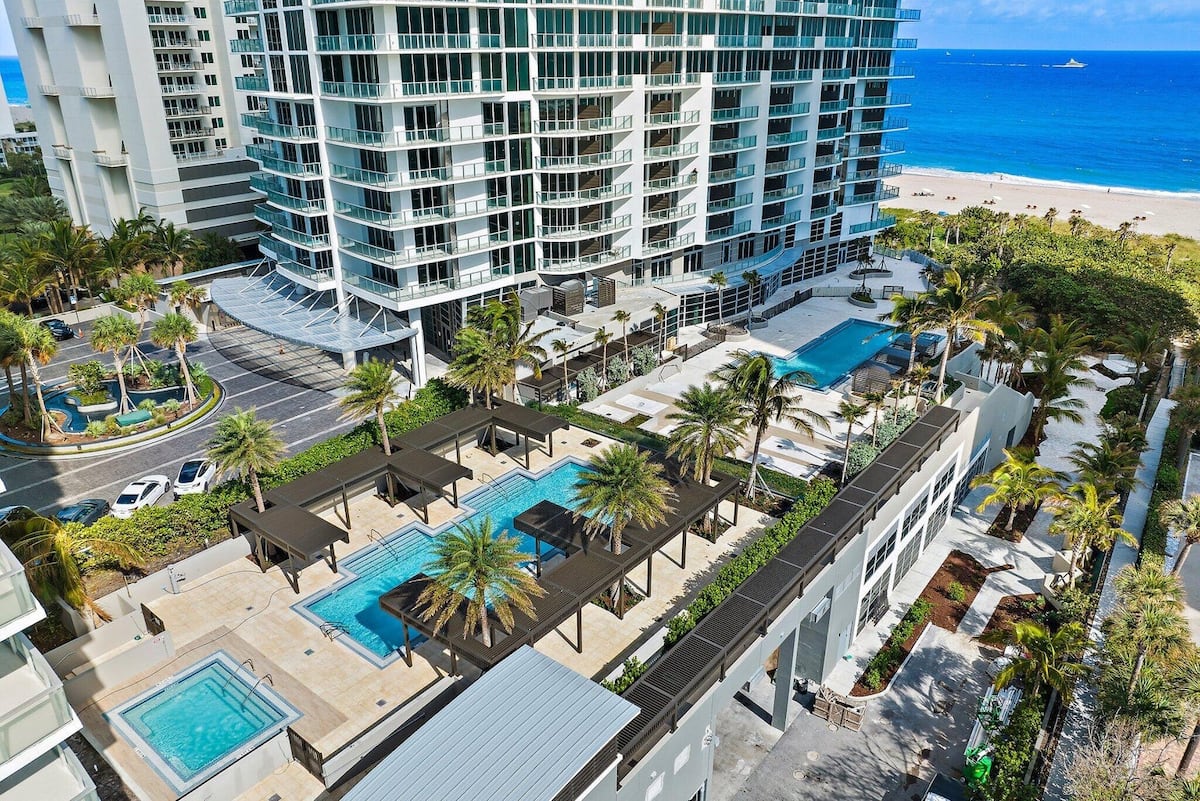
07Day trips south: Miami, Fort Lauderdale, Boca and Aventura
The best reason to learn Brightline is the string of day trips it opens up to the south. Each of the coastal stops is a genuine destination, and because the train drops you downtown in every case, you step off and you're already there. Here are the ones guests reach for most, roughly in order of distance from the residence.
Fort Lauderdale and Las Olas
About half an hour down the line, Fort Lauderdale is the easiest full-day outing. The station sits downtown, a five-minute rideshare from Las Olas Boulevard — a long, leafy street of sidewalk cafes, galleries, boutiques and restaurants that runs toward the beach. Spend the morning browsing Las Olas, have lunch on the water, and ride a water taxi through the city's canals past the yachts and waterfront homes. The beach itself, with its wavy promenade wall, is a short car ride further on. It's a relaxed, walkable city that makes for a low-effort day.
Aventura and the mall
If someone in your party wants to shop, Aventura is almost too convenient: the station sits right beside Aventura Mall, one of the largest and best shopping centers in the country, so you walk off the platform and practically into it. It's a cool, polished place to spend a hot afternoon, with hundreds of stores from everyday to high-end, a strong food hall and lunch spots, and public art scattered through it, including a walkable slide sculpture the kids tend to love. An easy, self-contained outing with almost no logistics.
Boca Raton and Mizner Park
Boca Raton, between West Palm and Fort Lauderdale, is the newest stop and a pretty one. A short ride from the station, Mizner Park is an open-air center of restaurants, shops, a green lawn that hosts events, and an art museum, all in the pink-hued Mediterranean style the city is known for. It's a gentler, more manageable day than the big cities — good for a leisurely lunch, a stroll and an early train home.
Miami, Brickell and Wynwood
Miami is the headline trip. Seventy minutes south, MiamiCentral leaves you in the thick of downtown, connected to the free Metromover that loops through Brickell — the dense, glassy financial and dining district that's walkable from the station. A short rideshare north lands you in Wynwood, the warehouse arts neighborhood of enormous murals, galleries, breweries and restaurants, anchored by the famous Wynwood Walls. South Beach and its Art Deco strip are another quick car ride across the bay. It's a lot for one day, so pick a neighborhood or two rather than trying to see all of it, and let the train carry your tired legs home.
A tip for pacing
The temptation on any of these is to cram too much in. The nicer approach is to treat the train as the frame and pick one anchor for the day — a long lunch on Las Olas, an afternoon at the mall, one Miami neighborhood on foot — then let the rest be a bonus. Because the trains run so often, you can always catch an earlier one home if you're done, or a later one if you're having too good a time to leave. That flexibility is the quiet advantage of the train over a rental car, which tends to lock you into a plan the moment you pull out of the garage.
For more on organizing these outings — which pair well, how to build a half-day versus a full one, and what's worth the trip in each direction — see our fuller guide to day trips.
08North to Orlando and the theme parks
The trip that changed the map is Orlando. Since the northern extension opened, you can board in West Palm Beach and, about two hours later, step off at the Orlando station without driving an inch of the turnpike. For a family staying on Singer Island, it turns the theme parks from a daunting road trip into a comfortable morning on a train — and it makes an overnight or two-night park run easy to fold into a beach vacation.
How the Orlando trip works
- The train takes roughly two hours from West Palm Beach, versus a three-hour-plus drive with traffic and stops.
- Brightline's Orlando station is at the Orlando airport, not at the parks themselves, so you'll take a rideshare, shuttle or hotel transfer for the final leg to Disney or Universal.
- There are fewer daily trains on the Orlando route than on the coastal hops, so book your specific departures — both directions — ahead of time.
- PREMIUM is especially worth considering here for the roomier seat, the lounge and the food over a longer ride.
Because the parks are a car ride from the station, the honest math is that Orlando is better as an overnight than a single long day. Ride up in the morning, check into a park hotel, spend a day or two at Disney World, Universal, or both, and take an afternoon train back to the coast. You skip the exhausting drive at both ends, nobody has to navigate unfamiliar highways after a day on your feet, and the kids can sleep or watch a movie on the way home while you rest.
A few realities to plan around. Park tickets, hotels and transfers are all separate from the train, so build those in. The final ride from the airport station to the parks adds time and cost, so factor it into your day. And because the northbound and southbound schedules are more limited than the coastal line, a missed train is a bigger deal here — give yourself margin, especially heading home when park exhaustion makes everyone slow.
That said, when it works, it's a wonderful way to do Orlando. There's something civilized about trading a white-knuckle drive for a smooth two hours where the grown-ups can read and the children can move around. It also means a family can do a couple of theme-park days as a break from the beach without renting a car for the whole stay — ride up, play, ride back, and be watching the ocean again by evening.
One more note for planning: if the parks are a major part of your trip, it can be worth checking Brightline's own vacation packages, which sometimes bundle the train with park tickets or hotels. We won't quote prices, but comparing a package against booking each piece yourself is a five-minute exercise that occasionally pays off.
And if the parks aren't your thing, Orlando is more than roller coasters. The same train reaches a city with a walkable downtown, museums, gardens and a growing food scene, so a couple who wants a change of pace from the beach can ride up, see a different side of Florida, and be back by the water the next day. The train quietly turns the whole interior of the state into an option rather than a chore, which is a nice thing to have in your back pocket on a longer stay.
09Riding with kids
Brightline turns out to be one of the most family-friendly ways to get around South Florida, and for a lot of guests traveling with children it's the part of the trip the kids remember best. There is a novelty to a fast, modern train that a car ride simply doesn't have, and the practical advantages for parents are real: nobody has to drive, everybody can move, and the trip becomes something to enjoy rather than endure.
Why it's easy with children
- No car seats to wrestle or install, and no one stuck driving while the kids get restless in the back.
- Room to move. Children can get up, stretch and walk to the restroom instead of being belted in for an hour.
- Tables and Wi-Fi for tablets, coloring, snacks or a card game to pass the time.
- Bring your own snacks and drinks, which heads off the hungry meltdown that always arrives at the wrong moment.
- Big windows. Watching the coast, the bridges and the crossings go by is entertainment in itself for younger ones.
A few tips make it smoother. Board a couple of minutes early so you can find seats together — a table group of four is ideal for a family. Bring a small bag of quiet activities and refillable water bottles. On the Orlando run, a downloaded show or movie covers the stretch where the scenery gets repetitive. And if you're traveling with a stroller, the step-free boarding and wide aisles make it far easier than folding one into a car trunk at every stop.
Check the current policy when you book, but young children generally ride at a reduced fare or free with a paying adult, and PREMIUM can be worth it with kids for the lounge before boarding — a calmer place to wait, with snacks, than a busy platform. Strollers, diaper bags and the usual family gear are welcome within the luggage limits. The restrooms onboard have room for a quick change, and the crew tend to be kind to families.
Safety-wise, the same rules of any public place apply: keep little ones close on the platform, hold hands crossing the gap onto the train, and stay clear of the doors as they close. But there's no highway to fear, no other drivers, and no fatigue behind the wheel — practically speaking, a train day is one of the gentler ways to move a family around.
It helps to make a small ritual of it with younger children. Let them scan the ticket at the gate, pick the seats, watch for the first bridge, count the stations as they go by. The train stops being transportation and becomes part of the adventure — which, on a trip built around a beach and a pool, is a surprisingly easy win on a day the weather turns or everyone just needs a change of scene without a long production to get there.
There's a bigger picture worth naming. Choosing the train for a day out means one parent isn't lost to driving and the other to refereeing the back seat. You arrive somewhere together, in a good mood, ready for the day, instead of frazzled from an hour on I-95. On the way home, tired children settle into a seat and a screen, and more than a few fall asleep before the train reaches West Palm — which may be the strongest endorsement a parent can give.
10Train or drive?
So should you take the train or just drive? Honestly, it depends on the day, and part of being a good host is telling you when the car is the better call. Brightline is superb for some trips and beside the point for others, and knowing the difference will make your whole stay run more smoothly.
When the train wins
- Miami and Fort Lauderdale. The traffic and parking in both make the train the clear choice for a downtown day; you arrive relaxed and skip the garage entirely.
- Aventura and Boca. The stations sit right where you're going, so there's almost no reason to drive.
- Orlando. Two calm hours beats a three-hour-plus haul up the turnpike, especially with kids or after a long day at the parks.
- Any day with a drink in it. Nobody has to be the designated driver, and dinner in another city stops being a logistics problem.
- When you value the time. Reading, working or napping instead of driving turns travel time into your own time.
When driving makes more sense
- Trips the train doesn't serve. Jupiter, Juno Beach, the Loggerhead Marinelife Center, the Everglades and Loxahatchee are north or west of the line — a car is the way.
- Beach-hopping and errands. Loading coolers, chairs and groceries, or bouncing between several stops, is simpler by car.
- Very early or very late plans. Outside the train's hours, or when your timing is unpredictable, a car is more forgiving.
- The last mile at the far end. Every train trip still needs a ride to the station here and a ride from the station there; for some outings that adds up to more hassle than it saves.
There's also the matter of the residence's own doorstep. With valet parking here, keeping a rental for the week isn't a hardship, and plenty of what you'll want — the beach, the marina, a few good dinners — sits close by. That shifts the calculation a little: the car isn't only for far-flung trips, so the real question each morning becomes narrower, just whether today's specific outing is one the train does better than the road.
The truth most guests land on is that you don't have to choose once and for all. Many pair the two — a rental car for the beach days, the golf, and the northern nature trips, and the train for the big-city outings where driving is a headache. Others skip the car entirely and lean on rideshare plus Brightline, which works well here; if that's your plan, our guide to getting around car-free lays out the whole approach.
Weigh it trip by trip and it's rarely a hard call. Going downtown somewhere with traffic and paid parking? Take the train. Chasing sea turtles up in Juno or loading the car for a beach picnic? Drive. Do both across a week and you get the best of the island: the freedom of a car when you want it, and the ease of stepping onto a fast, quiet train when you'd rather someone else did the work. Either way, you spend less of your vacation staring at brake lights and more of it looking at the water.
Common questions
How do I get from Singer Island to the Brightline station?
The West Palm Beach station is about <strong>fifteen to twenty minutes</strong> by car from the residence. A rideshare is the simplest option — you're dropped at the door and don't pay to park all day. You can also drive and use the station's paid parking, or arrange a private car. Leave the island twenty-five to thirty minutes ahead on days when timing matters.
What's the difference between SMART and PREMIUM?
Both ride in the same cars and arrive at the same time, with free Wi-Fi and power at every seat. <strong>SMART</strong> is the comfortable standard fare. <strong>PREMIUM</strong> adds a larger seat, a quieter car, station lounge access with complimentary snacks and drinks, food served at your seat, priority boarding and a bag allowance. SMART is plenty for short hops; PREMIUM shines on the longer Orlando run.
Can I take Brightline to the Orlando theme parks?
Yes. The train reaches Orlando in <strong>about two hours</strong> from West Palm Beach. Note that the Orlando station is at the airport, not at the parks, so you'll take a rideshare or shuttle for the last leg to Disney or Universal. With fewer daily trains on that route, it works best as an overnight rather than a single long day — and book both directions ahead.
Should I ride the train or just drive?
It depends on the trip. The train wins for <strong>Miami, Fort Lauderdale and Orlando,</strong> where traffic and parking are a headache, and for any day involving a drink. <strong>Driving</strong> is better for places the line doesn't reach — Jupiter, the Everglades — and for beach-hopping with gear. Many guests do both: a car for some days, the train for the big-city outings.
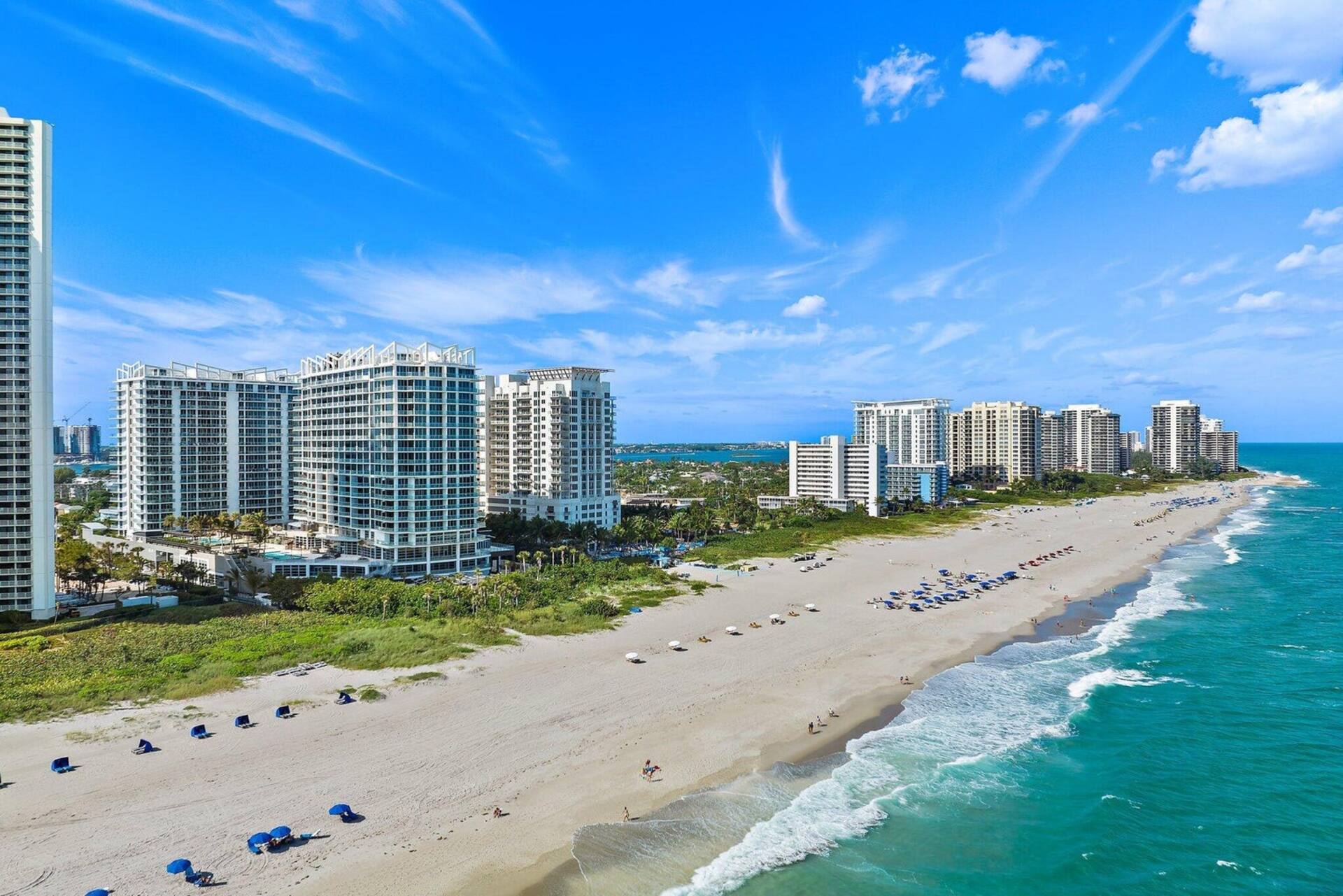
Your quiet address above the Atlantic
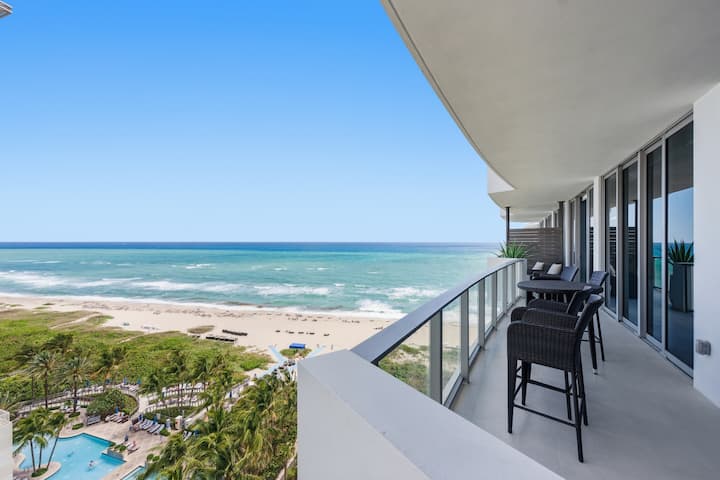
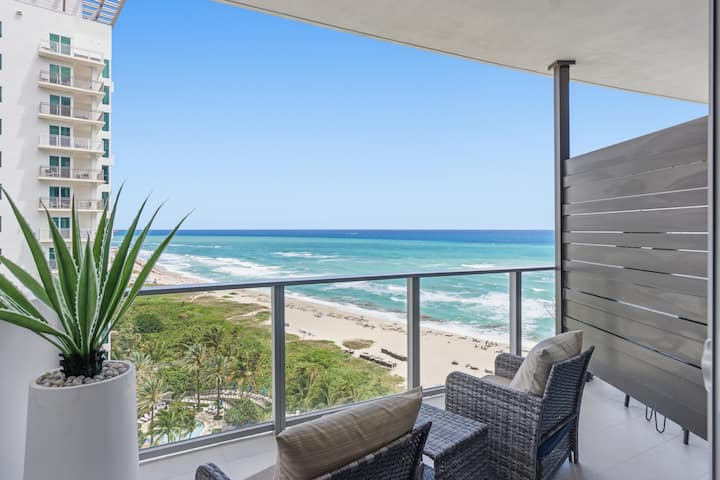
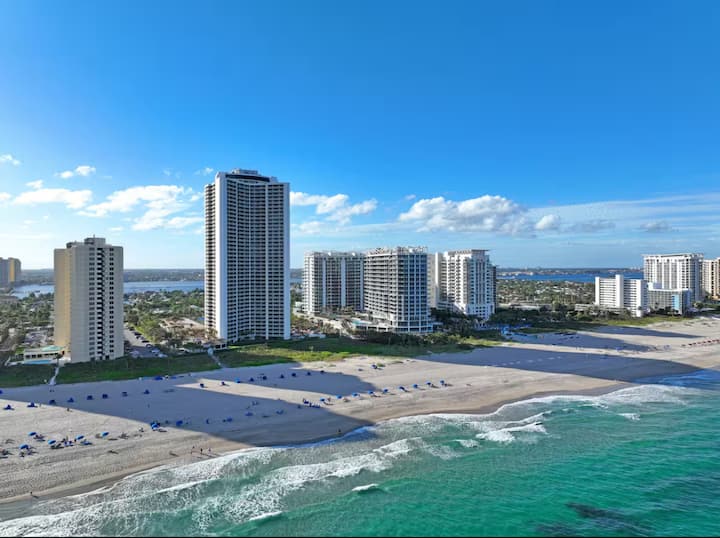
OASENA is a private two-bedroom home on the twelfth floor of the Happiness Tower — floor-to-ceiling ocean views, a sweeping balcony, and this entire wellness world an elevator ride below.
OASENA is a privately owned residence within Amrit Ocean Resort & Residences and is not operated by, affiliated with, or endorsed by the resort. See credits & notes.