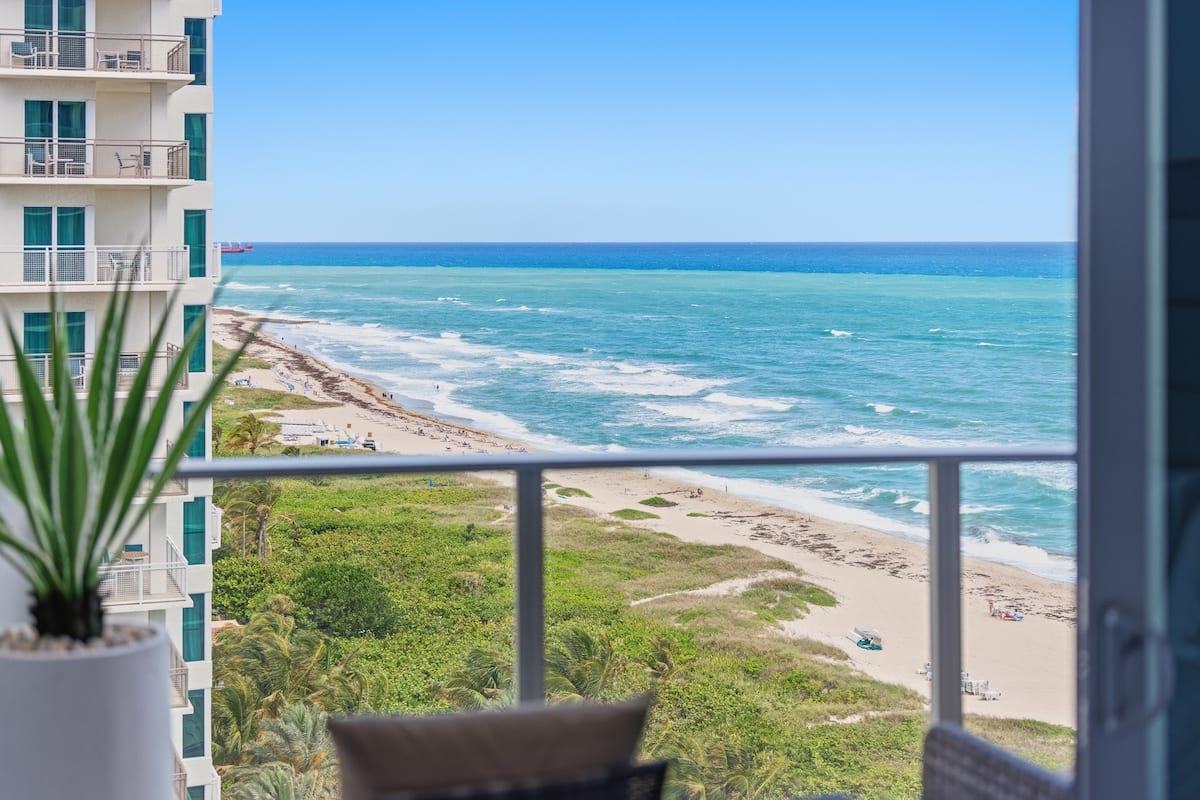
John D. MacArthur Beach State Park and Wild Singer Island
A few minutes north of the residence, the built world stops and old Florida begins. Here is how to walk the boardwalk, paddle the estuary to Munyon Island, snorkel a reef older than almost anything on the coast, and share the beach with nesting sea turtles at John D. MacArthur Beach State Park.
01The wild counterpoint to the resort beach
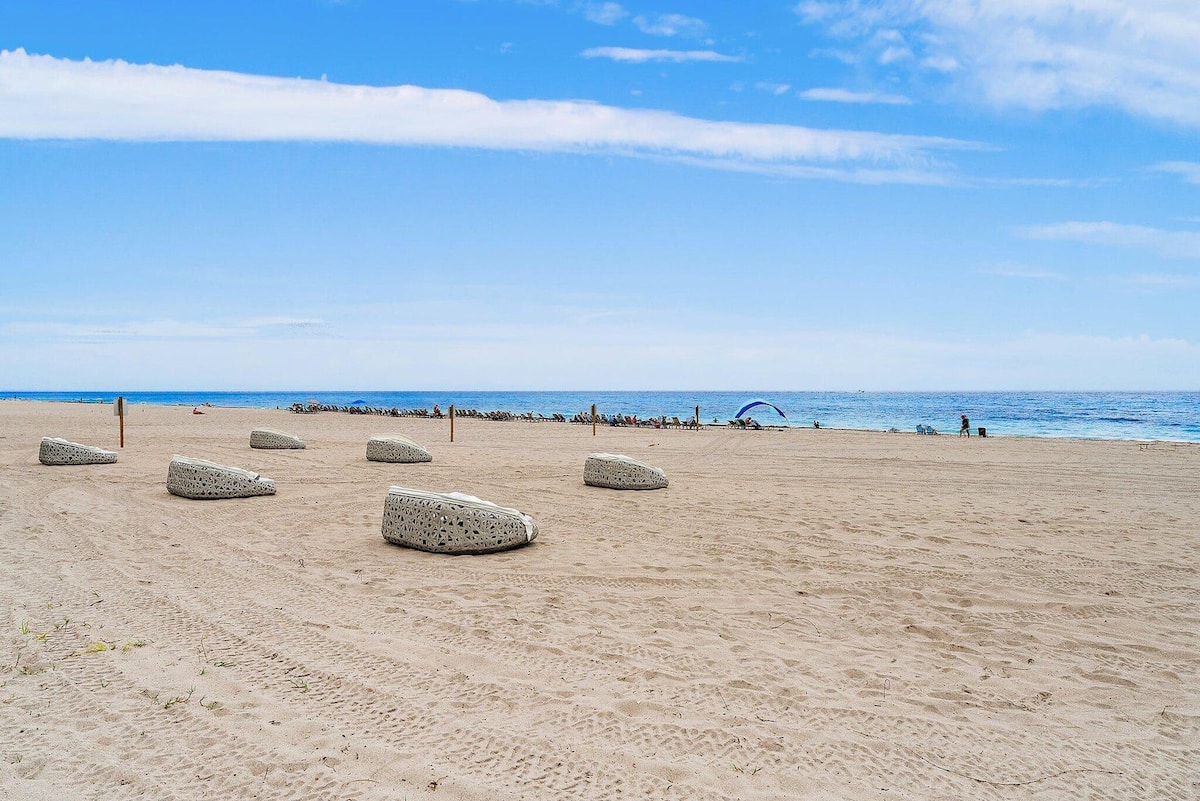
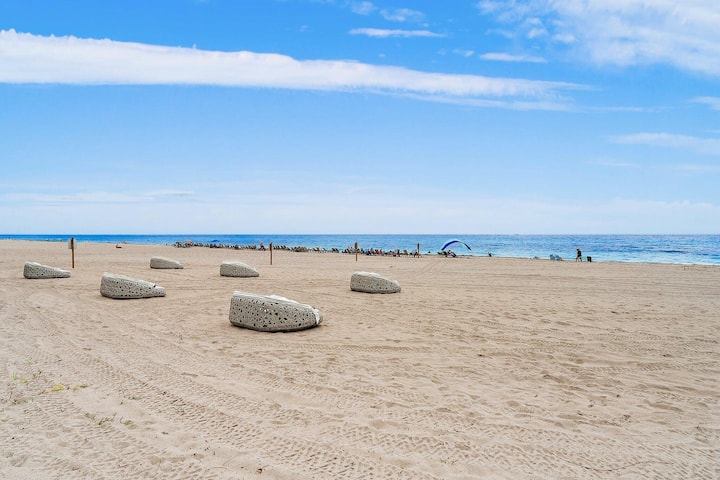
A few minutes north of the residence, past the last of Singer Island’s towers, the road crosses a low bridge and the built coast simply stops. On the far side sits John D. MacArthur Beach State Park — the only state park in Palm Beach County, and the closest thing near Singer Island to the shoreline as it looked long before any of us arrived. Where the beach below OASENA is groomed, raked and served with chairs, this one is left largely to itself: close to two miles of barrier-island sand, backed by dune, coastal hammock and a wide mangrove estuary, all of it protected.
That contrast is the reason to make the short trip. The resort beach is for a served, unhurried morning; MacArthur is for the version of Florida that came before the towers. You park, you cross a long boardwalk over a shallow lagoon, and you come out onto a stretch of open coast where the loudest thing is usually the surf. In a single visit you can meet a live loggerhead in the nature center, paddle a kayak to a quiet island, snorkel over a reef that is well over a hundred thousand years old, and, in the right season, stand on a dark beach at night while a sea turtle hauls herself up to nest.
The park carries the name of John D. MacArthur, the businessman and philanthropist who once owned much of this coast and whose foundation still funds work around the world. Rather than see this stretch built up like the rest, the land was set aside as a preserve, several hundred protected acres held back from the towers that filled in everywhere else. Standing on the beach here, with nothing behind you but dune and sea grape, you are looking at a deliberate act of restraint — a decision, decades ago, to leave one piece of the island wild.
It helps to know what the park holds before you go, so you can pick the version of the day that suits you.
What you will find inside the gate
- The William T. Kirby Nature Center — exhibits on the local habitats and live loggerhead sea turtles, the natural first stop.
- The boardwalk and estuary — a long crossing over the lagoon that connects the mainland side to the beach, and a habitat worth slowing down for on its own.
- Kayaking — single and double rentals to explore the estuary and paddle out to Munyon Island.
- An ancient reef — Anastasia limestone in the shallows, close enough to snorkel from the sand.
- Sea-turtle nesting — a protected beach that comes alive from spring into fall, with guided night walks in the early summer.
- Birds and wildlife — wading birds in the estuary, manatees in the warm-season lagoon, and the ordinary magic of a wild shoreline.
Think of this page as the field guide the residence would hand you on the way out the door. It is the wild, unmanicured counterpart to our own sand, and for a lot of guests it turns out to be the morning they remember longest. If you are building a beach week, read it alongside our guide to the beaches and the one on snorkeling & diving, since MacArthur touches both.
02The Kirby Nature Center and its sea turtles
Start indoors, even on a perfect beach day. The William T. Kirby Nature Center sits on the mainland side of the park, and it is the piece that turns a nice stretch of sand into something you understand. It is small and well made, the kind of place that respects your time: a set of clear exhibits on the four habitats the park protects — the beach and dune, the coastal hammock, the mangrove estuary and the nearshore reef — laid out so that by the time you walk back outside, you can read the landscape instead of just looking at it.
The residents most people come for are the live loggerhead sea turtles. Seeing one up close, before you ever set foot on the beach, changes how you behave out there. You notice the shape of the tracks in the morning sand. You understand why the dunes are roped off and why the lights along this coast are shielded and low. A creature that was an abstraction becomes an animal you have watched breathe, and that is the quiet work the nature center does.
Around the turtles you will usually find aquariums and displays of the smaller local life — the fish, crabs and creatures of the estuary and the reef — the same cast you will meet again in the water later that morning. It is a gentle, unhurried room, air-conditioned and shaded, and it makes a good place to gather everyone before the heat, or to retreat to when the beach has done its work and someone needs a break from the sun.
Make the most of the indoor stop
- Go first, not last. The exhibits frame everything you do afterward — the boardwalk, the reef, the nesting beach all make more sense with the context.
- Ask what is running that day. Parks like this lean on volunteers and a friends group, and there are often short talks, guided walks or seasonal programs that are not obvious from the parking lot.
- Bring the kids in slowly. The turtles hold a young child’s attention in a way a beach sometimes cannot, and it sets a respectful tone for the rest of the visit.
- Check the counter. During nesting season, staff and volunteers can tell you what has been happening on the beach and how to sign up for a guided night walk.
- Use it to plan. Ask about tides, kayak availability and whether the swimming area is guarded that day before you commit to your morning.
A few minutes here is the difference between wandering a beach and reading one. The staff are the people who know the park hour by hour — what the water is doing, what has washed up, what has been nesting — and a short conversation at the desk can shape the rest of your visit. It is also the one indoor stop of the day, so it doubles as shade and a cool-down when the afternoon sun gets heavy, and as a soft place to end the visit if the children have had enough of the sand. Families with restless little ones often circle back here at the finish, letting the turtles hold everyone’s attention for a last quiet stretch before the drive home. When you step back into the heat and start across the boardwalk, you carry the whole estuary in your head, which is exactly the point.
03Crossing the boardwalk over the estuary
To reach the beach, you walk. A long wooden boardwalk lifts you over the shallow estuary that separates the mainland side of the park from the barrier-island shore, and that crossing is not a chore to get past — it is one of the best parts of the visit. Below you is a broad, calm lagoon, part of the larger Lake Worth estuary system, its bottom laced with seagrass and fringed by mangroves. Take it slowly. This is where the park shows you its middle world, the brackish seam between fresh runoff and the open Atlantic.
Look down and you will usually see life without trying. Small fish flicker over the grass. Wading birds stalk the shallows on the far bank. In the warmer months, if you are patient and the water is still, you may catch the slow gray back of a manatee rolling up for a breath, or the swirl of a school of mullet moving through. The mangroves along the edges are the nursery that feeds all of it — their tangled roots shelter the young fish, crabs and shrimp that in turn feed the birds and the bigger fish out beyond the surf.
The boardwalk is long enough to feel like a real transition, and that length is a gift. You start over dry ground and sea-grape scrub, move out across open water and seagrass flats, and come down on the far side into the salt smell of the dune and the sound of surf. In a few unhurried minutes you have crossed three habitats. Few beaches make you earn the sand this way, and fewer still make the earning this pleasant. Interpretive signs along the rail name what you are looking at, so the walk teaches as it goes, and the crossing is level and railed the whole way, which makes it easy for almost anyone in your party to manage at their own pace.
How to walk it well
- Pause on the crossing. Most people march straight for the sand. Stop halfway, lean on the rail, and give the estuary five quiet minutes — it rewards stillness.
- Bring the beach on your back. The walk is not long, but there are no shops on the far side, so carry your water, snorkel gear and shade with you.
- Mind the sun and the boards. The crossing is open and can be hot at midday; the wood gets warm, so keep shoes on and hats handy.
- Watch the light early and late. Morning and the last hour before the park closes are when the estuary is calmest and the birds are most active.
- Look for the small things. Rays on the flats, a heron working the mangrove edge, mullet dimpling the surface — the estuary rarely puts on nothing.
On the ocean side the boardwalk delivers you to a dune crossover, and then to the beach itself: open, natural, and free of the neat rows you find at the resort. That short journey — from parking lot to nature center to estuary to open coast — is a compressed tour of everything a barrier island is. Even guests who come only to swim tend to remember the walk. It is the moment the day tips from ordinary beach outing into something closer to a small expedition.
04Kayaking the estuary
The best way to know the estuary is to get down onto it. The park offers kayak rentals — single and double boats — generally through the middle of the day, roughly from nine in the morning until around three in the afternoon, so that everyone is off the water well before closing. You launch into the sheltered lagoon rather than the open ocean, which makes this one of the friendliest paddles in the area for beginners, families and anyone who has not held a paddle in years.
From the water, the mangroves stop being scenery and become a place you move through. You can nose the bow into the quiet channels, drift over seagrass beds where you can watch the bottom slide past, and follow the shoreline out toward Munyon Island, the low green island sitting in the lagoon to the north. The whole world drops to the level of the water: a heron lifting off a root, a ray’s shadow crossing a sandy flat, the small tapping sounds of an estuary going about its morning. It is calm, unhurried paddling, and the distances are forgiving.
If you are deciding between boats, a single kayak gives you the freedom to explore at your own speed, while a double is the easy choice for a couple or a parent with a child — one person can steer while the other takes photographs or simply watches the water. Neither asks much of you. The lagoon is shallow and protected, there is no surf to launch through, and you can always turn back to the launch when you have had enough. It is about as low-stress as paddling gets. If you have never kayaked before, this is a forgiving place to start: the launch is calm, the boats are stable, and the staff will point you toward the easiest loop for the conditions that day. Older children can usually manage the front of a double with a little coaching, which makes it a genuine family outing rather than a spectator sport.
Before you push off
- Go earlier rather than later. Rentals run a set window in the middle of the day, and both wind and afternoon heat tend to build as it goes on. Morning water is usually glassy.
- Mind the tide and the breeze. Paddling out with the wind at your back is lovely until you have to come home against it. Ask staff which way the tide is running before you commit to a long loop.
- Dress to get wet. Quick-dry clothes, a hat, reef-safe sunscreen and water shoes. Leave anything that cannot survive a splash in the car.
- Bring water and a dry bag. Phones and keys ride better sealed and clipped in; there is nowhere to buy a drink once you are on the water.
- Keep your distance from wildlife. If a manatee surfaces near you, stop paddling and let it pass. Never chase or corner one.
If you would rather not rent on site, this is also a paddle you can build a longer outing around; see our day trips guide for how a morning at MacArthur fits alongside the rest of the coast. Either way, an hour or two on the estuary is the version of this park that stays with people — slow, green, and entirely on the water’s terms.
The beach below the residence is groomed and served; this one is left to itself, and that is exactly why you go.
On MacArthur Beach State Park
05Paddling out to Munyon Island
The natural destination for a paddle is Munyon Island, the low, green island that sits in the lagoon at the north end of the park. It is a short, sheltered trip from the kayak launch, and it gives your outing a shape — a place to point the bow, a beach to stretch your legs on, and a quiet loop to work around before you head back. For a lot of guests it becomes the small adventure that anchors the whole morning.
The island has a longer human story than its stillness suggests. More than a century ago it held a health resort, built by a man who made his name selling remedies and who saw the same thing our own residence sits above today: this stretch of coast as a place people would travel to in order to feel better. The buildings are long gone, and the island has been given back to the birds and the mangroves, restored as habitat rather than developed. Paddling its shoreline now, it is hard to picture a hotel here at all, which is a kind of quiet victory.
What replaced the resort is worth the trip on its own. The island’s edges have been replanted with native mangroves and coastal plants, and the shallow flats around it draw wading birds to feed and, in places, to nest and roost. Come around a corner of the shoreline and you may put up a small cloud of herons and egrets, or find a lone bird working the mud with the patience of something that has all day. It is a living demonstration of what this whole coast can look like when it is left alone. On a still morning the water around the island turns to glass, the birds carry across it, and the only marks on the whole scene are your own paddle strokes fading behind you.
What to know before you go
- It is a paddle, not a walk. You reach Munyon Island by kayak or canoe across the lagoon — there is no bridge and no boardwalk out to it. Rent on site and keep an eye on the return window.
- Tread lightly. The island is restored habitat and a nesting and roosting site for birds. Stay to open shoreline, keep noise down, and give any nesting areas a wide berth.
- Bring everything with you. There are no services on the island — carry your own water, sun protection and a way to pack out anything you bring.
- Watch the weather and the wind. An open lagoon can chop up quickly. If storms are building, especially in summer, save the crossing for a calmer day.
Part of the pleasure of Munyon Island is how little there is to do there, in the best sense. You beach the kayak, you sit for a while, you watch the birds work the shallows, and you paddle home. It is the kind of unstructured hour that a resort day rarely leaves room for, and it costs you nothing but the effort of the crossing. If you only rent kayaks once during your stay, aim them at Munyon Island and give yourself the whole morning to do it slowly.
06Snorkeling the ancient reef
On the ocean side, MacArthur hides something rare: a natural rock reef in the shallows, close enough to reach from the sand. This is Anastasia limestone, a coquina rock formed from countless compacted shells, and the outcrops here are old almost past imagining — on the order of a hundred and twenty-five thousand years. You are snorkeling over a seabed that predates every human structure on the coast by a very wide margin. When the water is clear and calm, you can see the reef from the surface, dark ledges and pockets scattered across the sandy bottom in water shallow enough to float over comfortably.
The rock is what makes the life possible. Bare sand grows little, but structure gives fish somewhere to hide, hunt and breed, so the reef gathers a small crowd around it. Drift quietly over the ledges and you may find reef squid hanging in formation and shifting color as they watch you, small tropical fish grazing the rock, and the long, wary shapes of snook holding in the current. Every outcrop is its own little neighborhood, and the fun of it is moving slowly from one to the next to see who is home.
It is worth pausing on what that rock is. Coquina forms as generations of shell and coral fragments cement together over enormous spans of time, and these ledges have been sitting off this beach since long before the last ice age reshaped the coast. Very little of Florida’s shoreline lets an ordinary swimmer float, unassisted, over something that old. That sense of deep time, right there under a snorkel mask in a few feet of water, is a large part of what makes the reef here special.
How to snorkel it safely
- Go on a calm, clear day. Visibility here depends entirely on the surf. Flat mornings after a run of settled weather are best; churned-up water turns the reef to a blur.
- Mind the rock. The limestone is sharp and often just below the surface. Fins, a snorkel vest for flotation and an awareness of the swell will keep you off it. Never stand on the reef.
- Respect the flags and the guarded area. Check conditions with the lifeguards, swim near the guarded zone when it is staffed, and never snorkel alone.
- Look, do not take. The reef and its creatures are protected. Leave the squid, the fish and the rock exactly as you found them.
- Wear reef-safe sunscreen. What goes on your skin ends up in the water; choose a mineral formula and let it soak in before you swim.
This is shore snorkeling for the patient, at the mercy of the surf, and on the wrong day it is not worth the effort. But time it to a calm morning and it is a quiet marvel — a living reef you reach on foot, over a rock older than the whole idea of Florida. For the region’s truly world-class underwater sites, including the famous shore dive under the Blue Heron Bridge, see our full snorkeling & diving guide; MacArthur is the wild, walk-in cousin of those.
07Sea-turtle nesting season and the dark beach
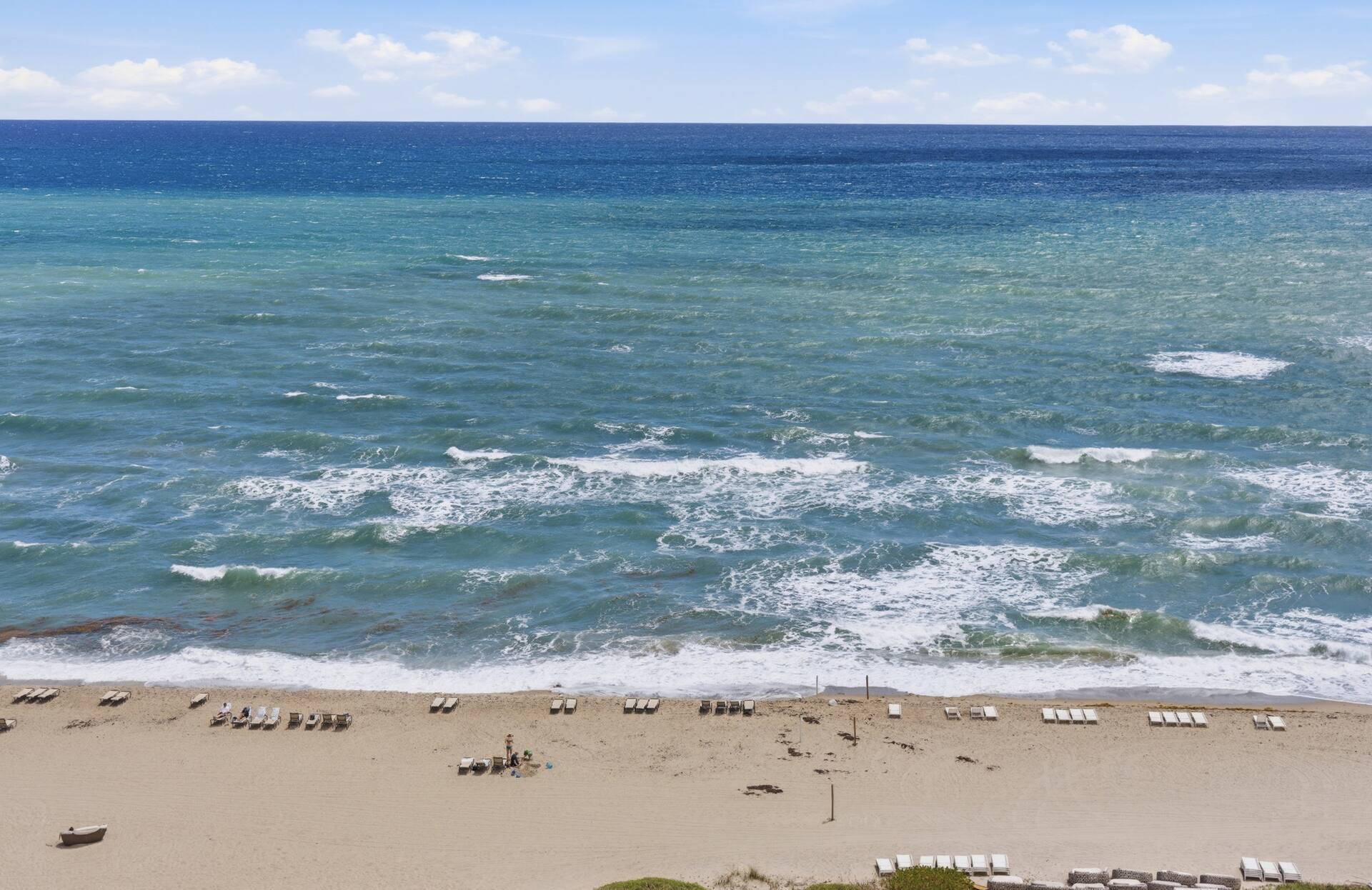
From spring into fall, this beach belongs to the sea turtles. Nesting season on this coast runs roughly from March through October, when loggerheads, greens and the occasional giant leatherback come ashore under cover of darkness to dig nests and lay their eggs above the tide line. MacArthur is one of the better protected stretches to witness it, precisely because it is a natural, undeveloped beach without a wall of bright hotel lights behind it.
Three kinds of turtle use this coast. Loggerheads are the most common, named for their broad heads and powerful jaws; green turtles come ashore in smaller numbers; and now and then a leatherback, the largest of them all, hauls up a body that can weigh as much as a small car. Each female returns from the open ocean to nest on the same kind of quiet, dark beach where she herself hatched, digs a chamber in the sand with her back flippers, lays a clutch of eggs, covers them and disappears back into the surf before dawn. Weeks later the hatchlings boil up out of the sand at night and race for the brightest horizon, which on a natural beach is the pale line of the sea.
The most memorable way to experience the season is a guided turtle walk, offered in the early summer, generally from around May into July, when nesting activity peaks. These are led by trained guides, they run at night, and they fill up — you reserve a spot ahead of time and go with a small group, waiting quietly until a scout finds a nesting female who has settled in to lay. Only then does the group approach, from behind, with no white light, to watch a two-hundred-pound animal do something her species has done for tens of millions of years. It is not a show and it is not reliable, which is part of what makes it feel earned.
Dark-beach etiquette
- Keep the beach dark at night. No flashlights, no phone screens and no flash photography near the water. Artificial light disorients nesting females and hatchlings.
- Never touch or crowd a turtle. Stay well back, stay quiet, and let a guide set the distance. A frightened female will turn around and return to the sea without nesting.
- Leave the beach as you found it. Fill in any holes you dig and take beach chairs, umbrellas and gear with you — obstacles trap hatchlings and block nesting adults.
- Do not disturb marked nests. Roped-off or staked areas are active nests; give them a wide margin.
- If you find hatchlings, do not help them along. The crawl to the sea is how they orient. Report anything that seems in trouble to park staff rather than intervening.
Even outside of a guided walk, a stay during nesting season asks a little of you: shield your lights, respect the roped-off dunes, and understand why this coast keeps itself dark. Book a turtle walk early if your trip lands in the early summer, since spots are limited and go fast. Watching a sea turtle nest under the stars is the kind of thing a served resort day cannot manufacture, and it is a short drive from the residence.
08Birding and wildlife
Turtles get the headlines, but MacArthur is a wildlife park in every season and at every hour. The mix of habitats packed into a small footprint — beach, dune, hammock and estuary — means you cross several different worlds in a short walk, and each keeps its own residents. Bring binoculars if you have them; even without, a slow, quiet pace will show you more than most people ever notice from a beach towel.
The estuary is the richest theater. The shallow lagoon and its mangroves draw wading birds to fish the flats — herons standing motionless, egrets stalking the grass, ibis probing the mud, the occasional roseate spoonbill sweeping its strange bill side to side. In the warmer months, keep an eye on the calm water for manatees, which drift into the sheltered lagoon to feed and rest; their slow gray backs and the ring of a surfacing breath are easy to miss if you are not watching for them.
The park also shifts with the calendar. Fall and spring bring migrating songbirds moving down the coast, and the hammock trails can be busy with small birds working the sea grape and gumbo limbo. Winter is prime time for the wading birds and for calm, clear estuary mornings. Summer is the season of the manatees, the nesting turtles and the afternoon storms. There is no dead month here; there is only a different cast depending on when you come. A pair of binoculars and a little patience turn any of those months into good birding, and the mix of open water, shaded trail and open beach means you are rarely watching the same kind of creature for long. Photographers do well here in the soft light of early morning, when the wading birds are working the flats and the water is still enough to mirror them.
What to look for, and where
- In the estuary: herons, egrets, ibis and spoonbills working the shallows; mullet schooling; rays gliding over sandy flats; manatees in warm weather.
- In the hammock: songbirds and butterflies among the sea grape, gumbo limbo and cabbage palm; land crabs and lizards on the shaded trails.
- On the beach and dune: shorebirds working the wrack line, ghost crabs at dusk, and the tracks of last night’s nesting turtles in the morning sand.
- Overhead and offshore: ospreys and pelicans; in migration season, songbirds moving through the coastal scrub; the chance of a dolphin beyond the surf.
The best wildlife hours are the same as everywhere: the first cool hour after the park opens and the last hour before it closes, when the light is low and the animals are active. Move slowly, keep your voice down, and let the place come to you. Sit still on a bench by the estuary for ten minutes and the birds forget you are there; that is when the good watching starts. If you saw a live loggerhead in the nature center at the start of the visit, the estuary and the dune trail are where the wider cast of characters fills in around it. It is an easy park to underestimate as just a pretty beach; give it a little patience and it reveals itself as one of the liveliest natural corners near Singer Island.
09Planning your visit: hours, parking and what to bring
MacArthur is an easy, low-fuss outing, but a little planning makes the difference between a rushed stop and a full, unhurried morning. It is a short drive north from the residence, close enough that you can be on the boardwalk not long after breakfast and back for lunch if you like — or you can make a whole day of it. Rideshare will bring you here without trouble, though having a car makes it simplest to come and go on your own clock, and to carry beach gear and a cooler. The drive up is short and simple, mostly along the island’s main road, and the park entrance is well signed once you are past the northern edge of the towers. Give yourself a few extra minutes on a winter weekend or a holiday, when both the road and the lot are busier than usual.
The essentials
- Hours. Like Florida’s state parks generally, it keeps daytime hours — open every day from early morning until sundown. Aim to arrive earlier rather than later for calm water, cooler sand and easy parking.
- Entry and parking. There is a day-use entrance fee, paid per vehicle at the gate, and a parking lot by the nature center. On beautiful weekends and holidays the lot can fill; morning is your friend.
- Facilities. Restrooms, the nature center, picnic areas and a dune crossover to the beach. There is no resort service out here, so plan to be self-sufficient once you cross the boardwalk.
- Swimming. When it is staffed, swim near the guarded area and follow the beach flags. This is a natural, open-ocean beach — respect rip-current warnings and never swim alone.
- Kayaks. Single and double rentals run a set window in the middle of the day, roughly nine to three. Check availability at the nature center when you arrive.
What to pack
- Water, and more than you think. The boardwalk and beach are open and hot; there is nowhere to buy a drink on the ocean side.
- Sun protection. A hat, a rash guard or cover-up, and reef-safe mineral sunscreen — important both for you and for the reef you may snorkel over.
- Water shoes. The reef rock is sharp and the boardwalk gets warm; closed water shoes handle both.
- Snorkel gear. If you own a mask, snorkel and fins, bring them — the reef is a shore snorkel and rewards having your own kit.
- A picnic. There are shaded tables, and a packed lunch turns a beach stop into an easy half-day. Pack out whatever you bring in.
- A dry bag and a trash bag. One to keep phones and keys safe, one to carry out everything you carry in.
If you would rather fold MacArthur into a wider plan — a morning here, a picnic, an afternoon somewhere else — our day trips guide lays out how the coast connects. And if you are choosing between beaches for a given morning, the beaches guide sets MacArthur next to the resort sand and the other public options so you can match the beach to the mood. Either way, the trick is the same: come early, bring your own everything, and leave yourself time to do the park slowly rather than ticking it off a list.
10Leaving it as wild as you found it
The reason MacArthur still feels like old Florida is that it is protected, and protection only works if every visitor does their small part. This is the one beach near the residence where the rules are not there to manage a crowd but to keep a living system intact — the turtles, the reef, the estuary and the birds all depend on people treating the place gently. None of it is difficult. It mostly comes down to leaving no sign that you were here.
It is worth understanding why the small rules matter so much on this particular beach. A single plastic bag in the water can be mistaken for a jellyfish and swallowed by a turtle. A hole left in the sand can trap a hatchling on its overnight crawl. A beach chair forgotten at dusk becomes an obstacle a nesting female cannot get around. A bright light in the wrong place sends a whole clutch of hatchlings inland toward the parking lot instead of out to sea. On a groomed resort beach a crew fixes these things by morning; here, there is no crew, only you. That shift in responsibility is easy to miss when you have spent the week on a served beach, so it is worth naming out loud: the condition of this beach tomorrow morning is the sum of how everyone treated it today.
The simple contract
- Pack it in, pack it out. Carry out all your trash, including food scraps and anything that blew away. A stray bag or bottle cap is a real hazard to turtles and birds.
- Fill in your holes and knock down your castles. Before you leave the beach, fill any holes you dug and flatten sandcastles. After dark they become traps for nesting turtles and their hatchlings.
- Take your gear with you. Chairs, umbrellas and toys left on the sand overnight block nesting adults and disorient hatchlings. Nothing stays on the beach after hours.
- Keep the beach dark at night. Shield lights, skip the flash, and understand that the darkness here is deliberate and protective.
- Stay off the dunes and out of roped areas. Dune plants hold the whole beach together, and marked areas are usually active nests. Use the crossovers.
- Give wildlife room. Do not feed, chase or corner anything — not the birds, not the manatees, not the fish on the reef. Watch, and move on.
There is a mindset that comes with a park like this, and it is worth carrying back to our own beach too. Reef-safe sunscreen, a bag for your trash, a wide berth for a nesting bird — these are small habits that keep the coast worth visiting. They cost nothing and ask almost no effort, and they are the whole reason a place like this can still exist a short drive from a row of high-rise towers. The staff and volunteers who run MacArthur, along with its friends group, do the heavy lifting of keeping it wild; the least a visitor can do is leave it exactly as they found it. Do that, and the park will be here, unspoiled, for whoever comes to Singer Island long after you.
11Folding MacArthur into a Singer Island day
The nicest thing about MacArthur is how easily it slots into a stay without taking it over. It is close, it is calm, and you can dial the visit up or down — a quick nature-center-and-boardwalk loop, or a full morning of kayaking, snorkeling and beach time. Here is how we usually suggest guests build it.
A half-day, the easy version
Come down from the residence after breakfast and drive the short way north. Start in the Kirby Nature Center to meet the loggerheads and read the habitats, then cross the boardwalk, giving the estuary a few slow minutes on the way. Spend an hour on the open beach, snorkel the reef if the water is calm, and be back at the residence in time for lunch and an afternoon by the pool. This is the version for a day when you want a taste of wild Florida without giving up the comforts waiting at home. It is the gentlest possible introduction to the wild side of the island.
A full morning, the paddler’s version
Arrive when the gate opens, rent a double kayak, and paddle the estuary out to Munyon Island while the water is still glass. Beach the boat, sit a while, and come back before the wind builds. Snorkel the reef on the way out, picnic in the shade, and let the whole morning belong to the park. Save the afternoon for something gentle back at the residence — you will have earned it.
The seasonal version
If your trip lands between late spring and midsummer, build the visit around the turtles. Book a guided night walk well ahead, keep your beach evenings dark, and treat the whole stay as a chance to see nesting season up close. Pair it with daytime visits for kayaking and the reef, and you have covered the park in every mood it has.
With children, and on an off day
Families do well here: the nature center and its turtles, the double kayaks on flat water, the shallow beach and the hunt for ghost crabs and shells all suit young explorers, as long as an adult keeps an eye on the surf. And on a breezy or unsettled day when the reef is stirred up and the paddle looks rough, the boardwalk, the hammock trail and the nature center still make a fine, sheltered hour or two.
However you shape it, MacArthur is the natural counterweight to a served resort stay — the morning you spend on the coast’s own terms rather than your own. When you are back and thinking about the rest of the water, our guides to the beaches, snorkeling & diving and day trips pick up where this one leaves off. The residence gives you the soft landing; the state park a few minutes north gives you the wild edge of the same island. Most guests want both, and the short drive between them is one of the small luxuries of staying here. Do the park early in your stay, too, rather than saving it for the last day: once people see it, they usually want to go back, and it is the kind of place that rewards a second, slower visit once you know your way around.
Common questions
How far is MacArthur Beach State Park from the residence?
It is a short drive north from Singer Island — only a few minutes by car. It is close enough that you can spend a morning there and be back at the residence for lunch, or make a full day of kayaking, snorkeling and the beach. It is the county’s <strong>only state park</strong>, so it is worth the quick trip.
Can you snorkel right from the beach, and is it worth it?
Yes. There is a natural <strong>Anastasia limestone reef</strong> in the shallows, close enough to reach from the sand, where you can see reef squid, tropical fish and snook. It depends entirely on the surf, though — go on a calm, clear morning, wear water shoes and a flotation vest, mind the sharp rock, and never snorkel alone. On a rough day, save it for another visit.
When can I see sea turtles, and how do I do it responsibly?
Nesting season runs roughly <strong>March through October</strong>, and the park offers <strong>guided night walks</strong> in early summer, generally May into July. Reserve a spot ahead, as they fill quickly. Any time you are on the beach at night in season, keep it dark — no flashlights, screens or flash near the water — fill in any holes, take your gear with you, and never approach or touch a turtle.
What should I bring, and are there rentals on site?
Bring water, sun protection, reef-safe sunscreen, water shoes and your own snorkel gear if you have it — there is no resort service once you cross the boardwalk. The park rents <strong>single and double kayaks</strong>, generally in the middle of the day (roughly 9 a.m. to 3 p.m.), which is the best way to explore the estuary and paddle out to Munyon Island. Check availability at the nature center when you arrive.
Your quiet address above the Atlantic
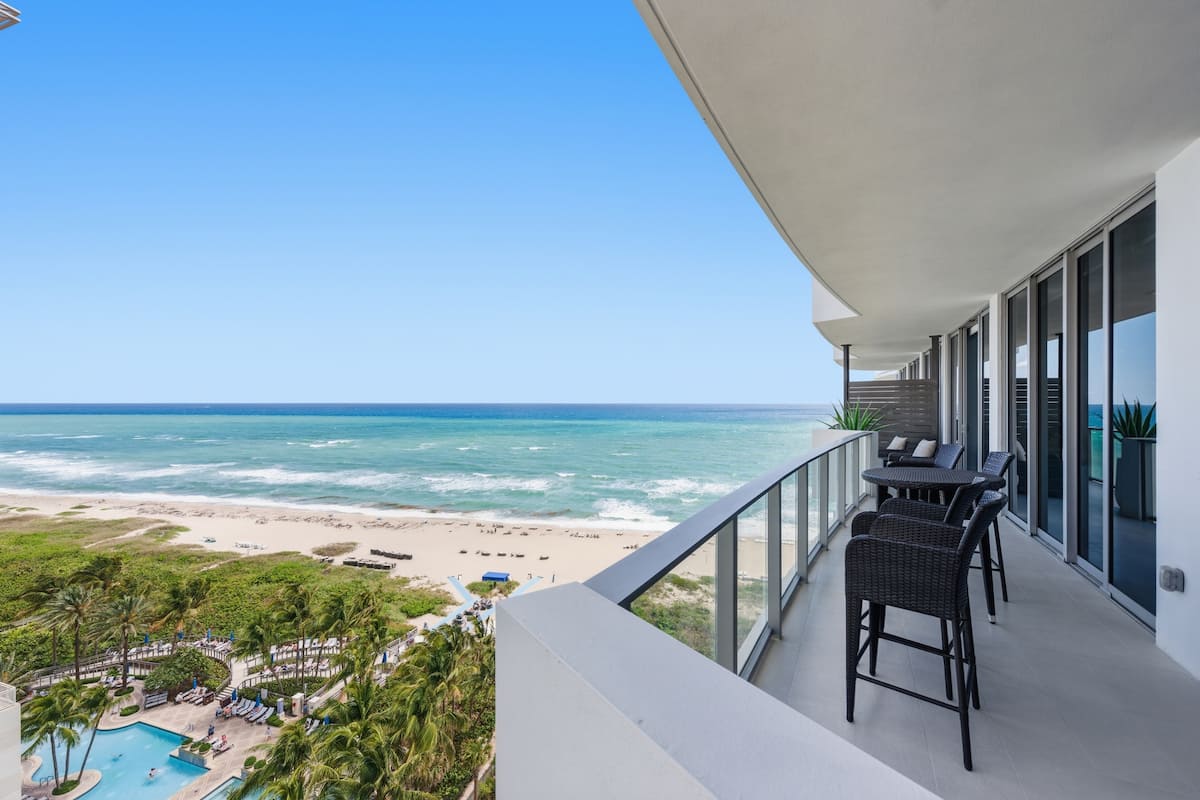
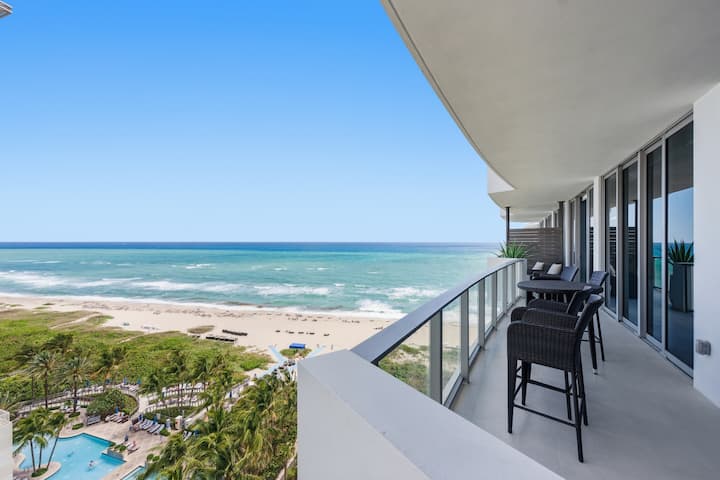
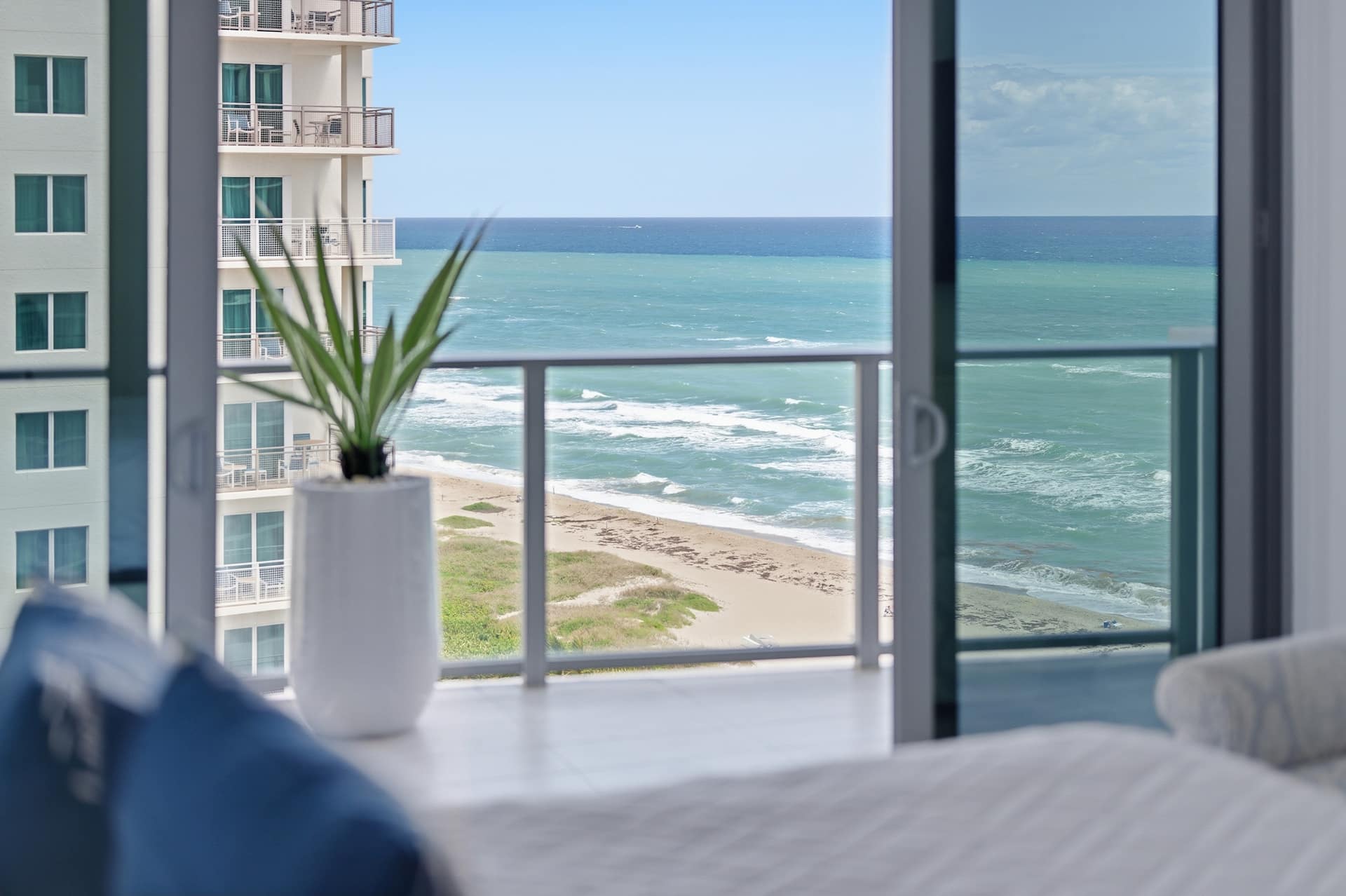
OASENA is a private two-bedroom home on the twelfth floor of the Happiness Tower — floor-to-ceiling ocean views, a sweeping balcony, and this entire wellness world an elevator ride below.
OASENA is a privately owned residence within Amrit Ocean Resort & Residences and is not operated by, affiliated with, or endorsed by the resort. See credits & notes.