Boating, Fishing and the Intracoastal
The residence sits on a barrier island with the Atlantic on one side and the Intracoastal on the other, and the Palm Beach Inlet only minutes south. Here is how to get on the water — the two marinas, the kinds of charters, the boat rentals, the short run out to Peanut Island, and what tends to be biting each season.
01Water on both sides of you
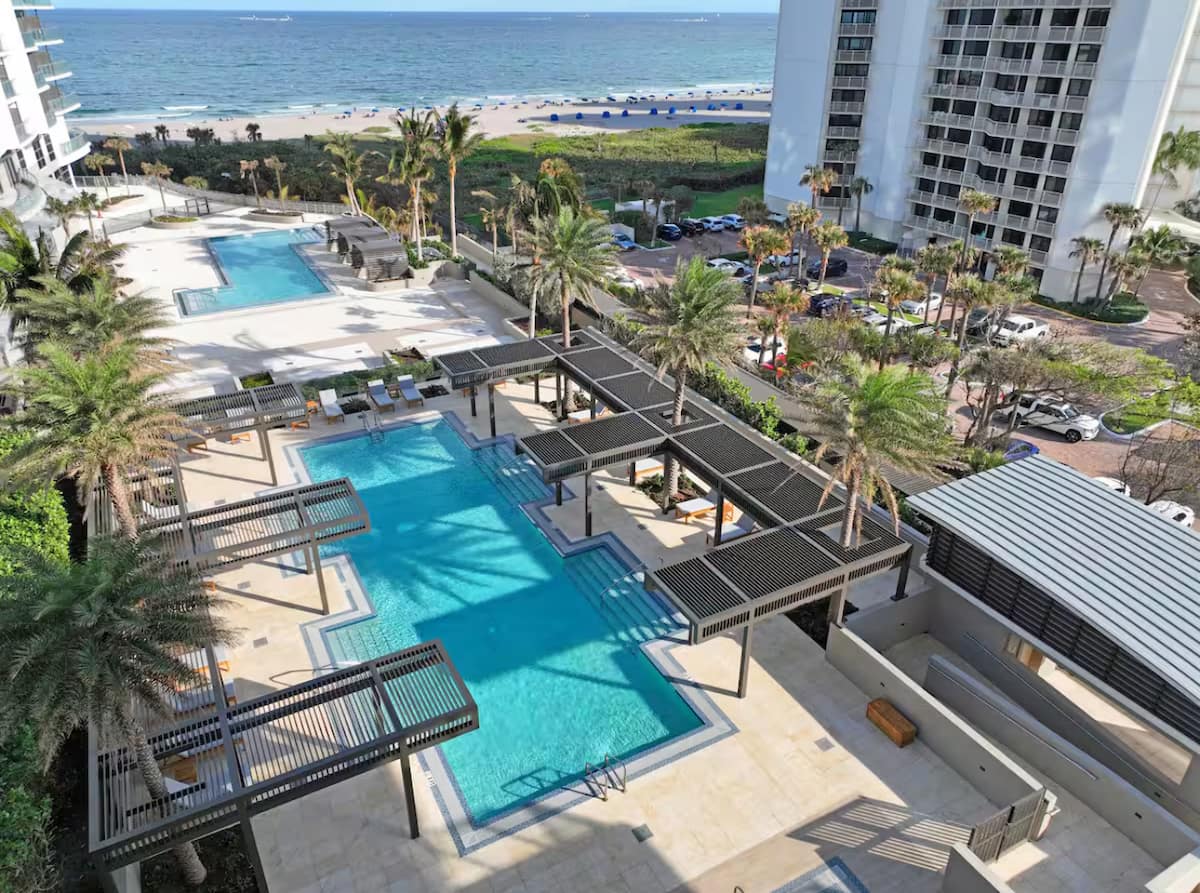
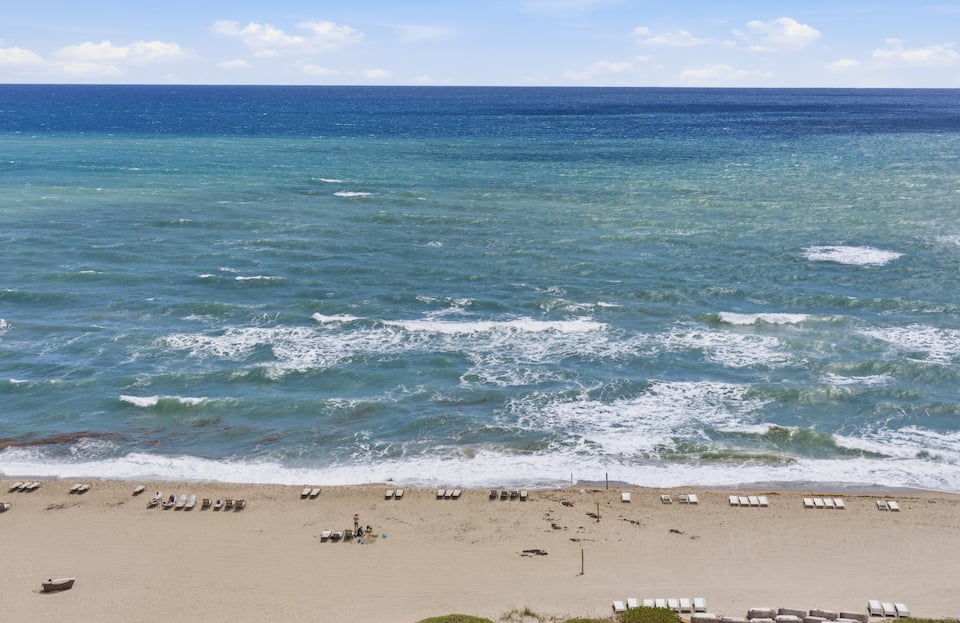
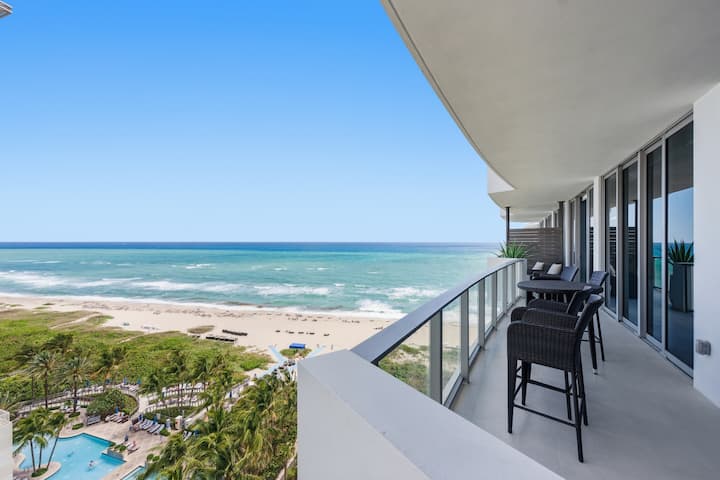
Two bodies of water frame the building you are staying in. Out the ocean side lies the open Atlantic; a few hundred yards behind it runs the Intracoastal Waterway, the sheltered ribbon of protected water that threads the entire Florida coast. The residence sits on a slim barrier island between the two, which means that whatever you want from a day on the water — a hard morning chasing sailfish offshore, a slow pontoon drift with the kids, a sunset with a drink in your hand — the boat that does it launches only minutes from your door.
What makes this stretch of coast so good for boating is a piece of geography you can read off any chart. The Palm Beach Inlet, also called the Lake Worth Inlet, cuts through the barrier islands just south of Singer Island and joins the calm Intracoastal to the ocean. It is deep, well marked and busy with everything from paddleboards to cruise ships, and it is the door nearly every boat here uses to reach the sea. Once you clear it, the bottom drops away fast and the Gulf Stream — the warm blue river that runs up the Florida coast and carries the big pelagic fish with it — sits only a few miles out. Few places in the country put deep offshore water this close to the dock.
What a day on the water can look like
You do not need to own a boat, know how to run one, or even be an angler to spend a good day out here. The options fan out in every direction, and most of them start within a short drive of the residence:
- Offshore charters run out the inlet to troll and drift the Gulf Stream for sailfish, mahi, tuna and wahoo.
- Inshore and flats guides stay inside, poling the shallows of the Intracoastal and the inlet for snook, jacks and tarpon.
- Reef and bottom trips anchor or drift over the near reefs for snapper and grouper — often the surest bet for families who simply want to catch fish.
- Cruises, from sunset sails to eco tours, trade the rods for a cooler and a camera.
- Rentals let confident boaters take a center console or a pontoon out on their own.
The sections that follow walk through each of these in turn, plus the two marinas that anchor the local scene, the two waterways you will move between, the short hop out to Peanut Island, what tends to bite in each season, and the practical things — licenses, seasickness, what to pack — that separate a great day from a long one.
One more thing works in your favor here: proximity. The residence keeps a valet at the door, and the marinas are a short drive rather than a project, so a boat day does not have to eat the whole day. You can be on the water by mid-morning and back on the balcony by early afternoon, or catch an evening cruise and still make a late dinner. Many guests never rent a car for the boating at all — a rideshare to the dock and back covers it, and the water taxi handles the rest. That closeness changes how you think about it. Getting on the water stops being an expedition you plan around and becomes something you can do on a whim when the morning looks calm.
If your interest runs more to what is under the water than what is on top of it, the companion guide to snorkeling & diving covers that world in full, and when you come back hungry, waterfront seafood points you to the docks where the catch gets cooked. For trips that go farther afield by land, see the day trips guide.
02The two marinas that anchor the scene
Almost everything on the water near Singer Island traces back to one of two marinas, and it helps to know how they differ before you book. They sit within a few minutes of each other on the mainland and island sides of the inlet, and between them they cover the whole range, from a shared drift-fishing boat to a private billfish charter to a bare-boat rental.
Riviera Beach Marina
The Riviera Beach Marina is the public, municipal marina on the mainland side, at the heart of the redeveloped Marina Village. It is the busiest hub in the area and the most useful one to know, because so much launches from here: the Peanut Island shuttle, the water taxi, sightseeing and eco cruises, sport-fishing charters, boat and jet-ski rentals, and a public boat ramp for anyone trailering their own. There is a grassy event lawn, a handful of casual waterfront places to eat and drink, and parking, so it works just as well as a place to start a day as a place to end one. If you are not sure where to begin, begin here and ask at the docks.
Sailfish Marina
Across the water, the Sailfish Marina Resort sits right on the inlet on the Singer Island side, and its name is not an accident. This is the classic sport-fishing address in the area, with a long dock of charter boats whose captains have fished these waters for decades. It is worth a visit even on a day you are not going out: you can walk the docks in the late afternoon and watch the boats come in and clean their catch, then stay for a drink as the sun drops over the water. The on-site restaurant is a local institution for casual waterfront seafood, and there is a water-taxi stop here too.
A few things worth holding in mind as you choose between them:
- For offshore sport fishing, the charter fleet at Sailfish Marina is the traditional first call, though excellent captains work out of both marinas.
- For families, rentals, the Peanut Island shuttle and eco cruises, the Riviera Beach Marina is the one-stop hub.
- For a low-effort evening, either marina makes a fine sunset stroll; Sailfish Marina's dock walk at the end of the fishing day is the most atmospheric.
- For parking and easy access, both are close to the residence; the Riviera Beach Marina has the larger public lot.
Both marinas also serve the boaters who arrive by water rather than by car. Between them they offer fuel docks, transient dockage for visiting boats, ship's stores and provisioning, and the everyday services a working waterfront needs, which is part of why the charter and rental fleets base here. For a guest, that infrastructure mostly matters as a sign of a real, functioning boating community rather than a tourist add-on — the captains who keep their boats here fish these waters year-round and know them cold.
Because the two are so close, you can easily fish out of one and eat at the other, or scout both in a single afternoon before you commit to a charter. Walk the docks, read the boards, look at the boats, and talk to a mate or two; you will learn more in fifteen minutes on the dock than in an hour online. The captains talk to each other, and a good one will tell you honestly whether the conditions favor going offshore or staying inside on a given day — and, if his own boat is booked, point you to someone else who will do right by you.
03The inlet and the Intracoastal
To get the most out of the water here, it helps to understand the two very different environments you will be moving between. One is the sheltered, glassy world of the Intracoastal; the other is the ocean beyond the inlet. Nearly every trip involves both, and the inlet is the hinge that connects them.
The Palm Beach Inlet
The Palm Beach Inlet, formally the Lake Worth Inlet, is the deep, jettied channel just south of Singer Island where the lagoon meets the Atlantic. It is one of the reasons this area is such a strong boating base. The channel is dredged deep for the Port of Palm Beach, so it carries big ships as well as small boats, and it gives you a quick, direct shot to the ocean without a long, slow run down the coast. Peanut Island sits right in the middle of it. The inlet can run fast on a strong outgoing tide, especially against an east wind, when it kicks up a short, steep chop where the current meets the swell — which is exactly why you leave the ocean navigating to a licensed captain or an experienced boater, and why timing the tide matters.
The Intracoastal Waterway
Behind the barrier island, the Intracoastal Waterway — here it widens into the Lake Worth Lagoon — is the calm, protected water that runs the length of the coast. This is the gentle side of boating near Singer Island: no-wake zones, mangrove-lined islands, manatees nosing along the seawalls, and dolphins working the channel. It is where beginners learn, where families cruise, where the sunset and eco tours run, and where you idle out to the inlet before committing to the ocean. Because it is sheltered, it stays flat on days when the ocean is rough, so it is your reliable fallback when the wind is up.
A few practical notes on moving between the two:
- Watch the tide at the inlet. An outgoing tide against an onshore wind makes the roughest water of the day; captains time their runs around it.
- Respect the no-wake and manatee zones in the lagoon. They are marked, enforced, and there for the wildlife as much as for the moored boats.
- Give the ship channel room. Commercial traffic uses the marked channel through the inlet; small boats stay clear and cross with care.
- Know your comfort level. If anyone in the group is uneasy on the water, a lagoon cruise or an inshore trip gives you the scenery and the wildlife without the ocean's motion.
The lagoon has its own small pleasures beyond the wildlife. Low sandbars surface at low tide where boats gather to anchor and wade, spoil islands dot the channel, and the mangrove shorelines hold fish and birds through the day. It is shallow in many places, so local knowledge of where the water carries matters — another reason a guide or a careful reading of the chart pays off if you are running a rental. None of it is hard water to enjoy; it is simply water that rewards paying attention.
The short version is that you have two boating worlds a few hundred yards apart, and you can pick the one that suits the day and the crew. On a calm morning you push out the inlet for the ocean; on a breezy afternoon you stay inside, and the lagoon is still beautiful. Good captains read the wind and the tide for you and choose accordingly, which is a large part of what you are paying for.
04The kinds of charter, and how to choose
"Going on a charter" covers several very different days on the water, and the biggest mistake first-timers make is booking the wrong one for their crew. The species you can catch, the water you will fish, the amount of motion you will feel and the skill it asks of you all change depending on the type. Here is how the main categories break down.
Inshore and flats trips
Inshore trips stay inside the inlet, working the Intracoastal, the flats and the channel edges with light tackle. This is finesse fishing: sight-casting to snook along the mangroves, working jigs for jacks and ladyfish, live-baiting for tarpon in season. The water is calm, the runs are short, and a good inshore guide will teach you as you go, which makes this a fine choice for newer anglers, for kids old enough to cast, and for anyone prone to seasickness. Half-day trips are the norm.
Reef and bottom fishing
Reef trips anchor or drift over the near-shore reefs and wrecks just outside the inlet, dropping baits for snapper, grouper, porgies and the occasional surprise. Because you are close to shore and the action can be steady, this is the classic family and mixed-ability outing — the trip most likely to send everyone home with fish for dinner. Shared drift boats, which take a group and split the rail, are the most accessible way to try it, while a private reef charter gives you the boat to yourselves.
Offshore and deep-sea
Offshore trips run out the inlet to the Gulf Stream for the glamour fish: sailfish, mahi, wahoo and tuna. These are longer, bigger-water days with real ocean motion, and they reward anglers who want a challenge and do not mind an early start. The next section covers them in detail.
To match a trip to your group, think about three things:
- Motion tolerance. Inshore is flattest, reef is moderate, offshore is the roughest. If seasickness is a worry, stay inside.
- Who is aboard. Young kids and non-anglers do best on short inshore or reef trips, or on a cruise; serious anglers gravitate offshore.
- Private versus shared. A private charter is yours to set the pace and the target; a shared drift or party boat is the friendlier way to sample fishing without committing the whole boat.
Most captains run either a half-day or a full-day, and the full day simply buys you more time and more range — often the difference between fishing the reef and reaching the Stream. A four-hour morning is plenty for a first outing or a family; a six- or eight-hour day is for anglers set on the offshore run. Whatever the length, a private charter typically includes the rods, reels, bait, tackle, ice and license coverage, and the mate cleans and bags your catch at the end — you bring yourselves, your sun protection and your food and drink.
Booking is usually a phone call or a walk down the dock; tell the captain honestly who is coming and what you are hoping for, and let the boat's advice steer you. A good captain would rather put you on a trip you will enjoy than sell you a hard offshore day that leaves half the crew green. When the fish are cleaned at the dock, many nearby restaurants will cook your catch — the waterfront seafood guide covers which ones.
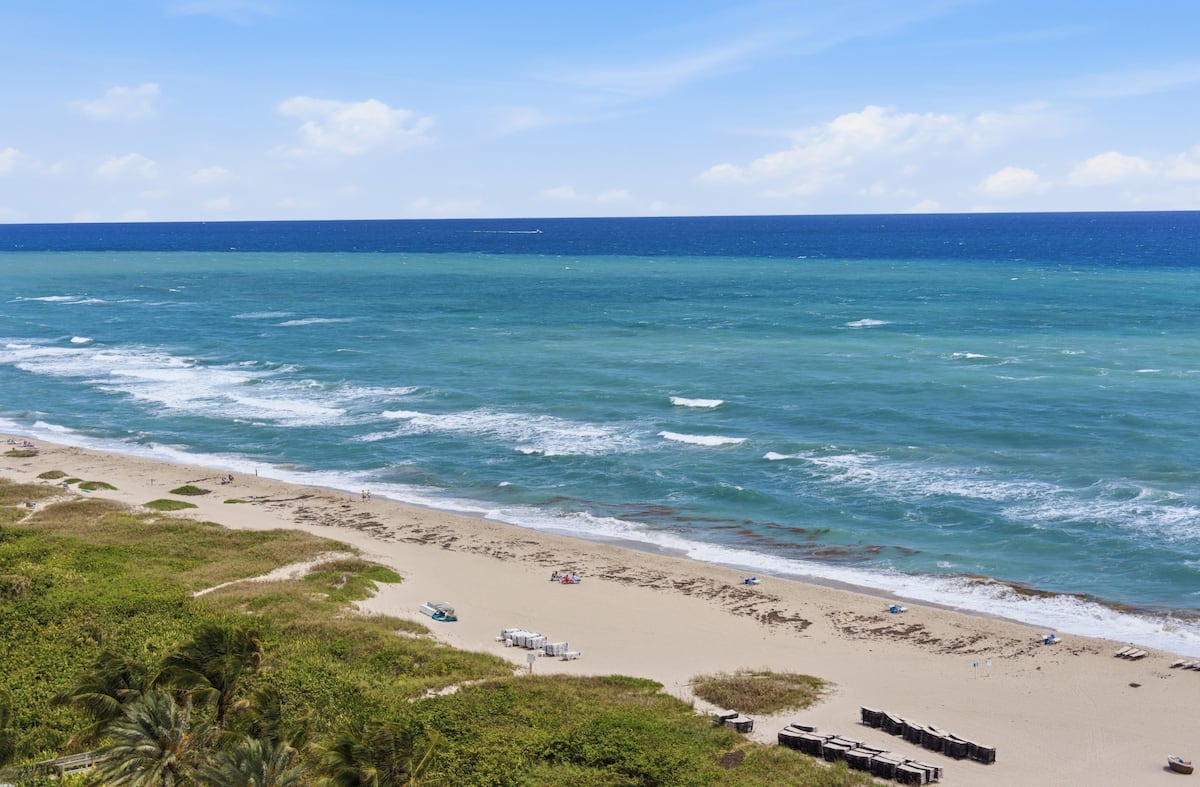
Few places in the country put deep blue water this close to the dock — the Gulf Stream runs only a few miles past the inlet, and it carries the big fish north with it.
On boating from Singer Island
05Offshore: the Gulf Stream and the sailfish
The offshore fishing is the reason this coast has a reputation, and the reason is the Gulf Stream. That warm blue current sweeps up from the tropics and passes close to the Palm Beach shore — closer here than in most of Florida — bringing with it the fast, migratory ocean fish that anglers travel a long way to chase. From the inlet you can reach deep, blue water in a short run, which is why a half-day offshore trip is realistic rather than a whole-day expedition.
Palm Beach is best known for one fish above all: the Atlantic sailfish, the acrobatic billfish that tail-walks across the surface when hooked. The winter sailfish run here is famous, drawing tournament fleets when the cold fronts push down the coast. Nearly all sailfish are released — the sport is in the fight and the leap, not the freezer — and a photograph beside a lit-up sail at the boat is the trophy people come home with.
What you might tangle with offshore
- Sailfish — the marquee catch, at its best in the cooler months; almost always released.
- Mahi-mahi (dolphinfish) — brilliant green and gold, fast and delicious, best from spring into summer and a favorite for the table.
- Wahoo — blistering runs, prized eating, more common in the cooler months.
- Blackfin tuna — hard-pulling and excellent raw or seared, often around in winter and spring.
- Kingfish (king mackerel) — toothy and fast, running through in spring and fall.
Not all of the offshore fishing is way out in the blue, either. Between the beach and the Stream lie near-shore reefs, ledges and wrecks that hold their own fish — snapper and grouper on the bottom, kingfish and the odd cobia in the water column — and a captain will often work these on the way out or when the deep bite is slow. That flexibility is one more reason the offshore day here is forgiving: there is usually something to catch closer in even when the pelagics are not cooperating.
The offshore captains here use a couple of signature techniques worth knowing about. Trolling drags a spread of baits or lures behind the moving boat to cover water and find fish. Kite fishing, a South Florida specialty, flies live baits from fishing kites so they dance on the surface — a deadly method for sailfish that is a spectacle in its own right when a sail crashes the bait. On a drift day, the boat may simply shut down over a good patch of water and fish live baits down through the current. A good crew reads the water temperature, the color changes, the weed lines and the birds to put you on fish, and the mate rigs baits and clears lines so all you have to do is take the rod when it goes off.
An offshore day is the most demanding kind out here, so set expectations accordingly. Expect an early start, real ocean motion, sun and salt spray, and the honest possibility of a slow bite — the ocean does not read the calendar. If anyone in the group is unsure about the open water, consider a shorter reef trip or an inshore morning instead, and save the offshore run for the committed anglers. When it comes together, though — a sailfish lit up behind the boat, a double-header of mahi in the spread — it is the kind of day people talk about for years.
06What's biting, season by season
The fishing here is good all year, but what you are most likely to catch shifts with the calendar as different species move through. Seasons blur, a warm winter or an early front can move things by weeks, and the regulations on what you may keep change too. None of that is something you have to track yourself — the captains live by it — but a rough sense of the year helps you plan a trip around the fish you most want to catch.
Winter (December to March)
This is the marquee stretch for offshore anglers. Cold fronts sweeping down the coast trigger the famous sailfish run, and the same conditions bring wahoo, blackfin tuna and kingfish within reach. Inshore, cooler water brings pompano, bluefish and sheepshead around the bridges and structure. Bundle up for the early boat — a Florida winter morning offshore is cooler than visitors expect.
Spring (April to May)
The water warms and the ocean comes alive. Mahi begin to show offshore and improve week by week, cobia move along the beaches, the kingfish run peaks, and the first tarpon of the year appear inshore. This is one of the most varied and pleasant times to fish here, with mild weather and a wide menu.
Summer (June to August)
Hot, humid and often calm early before the afternoon storms build. Offshore, mahi are the summer staple, and the near reefs produce mangrove and mutton snapper and other bottom fish. Inshore, tarpon and snook are the prizes for light-tackle anglers. Get on the water early: the fishing and the weather are both best before midday, and the storms tend to arrive in the afternoon.
Fall (September to November)
The quietest season on the water and, for many locals, a favorite. The mullet run along the beaches sets off a feeding frenzy that brings snook, tarpon, jacks and kingfish crashing bait close to shore. Offshore fishing picks back up as the first fronts arrive late in the season, and there are fewer boats out to share the water with.
Alongside the offshore calendar, the inshore and reef fishing gives the year a steadier backbone. Snapper and grouper hold on the reefs through much of the year, snook and tarpon prowl the inlet and the lagoon whenever the water is warm, and sight-fishing opportunities — a cobia trailing a ray in spring, a tripletail hanging by a buoy — turn up for the sharp-eyed. It means that even if your visit misses the peak of a particular species, there is almost always a good trip to be had by adjusting where and how you fish rather than staring at an empty ocean.
Two honest caveats. First, fishing is fishing: even in peak season there are slow days, and a good captain earns the trip by finding fish when they are hard to find. Second, harvest rules — seasons, size limits and bag limits — change by species and by year, and some fish must be released. Your captain handles all of that on a charter; if you are fishing on your own, it is on you to check the current Florida saltwater regulations before you keep anything. The next sections cover renting a boat and the licenses and rules that come with fishing on your own.
07Renting a boat and going on your own
If you are comfortable on the water, renting your own boat opens up the day in a different way. Instead of a captain's plan, you set your own — a slow lagoon cruise, a picnic run to a sandbar, an afternoon anchored off Peanut Island. Rental outfits operate out of the Riviera Beach Marina and elsewhere along the Intracoastal, and the fleet generally runs from easygoing pontoons to center-console fishing boats, with personal watercraft available too.
What tends to be available
- Pontoon boats — stable, roomy, shaded and slow, they are the ideal family rental for cruising the calm Intracoastal, spotting wildlife and beaching at a sandbar.
- Center-console boats — the versatile Florida workhorse, good for fishing the flats and reefs or running out to the islands, for renters with real boating experience.
- Deck boats and smaller runabouts — a middle ground for cruising and light watersports.
- Jet skis and personal watercraft — for a faster, wetter way to explore the lagoon.
- Kayaks and paddleboards — the quietest, cheapest option of all, ideal for poking through the mangroves and shallows under your own power with no license or motor to worry about.
Before you book a rental
Renting here comes with a few rules and realities worth knowing in advance:
- The Florida boater education card. Anyone born on or after January 1, 1988 who operates a motorboat of ten horsepower or more must carry a Boating Safety Education ID card. It is earned through an approved course, so sort it out before your trip rather than at the dock.
- Experience and deposits. Rental companies will ask about your boating experience, take a security deposit, and give a safety and operations briefing. Be honest about your comfort level; the Intracoastal is forgiving, the inlet and ocean are not.
- Stay inside unless you truly know the water. Most first-time renters should keep to the sheltered lagoon. Running the inlet and going offshore is for experienced boaters who know how to read the tide and weather.
- Watch the manatee and no-wake zones. They are marked and enforced throughout the lagoon.
- Mind the weather and the fuel. Summer storms build fast in the afternoon; check the forecast, plan to be in before it turns, and keep an eye on the fuel.
A rental is one of the best ways to reach Peanut Island under your own power, anchoring off the sandbar and wading in to snorkel the lagoon or explore. It is worth a word on sandbar etiquette while you are out there: anchor with room around other boats, keep music and speed in check near families, watch for swimmers in the water, and take every scrap of trash home with you. The sandbar scene is friendly precisely because most people mind those unwritten rules.
If fishing is the plan, remember that a rental does not come with the license coverage a charter does — on your own boat you and your crew need Florida saltwater fishing licenses, which the planning section at the end explains. And if the idea of running a boat yourself sounds like more responsibility than vacation, that is exactly what the charters and cruises are for: someone else drives, and you enjoy the ride.
08The short run to Peanut Island
Sitting right in the middle of the inlet is one of the best half-day outings in the area, and it is a short trip from the residence. Peanut Island is a 79-acre county park in the Lake Worth inlet, a man-made island built long ago from dredge spoil and since turned into one of the most-loved spots on this coast. You can reach it two ways: by the regular shuttle from the Riviera Beach Marina, which runs roughly every 25 minutes through the middle of the day, or on your own boat or a rental, anchoring off the sandbar that forms on the west side.
What is out there
- A snorkeling lagoon. A protected, man-made lagoon on the inlet side is the island's centerpiece, with rock and calm shallow water that draw fish. It is best at high tide, when clearer ocean water pushes in; bring your own mask and fins.
- A shoreline path and picnic areas. A walkway circles the island with shaded picnic spots, restrooms and showers, so it works as an easy beach day as much as a snorkel trip.
- Tent camping. The island has a small campground where you can pitch a tent for up to a few nights. Sites are limited and popular, so reserve well ahead.
- A piece of Cold War history. Peanut Island holds a preserved fallout bunker built for President Kennedy during his Palm Beach years, a relic of the era open on a limited basis.
The single most important thing to know about Peanut Island is that there are no concessions. You must bring everything you want to eat and drink, plenty of water, sun protection and your snorkel gear, and you must carry your trash back out. Plan it as a self-contained outing: pack a cooler, bring shade if you can, and treat it as a picnic on an island rather than a place to buy lunch. On weekends the sandbar becomes a floating party of anchored boats, which is a scene in itself; on a quiet weekday morning it can feel almost private.
Munyon Island, to the north
A second island worth knowing sits farther up the lagoon: Munyon Island, a mangrove island that is part of the state park to the north. It is not a shuttle stop — the usual way to reach it is a short paddle by kayak from the launch at John D. MacArthur Beach State Park, gliding across the estuary to land on a quiet, undeveloped shore alive with wading birds. It is a lovely, low-key contrast to the busier Peanut Island, and it belongs on the list for anyone drawn to the wilder, quieter side of the water. The wider state park and its estuary are covered in the beaches and nature guides.
Between the two islands you have the whole range of what the lagoon offers: Peanut Island for an easy, sociable day with snorkeling and history a shuttle ride away, and Munyon for a paddle into the mangroves. Either one turns a morning on the water into a small adventure without ever taking you far from home. For more on the snorkeling itself, see the snorkeling & diving guide.
09Sunset cruises, eco tours and easy days with the family
Not every good day on the water involves a rod or an early alarm. Some of the most enjoyable time out here is spent simply cruising the sheltered lagoon — watching for wildlife, catching a sunset, and letting the kids trail their hands in the water. Because the Intracoastal stays calm when the ocean is rough, these gentle trips run on days when fishing offshore would be miserable, which makes them a reliable choice for mixed groups and younger children.
Sunset and cruise options
- Sunset cruises leave from the marinas in the late afternoon and drift the lagoon as the light goes gold and the sky over the mainland turns. Some are quiet sailing catamarans, others easygoing pontoons with a cooler aboard; all of them are about the view rather than the destination.
- Eco and sightseeing tours put a naturalist's eye on the trip, idling through the mangrove islands and shallows to point out the birds, the fish and the marine mammals that live in the lagoon.
- Water-taxi and shuttle rides are the simplest of all: a short, cheap, scenic hop across the inlet that doubles as a little cruise in its own right.
Wildlife you are likely to see
The Lake Worth Lagoon is a rich estuary, and you do not have to work hard to see its residents:
- Manatees. These gentle, slow-moving giants graze the seagrass and gather near warm-water outflows, most reliably in the cooler months. Idle speed and manatee zones exist to protect them — give them room and never chase them.
- Dolphins. Bottlenose dolphins work the inlet and the channel year-round and often ride a boat's wake, a highlight for children and adults alike.
- Wading and diving birds. Ospreys, pelicans, herons and egrets patrol the shallows and the mangrove islands, especially around Munyon Island.
- Sea turtles. In the warmer months you may spot a turtle surfacing offshore or in the inlet; the beaches here are important nesting grounds.
These trips also happen to be the most photogenic time on the water. The late-day light on the lagoon, a dolphin rolling alongside, the skyline going pink across the channel — it is easy, low-effort scenery, and you do not have to do anything but look. If you are choosing among the cruise options, a sailing catamaran gives you the quietest ride, a pontoon the easiest one for a group with drinks and coolers, and a naturalist-led eco tour the most to see and learn. Bring a light layer for the breeze that comes up as the sun drops, and something to drink; many operators let you bring your own.
For families in particular, the calm-water trips are the sweet spot. A short reef or drift-fishing outing, a lagoon cruise or an eco tour gives young children the fun of being on a boat and seeing wildlife without the motion and the long runs of an offshore day. Bring sun protection, water, snacks and a light layer for the breeze, and keep small children in life jackets, which the operators provide. If someone in the group tends to get seasick, the sheltered lagoon is your friend: it stays flat, the trips are short, and you are never far from the dock. It is the easiest way to give everyone a taste of the water, and it often ends up being the trip people remember most fondly — the evening the dolphins came up alongside, or the sunset over the lagoon on the way back in.
10Licenses, seasickness and the practical details
A little planning makes a day on the water smoother, and most of it comes down to a few practical questions: do you need a fishing license, how do you keep from getting seasick, and what should you bring versus what does the boat provide. Here is the plain version.
Fishing licenses
Florida requires a saltwater fishing license to fish in salt water, but there is one big, convenient exception that covers most visitors:
- On a licensed charter or guide boat, you are covered. The vessel carries a charter license that extends to its paying passengers, so you do not need to buy anything to fish aboard a proper charter. This is the simplest way to fish here, and one more reason first-timers should start with a captain.
- Fishing on your own — a rental, a pier or the shore — means you need a license. A Florida saltwater fishing license is inexpensive and can be bought online or by phone in minutes, with short-term options sized for visitors. Everyone in your party who is fishing needs to be covered.
- There are exemptions, including for children under sixteen and for certain shore-based situations, and the rules do shift, so check the current Florida Fish and Wildlife requirements before you rely on one.
Along with the license come the harvest rules — seasons, size and bag limits, and which fish must be released. On a charter the captain manages all of it. On your own, it is your responsibility to know the current regulations for anything you keep.
Seasickness and comfort
If you or anyone aboard is prone to motion sickness, plan for it rather than hope:
- Choose the calmer trip. Inshore and lagoon trips are flattest; the reef is moderate; offshore is the roughest. Matching the trip to the crew solves most problems before they start.
- Take a remedy early. Over-the-counter or prescription seasickness medicine works best taken before you leave the dock, not once you feel unwell. Ask a pharmacist which suits you.
- Eat lightly, stay hydrated, watch the horizon, and stay in the fresh air on deck rather than below. Ginger and acupressure bands help some people.
What to bring, and what the boat handles
Charters generally provide the rods, reels, bait, tackle, ice and the license coverage, and the mate will clean and bag your catch at the end. Your job is to come prepared for sun and salt:
- Bring: sunscreen, a hat and sunglasses, a light layer for wind and spray, soft-soled non-marking shoes, water, snacks, and a soft cooler for anything you keep. Leave hard coolers and bananas ashore — captains are superstitious about the latter, and there is no room for the former.
- Tipping the mate is customary on a charter, much as in a restaurant; it is a real part of the crew's income for a day of hard work.
- Book ahead in winter, the busy high season, when the best captains fill up; a quiet shoulder week gives you more choice.
Finally, think about what happens to your catch. Many of the waterfront restaurants around the marinas will cook what you bring in, turning your morning's fish into that night's dinner — the waterfront seafood guide covers which docks do it best. And if a full day on the boat is not for everyone in your party, remember the water is only one way to spend a day here; the day trips guide lays out what else is within easy reach.
Common questions
Do I need a fishing license to go out?
If you fish aboard a licensed charter or guide boat, no — the vessel's license covers its passengers, so there is nothing to buy. If you fish on your own from a rental boat, a pier or the shore, you need a <strong>Florida saltwater fishing license</strong>, which is inexpensive and can be bought online in minutes. Children under sixteen and some shore situations are exempt, and the rules change, so check the current requirements before you rely on one.
When is the best time of year to fish here?
It depends on what you want to catch. <strong>Winter</strong> is the famous sailfish run and brings wahoo, tuna and kingfish; <strong>spring</strong> brings mahi, cobia and the first tarpon; <strong>summer</strong> means mahi offshore and snapper on the reefs; <strong>fall</strong> is quieter, with the mullet run lighting up snook and tarpon near shore. Reef and bottom fishing is good all year.
Can I go out with young kids or people who don't fish?
Yes, and the calm Intracoastal is the key. A short reef or drift-fishing trip, a lagoon cruise, a sunset sail or an eco tour gives everyone the fun of the water and a good chance of seeing manatees and dolphins, without the motion and long runs of an offshore day. Operators provide life jackets; bring sun protection, water and snacks.
How do I get to Peanut Island?
Two ways. The easiest is the <strong>shuttle from the Riviera Beach Marina</strong>, which runs roughly every 25 minutes through the middle of the day. If you have your own boat or a rental, you can anchor off the sandbar. Either way, bring everything you need — food, water, sun protection and snorkel gear — because there are no concessions on the island, and carry your trash back out.
Your quiet address above the Atlantic
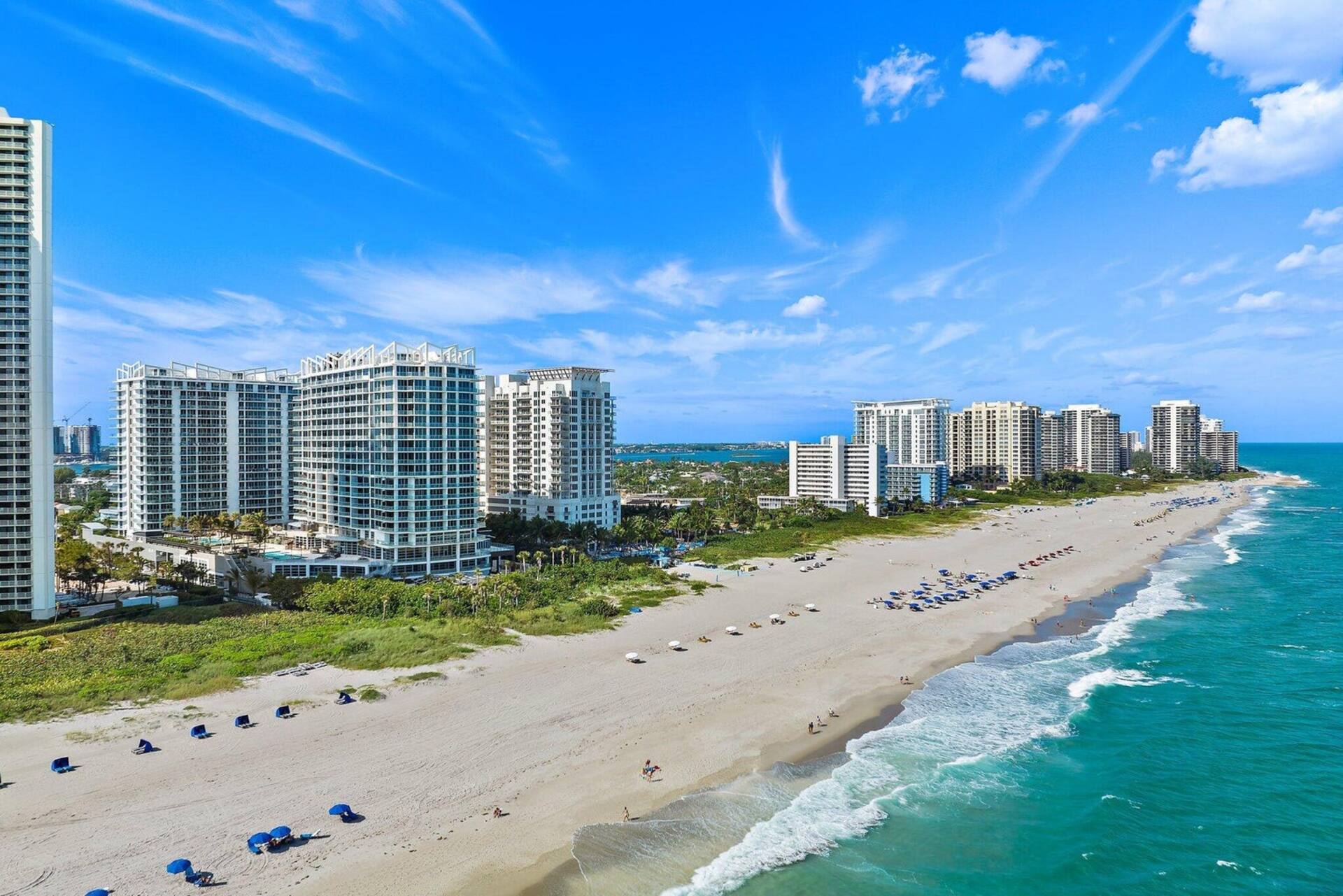
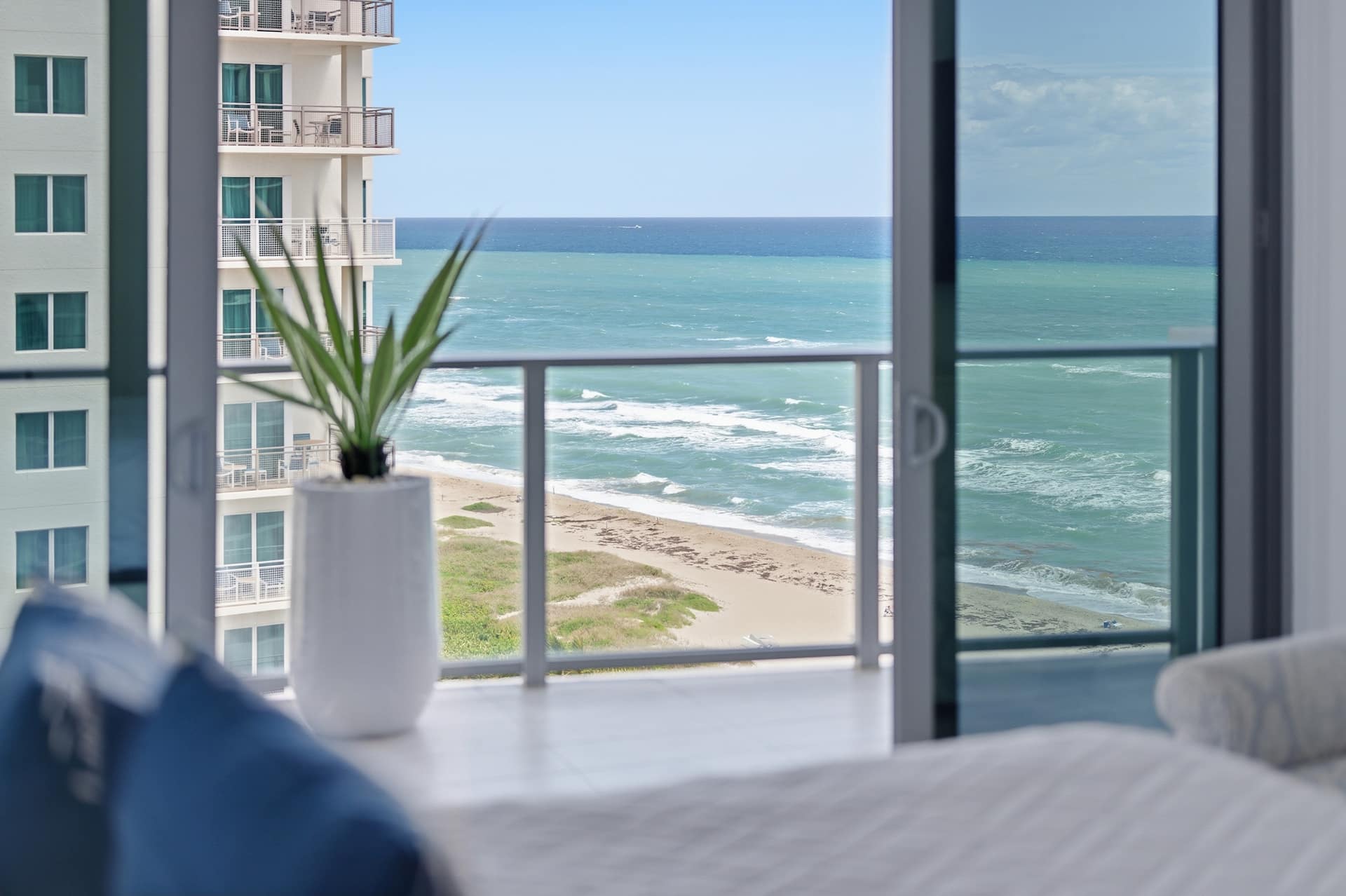
OASENA is a private two-bedroom home on the twelfth floor of the Happiness Tower — floor-to-ceiling ocean views, a sweeping balcony, and this entire wellness world an elevator ride below.
OASENA is a privately owned residence within Amrit Ocean Resort & Residences and is not operated by, affiliated with, or endorsed by the resort. See credits & notes.