The Ammortal Chamber: Bioenergetic Wellness, Explained
Below the residence sits a single-person pod that runs five wellness practices at once — guided breath, light, sound and vibration, molecular hydrogen and a pulsed electromagnetic field. Here is what the Ammortal Recharge Chamber combines, what the science does and doesn't support, and how to use it well.
01What the Ammortal Chamber is
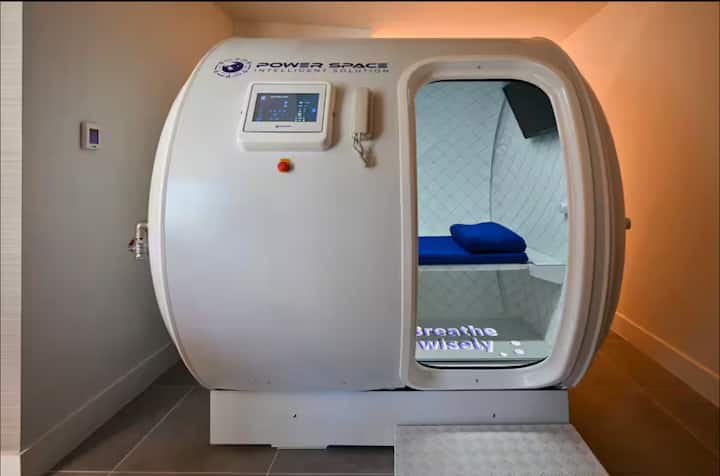
The Ammortal Recharge Chamber is a single-person wellness pod that runs several therapies at the same time. You settle into it for twenty to thirty minutes and, over that window, it coaches your breathing, surrounds you with colored light, plays sound you feel in your body as much as hear, feeds you a stream of hydrogen-enriched air to breathe, and runs a gentle pulsed electromagnetic field beneath you. The company that makes it calls the underlying idea bioenergetic wellness. The word it hangs on the door is recharge.
It helps to be plain about what that means and what it does not. The chamber is a wellness device, not a medical treatment. It does not diagnose anything, treat any disease, or replace a doctor. It is a newer, proprietary system that bundles together a handful of practices you can also find on their own — breath training, red and near-infrared light, vibration and sound, molecular hydrogen, and PEMF — and delivers them in one guided sitting rather than five separate appointments.
The pitch is convenience and synergy: that doing these things together, in a calm and enclosed space, does more than doing any one of them alone. That is a reasonable thing to hope for and a hard thing to prove, and we will come back to it honestly below. For now, the useful mental model is a comfortable chair that runs a stacked wellness program on a timer, with a guided-breathing coach built in.
What the chamber combines
- Guided breathwork — paced breathing cues that walk you through the session.
- Light therapy — colored and near-infrared light, in the family of photobiomodulation.
- Sound and vibration — low-frequency tones and physical resonance you feel through the seat.
- Molecular hydrogen — hydrogen-enriched air breathed through a small nasal cannula.
- PEMF — a low-level pulsed electromagnetic field, the same idea used in the PEMF mats elsewhere in the spa.
At Amrit, the chamber lives in the regenerative-therapies part of the wellness centre below the residence, alongside the hyperbaric oxygen suite, the red-light room and the float. It is a touchless, clothes-on experience: you do not undress, you are not connected to anything invasive, and you can end the session and step out whenever you like.
The name is worth a word, too, because it sets expectations high. “Ammortal” leans on the idea of pushing back against aging, and the whole product sits inside the longevity conversation — the growing world of people trying to feel younger for longer through better recovery, sleep and cellular tune-ups. That framing sells, and it also invites healthy skepticism. Nothing in a twenty-minute pod stops or reverses aging, and no honest description of the chamber should suggest it does. What it offers is a pleasant, structured pause built out of several recovery practices at once.
So read this guide as a tour of a stack rather than a single therapy. To understand the chamber, it is easiest to take it apart — to look at where the whole idea came from, what each of its five parts is doing, what the science supports and what it does not — and then to put it back together and sit down inside it.
02Where the idea came from
The Ammortal Chamber is a recent arrival, and its story is really the story of two older ones meeting.
The first is the long, separate history of the parts. None of the five modalities inside the chamber is new. Breathwork is ancient, with roots in yogic pranayama and a modern revival through teachers who turned paced breathing into a wellness practice. Pulsed electromagnetic field therapy grew out of orthopedic medicine in the 1970s, where it earned clearance for helping certain stubborn bone fractures knit. Red and near-infrared light came up through laser research and, famously, experiments on plant growth and wound healing that trace back to NASA. Molecular hydrogen as something to breathe or drink is the newcomer of the group, drawing on research that began in earnest around 2007. Sound and vibration as therapy runs from Nordic vibroacoustic chairs to the plain, universal experience of a low note you feel in your chest.
The second story is cultural. Over the last decade or two, a broad interest in longevity — living not just longer but better, with more energy and quicker recovery — has moved from the fringes into mainstream spas and clinics. Along with it came the habit of stacking: combining several recovery practices on the theory that small effects might add up. The Ammortal Chamber is a product of that moment. Rather than asking you to book a light session, a PEMF session, a breath class and a hydrogen session separately, it packages them into one enclosure with a single guided program.
What “bioenergetic” is trying to say
The word the makers use to tie it all together is bioenergetic. In plain terms, it points at the idea that your cells run on energy — the tiny power plants called mitochondria turning food and oxygen into a molecule named ATP — and that supporting that energy production might help you feel and function better. It is a real area of biology. It is also a word that gets stretched a long way in wellness marketing, where it can be used to imply more certainty than the evidence carries. Keep both facts in mind: the underlying science of cellular energy is genuine, and the leap from “this supports cellular energy” to “this makes you younger” is a marketing leap, not a proven one.
It is also worth saying that Ammortal is a proprietary system. The specific combination, the sequence, the doses of light and hydrogen and field strength, and the guided program are the company’s own design. That is normal for a device like this, but it has a consequence worth remembering when you reach the evidence: most of what is known about the parts comes from studies of those parts on their own, not from independent trials of this particular chamber as a whole.
So the chamber is best understood as a modern package around old and new ideas, assembled at a time when combining recovery practices became fashionable. That does not make it a gimmick. It does mean the honest way to judge it is to look at each ingredient on its merits, and to treat the promise of the combination as an open question rather than a settled fact.
03Each part of the chamber
The clearest way to understand the chamber is to walk through its five parts one at a time. Each is doing a specific, describable thing, and for two of them — light and PEMF — there is a fuller guide elsewhere in this collection where the evidence is weighed in more detail.
Breath, light, sound, hydrogen, field
- Guided breathwork. The chamber leads you through paced breathing — typically slower breaths with a longer exhale — which nudges the body toward the parasympathetic, rest-and-recover side of the nervous system. Of the five ingredients, this is the one with the least hardware and, honestly, the most dependable effect. Slow breathing reliably lowers heart rate and settles people down, and you can practice it anywhere for free.
- Light therapy. Inside the pod you are lit with colored and near-infrared light. The near-infrared part belongs to a field called photobiomodulation, where specific wavelengths are absorbed by an enzyme in your mitochondria and may give cellular energy production a small nudge. It is painless, and you feel warmth more than anything. The red-light guide in this collection goes deeper into what the science does and does not support.
- Sound and vibration. The chamber plays low-frequency tones and transmits physical vibration you feel through the seat and back. This draws on the vibroacoustic tradition — the long-known fact that a deep, steady tone you can feel in your body tends to relax people and let attention drift. Think of the calm that settles over you near a large, low sound.
- Molecular hydrogen. You breathe hydrogen-enriched air through a small nasal cannula. Hydrogen gas is proposed to act as a selective antioxidant — a molecule small enough to reach places others cannot, mopping up only the most damaging free radicals while leaving useful signaling ones alone. This is the newest and least settled ingredient; the research is young, mostly small or early, and enthusiastic more than conclusive.
- PEMF. A low-level pulsed electromagnetic field runs through the seat beneath you. The technology’s serious pedigree is in orthopedics, where stronger, targeted versions are cleared to help certain bone fractures heal. The wellness version aims lower and gentler, at recovery and comfort. The PEMF guide in this collection explains the mechanism, the evidence and the important cautions — including why anyone with a pacemaker or other implanted electronic device should not use it.
Sequenced together over a single sitting, these five are meant to work along the same theme: calm the nervous system with breath and sound, and support the cell’s energy and recovery machinery with light, hydrogen and field. The chamber’s bet is that this combination is more than the sum of its parts.
That is an interesting bet, and it is also the crux of the whole thing. Each part, taken alone, has a body of evidence that ranges from solid to thin, which is exactly why the next section separates what is well supported from what is still hopeful. Read the parts first; judge the package second.
Keep that framing as you read on. A stack is only as honest as its weakest ingredient’s evidence, and the point of taking the chamber apart is so the strong parts and the thin parts never get blended into one confident claim. It is a set of five separate things sharing an enclosure and a timer, not a single unified therapy, however smoothly it is presented as one.
04How it is thought to work
The chamber’s account of itself rests on two threads that run through the whole session, and it is worth separating them because they stand on very different ground.
The first thread is the nervous system, and it is the sturdier of the two. Slow, paced breathing with a long exhale, a low tone you can feel, and a quiet enclosed space all push the body in the same direction — away from the sympathetic, fight-or-flight state and toward the parasympathetic, rest-and-recover one. Physiologists measure that shift in things like a slower heart rate and greater heart-rate variability, a sign of a relaxed, adaptable nervous system. None of this is exotic, and that is the point: the breath-and-sound half of the chamber is doing something bodies have always responded to.
The second thread is cellular energy, and this is where the word bioenergetic comes in. The claim runs roughly like this. Your cells are powered by mitochondria, which convert oxygen and fuel into ATP, the molecule that runs almost everything you do. As you age, or after stress and hard effort, that machinery works less cleanly and produces more oxidative stress — reactive molecules that, in excess, wear on cells. The chamber’s energy-side tools each aim at that picture:
- Near-infrared light is absorbed by an enzyme in the mitochondria and, in the lab, can modestly increase energy output and ease inflammation.
- Molecular hydrogen is proposed to neutralize the most harmful reactive molecules while sparing the useful signaling ones.
- PEMF is thought to influence the electrical charge across cell membranes and the movement of ions in and out, which proponents link to recovery and repair.
Put together, the pitch is that you leave with a nervous system dialed down and a cellular energy system gently supported — hence recharge. It is a tidy metaphor, and metaphors are where care is needed. A battery recharges in a measurable, provable way; a person after twenty minutes in a wellness pod does not, at least not in any way current science can point to and quantify. The mechanisms above are real research directions, not established outcomes. It is entirely fair to say the chamber is built on plausible biology. It is not fair to say that biology has been shown to add up to longer life or reversed aging, and the next section is where that distinction gets its due.
One more honest note on mechanism: even where a single ingredient has a decent scientific rationale, combining five of them does not automatically multiply the benefit. It could add up, it could do little beyond deep relaxation, or the calming effect could be most of what you feel. Nobody has cleanly separated those possibilities for this specific chamber, which is the recurring theme of any fair look at it.
It is also fair to ask about dose. Many of these therapies show their clearest effects at specific intensities and durations — a certain wavelength and power of light, a particular field strength, a real stretch of paced breathing. Fitting five of them into a single twenty-minute program means each is delivered in a shorter, lighter dose than a dedicated session would give. That is part of the appeal, and it is also a reason to keep expectations modest: a taste of five things is not the same as a full course of any one of them.
The chamber is an elaborate, engineered way to breathe slowly, calm your nervous system and rest — and you are staying twelve floors above one of the most reliable versions of that on Earth.
On the Ammortal Chamber at Amrit
05What the evidence does and doesn't say
This is the section to read slowly, because it is where the short answer lives. Start with the headline: there is very little independent, peer-reviewed evidence for the Ammortal Chamber as a whole. It is a new, proprietary device, and the large, well-controlled, independent trials that would test its combined longevity and recharge claims have not been done, or at least have not been published in a form anyone can weigh. When you see benefits attributed to the chamber itself, they generally rest on studies of the individual ingredients, on the company’s own materials, or on how people say they feel — not on outside science testing this specific package.
Strong parts, thin parts, and the missing study
The individual ingredients are a mixed bag, and it is worth being candid about each:
- Breathwork has the firmest ground. Slow, paced breathing is well shown to reduce stress and lower heart rate in the moment. You do not need a pod for it, but the effect is real.
- Red and near-infrared light has decent support for certain skin outcomes and some promise for muscle recovery and soreness. Beyond that, the marketing tends to outrun the data.
- PEMF has genuine, cleared medical use for specific bone-healing problems and some evidence for pain. For general wellness, energy and recovery, the evidence is limited and less consistent.
- Molecular hydrogen is the least settled. The research is early and mostly small; some studies are encouraging, but it is nowhere near proven for the broad benefits sometimes claimed.
- Sound and vibration rests mainly on small studies and long experience showing it helps people relax. Pleasant and low-risk, but not a heavyweight of the evidence world.
Notice the pattern. The two ingredients most likely to be doing something you can feel — breath and sound — are also the two that are cheapest, oldest and least dependent on the machine. The high-tech ingredients carry the bigger claims and, in several cases, the thinner evidence. That does not mean they are useless. It means a fair-minded person should hold the grand version of the promise loosely.
So what is a reasonable takeaway? The Ammortal Chamber is best understood as a well-designed relaxation and recovery experience that stacks several low-risk practices, some better supported than others. It may leave you calmer, and it might support recovery at the margins. What it is not is a proven longevity treatment, an anti-aging device in any literal sense, or a therapy for any disease. Nobody should use it in place of medical care, and no honest reading of the current evidence supports claims that it extends life, reverses aging, or cures conditions. Enjoy it for what it plausibly does — help you rest and recover — and keep a clear head about the parts that remain hopeful rather than proven.
If that sounds more skeptical than a spa brochure, it is meant to. Treating you like an adult about the evidence is the whole point here, and it makes the enjoyable parts of the experience easier to appreciate without overselling them.
A fair way to hold it, then, is a two-part verdict. On safety, the chamber earns a good grade: the individual pieces are low-risk for most people, and used sensibly the whole is gentle. On efficacy for its headline claims — longevity, recharge, cellular renewal — the honest grade is “unproven,” not because it has failed a test but because the test has not really been run. Absence of evidence is not proof that it does nothing; it is a reason to withhold the big claims until someone does the work. Try it, and let the marketing earn your belief rather than assume it.
06What a session is like
A session is short and undemanding. Here is the shape of one, start to finish.
You arrive in comfortable clothes; there is nothing to undress. A staff member settles you into the reclined seat, fits a light nasal cannula for the hydrogen-enriched air, and sets the program. The canopy closes over you into a quiet, dim, contained space — open enough that most people do not find it confining, but enclosed enough to shut the world out.
Then the program runs, usually twenty to thirty minutes. A calm set of cues leads your breathing — slower in, longer out — and for many people that is the anchor of the whole thing. Around it, the light shifts through colors and warm near-infrared, low tones play and hum through the seat, and the hydrogen-enriched air flows quietly through the cannula. The PEMF runs the entire time and you will almost certainly not feel it at all; it is not meant to be felt. Most people close their eyes and drift somewhere between awake and asleep.
You are never trapped. If you feel too warm, too enclosed, or simply done, you can end the session and step out — this is a wellness experience you stay in charge of the whole way through. When the program finishes, there is usually a minute to sit before you stand, since deep relaxation can leave you a little slow and soft-headed in a pleasant way.
Small things that make it better
- Wear comfortable clothes. You stay dressed; loose and soft is ideal.
- Arrive a little settled. If you rush in stressed, the first several minutes just go to unwinding. Come a few minutes early.
- Hydrate. Have water before and after, as you would around any spa session.
- Do not schedule tightly afterward. Leave room to move slowly into whatever is next rather than jumping straight to a call or a drive.
- Say what you feel. Tell the staff if you are prone to claustrophobia, if the sound is too strong, or if anything is uncomfortable; the settings can be adjusted.
What you will not get is drama. There is no jolt, no rush, no obvious before-and-after. At its best it feels like a very efficient reset — the settled, slightly floaty calm of a good meditation or nap, arrived at with help. People who go in expecting fireworks are often underwhelmed; people who go in wanting to be walked into deep rest tend to come out pleased.
It is also, worth noting, a good option for people who struggle to relax on their own. If sitting still and slowing your breath is hard when left to your own devices, having the room do the work — dim the lights, set the pace, fill the quiet with a low tone — can make the difference between fidgeting and letting go.
One caveat about the enclosed design: a small number of people simply do not like being inside a pod, however gentle it is. If that is you, the fix is easy — ask to keep it more open, keep the session shorter, or skip it in favor of the red-light room or the float, which feel less contained. There is no prize for gritting your teeth through something meant to relax you, and the staff would far rather adjust the setup than have you endure it.
07What people say they feel
Set the science aside for a moment and listen to what regulars describe, because reported experience is its own kind of information — useful as long as you remember it is not the same as proof. The most common reports cluster around calm and recovery rather than anything dramatic:
- Deep relaxation. The most consistent response — a settled, unwound feeling, like the far end of a good meditation.
- Better sleep that night. Many people say they sleep more deeply after an evening session, which fits what slow breathing and downshifting the nervous system tend to do.
- A mental reset. A clearer, less cluttered head for a while afterward; people often describe it as having “come up for air.”
- A gentle lift in energy. Some describe feeling refreshed rather than sedated, especially a few hours later — the recharge the name promises, felt subjectively.
- Physical ease. A looser, less tense body, sometimes with less soreness after training.
These are worth taking seriously and worth keeping in proportion. They are subjective, they vary a lot from person to person, and they are strongly shaped by the setting itself. Twenty quiet minutes lying down with your eyes closed, breathing slowly, with no phone and nothing asked of you, would leave most people calmer and clearer regardless of the hardware. That is not a knock on the chamber; a device that reliably gets you to do that is doing something useful. It is just a reminder that a good part of the benefit may come from the rest and the ritual as much as from the light, the field or the gas.
The honest frame is this: people report feeling calmer, clearer, better rested and gently re-energized, and those reports are believable as descriptions of how the session feels. They are not evidence that the chamber changes anything lasting about your health or your age. If you go in hoping for a pleasant, reliable way to drop into deep rest and come out refreshed, the reports suggest you will probably get it. If you go in expecting a measurable overhaul of your body, you are likely to be disappointed and, worse, misled.
It also helps to notice who tends to be happiest with it. People carrying travel fatigue, poor sleep, or a wound-up, over-scheduled nervous system usually get the most obvious payoff, because they have the most tension to shed. People who are already well rested and calm sometimes shrug and say it was nice but nothing special. Your mileage depends a great deal on the state you bring to the seat.
None of these reported benefits requires you to believe the grander longevity story. You can enjoy a calmer body and a clearer head this afternoon while staying entirely agnostic about whether the chamber is doing anything for your cells a year from now. Those are two separate claims, and only the first one is on solid ground.
If you want to judge it for yourself, the cleanest test is a personal one: try it two or three times across a stay, and pay attention to your sleep and your mood the same evening rather than chasing a dramatic in-the-moment sensation. That is where most people notice whatever effect there is, and it keeps you honest — you are measuring how you feel, not how a brochure says you should.
08Who it suits — and who should ask a doctor first
Because the chamber is low-intensity and touchless, it suits a wide range of people. It tends to be a good fit for:
- Travelers shaking off a long day of flying, where the calm and the breath work help reset a scrambled system.
- People who sleep poorly or who wind down badly on their own.
- The chronically busy and wired, who rarely give their nervous system a genuine pause.
- The longevity-curious, who want to try a stacked recovery session and judge it for themselves.
- Active guests looking for a gentle recovery add-on around workouts, tennis, golf or a long day in the water.
It is comfortable, brief and clothes-on, which makes it an easy first step for people who find more involved treatments intimidating. There is no massage table, no needle, no cold shock, and no undressing.
Who should check with a doctor first
Even a gentle, multi-part device carries real cautions, mostly because of two of its ingredients — the pulsed electromagnetic field and, for a small number of people, the changing light and sound. Talk to your own physician before you book if any of the following apply:
- A pacemaker or any implanted electronic device. PEMF can interfere with pacemakers, defibrillators and similar implants, and people who have them are generally advised to avoid it. This is the single most important caution here.
- Pregnancy. As with most of these therapies, the responsible answer during pregnancy is to wait and to ask your obstetrician; PEMF and several of these modalities are simply not well studied in pregnancy.
- Epilepsy or a seizure disorder. Changing light and rhythmic sound can be a trigger for a small number of people; clear it with your doctor first.
- Serious heart, lung or other medical conditions, or an active illness or fever. If your health is complicated, get a professional’s read before adding any new modality.
- Claustrophobia. Not a medical danger, but the enclosed pod can feel confining; tell the staff, who can keep it more open, and know you can step out anytime.
Two general rules cover the rest. First, the staff should ask you a health-screening question or two before your first session — answer them honestly, including anything implanted, any medications and any pregnancy. Second, when in doubt, ask. “Is this a good idea for me specifically?” is a question for your own doctor, who knows your history, not for a brochure or a front desk. Nobody should feel they have to power through discomfort to get the benefit; the whole value of the thing is that it is gentle.
It also pays to be honest with yourself about stimulants. If you have taken something that already has you wired — a strong coffee, a pre-workout, certain prescriptions — the calming half of the chamber has more to fight against, and you may get less out of it. A quieter body going in usually means a deeper rest coming out.
Children and teenagers are a separate question again: this is designed with adults in mind, and any use by a minor should be a parent’s decision made with the resort’s policies and, ideally, a pediatrician’s input. Used within these limits, the chamber is a low-risk experience for most healthy adults, and the cautions above are the ordinary guardrails that come with any device running an electromagnetic field and a changing light program.
09The chamber below the residence
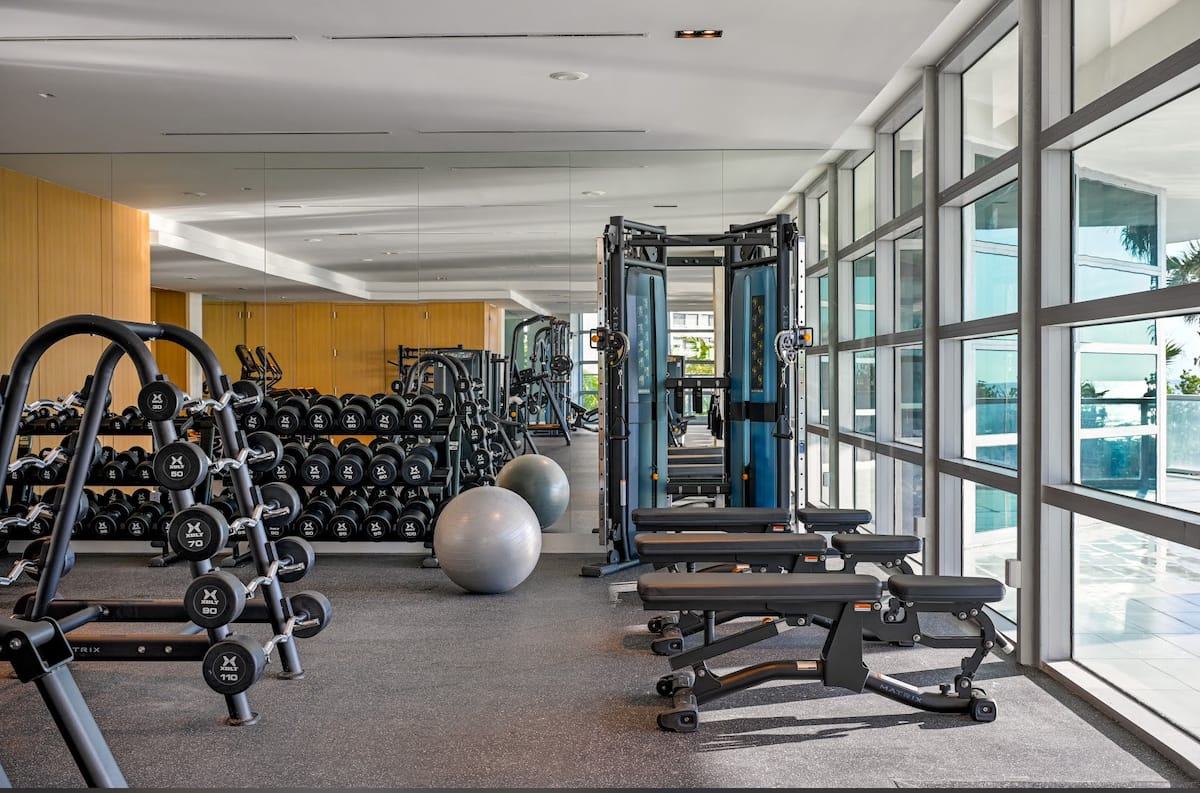
What sets the Ammortal Chamber apart at Amrit is less the device than where you find it. The wellness centre below the residence runs to about 100,000 square feet with twenty-two treatment rooms, and the chamber sits within its regenerative-therapies group — the cluster of touchless, technology-led services that also includes hyperbaric oxygen therapy, red light therapy, dry flotation, the PEMF mat, and IV nutrient therapy. It is not a standalone gadget in a rented studio; it is one option on a broad menu, a short elevator ride below OASENA.
That neighborhood is the real advantage, because these therapies are easy and natural to combine into a single unhurried visit. A few ways guests fold the chamber in:
- After the Aayush hydrothermal circuit. Once you have moved through the sauna, the cold plunge and the salt room, the chamber makes a calm, dry place to land and finish.
- Inside a recovery-focused morning. Paired with the red-light room or the hyperbaric suite — each covered in its own guide here — it rounds out a session aimed at rest and repair.
- Around the PEMF mat or an IV drip. If the field-and-recovery idea is what draws you, the PEMF guide goes deeper on that side, and the two can be booked close together.
Residence guests reach the wellness centre at preferred rates, with access and booking subject to the resort’s terms. Because the chamber runs a fixed twenty-to-thirty-minute program, it fits into a morning or an afternoon without claiming the whole day, and it does not ask for any recovery time afterward beyond a minute to gather yourself. You can be back upstairs, or out on the beach, soon after you step out.
A practical note on booking: touchless, single-person devices like this often have limited slots, and a wellness centre this size stays busy in high season. If the chamber is a priority for your stay, ask about it when you arrange your other treatments rather than hoping to walk up to it on a whim. The staff can also tell you the current session length and whether any short health screening applies before your first visit.
It is also worth setting expectations about the setting. This is a resort wellness centre, not a clinic, and the chamber is offered in that spirit — as a restful, self-directed experience rather than a medical procedure with a diagnosis attached. That is the right way to approach it. Come for the calm, the recovery and the curiosity of trying a stacked longevity session in a serious, well-run spa, and bring the same friendly skepticism to any larger promises that you would bring anywhere else.
If you are the kind of guest who likes a plan, a simple approach works well: pick one anchor treatment for the day — the chamber, the hyperbaric suite, a long massage — and build the rest of the visit loosely around it rather than trying to sample everything at once. A wellness centre this large rewards a slow, chosen path over a rushed checklist, and the chamber is at its best as a calm punctuation mark in that path, not another box to tick.
10Folding it into a longevity-minded stay
If the longevity idea is what draws you to the chamber, the most useful thing this guide can do at the end is put it in proportion. A twenty-minute pod is a pleasant part of a healthy day, not the engine of one. The things that most reliably help you feel and function better are unglamorous and free, and Singer Island happens to serve them up easily.
- Sleep. A dark, quiet room and an unhurried morning do more for recovery than any device. An evening chamber session can help you get there; it is a nudge, not a substitute.
- Movement. A long barefoot walk on the private beach, a swim, a bike ride, a round of tennis or golf — ordinary activity is the closest thing to a longevity miracle there is.
- Sun and daylight, sensibly. Morning light on the balcony helps set your body clock; midday sun calls for shade and sunscreen.
- Real food. The residence’s own Miele kitchen, the local seafood, and simple, plant-heavy meals will do more than any supplement drip.
Seen that way, the chamber becomes what it should be: a considered pause inside an already good day, not the point of the day. Here is one honest way to weave it in.
A recharge day. Start slow with coffee on the balcony and the sunrise over the Atlantic. Move your body before the heat — a beach walk or an early swim. Mid-morning, go down to the wellness centre: warm up through the Aayush circuit, then settle into the Ammortal Chamber for a calm, guided reset. Come back up for a light, real lunch and an hour horizontal in the shade. Spend the afternoon on the water or in town, and keep the evening early and dark so you sleep. The chamber is one beat in that rhythm — a good one, kept in its place.
None of that means skipping the chamber. Trying it is part of the fun of a wellness-forward stay, and there is real value in a device that reliably walks you into deep rest when your own mind will not cooperate. The point is only to rank things honestly: the chamber supports a good day; it does not replace one.
The same logic applies to time, quietly. On a short stay, the hours are the real budget, and a wellness centre this size can swallow a whole trip if you let it. Choosing a couple of things to do well — the chamber among them, if it appeals — beats grazing every device once and feeling rushed the entire time.
There is a quiet irony worth ending on. The chamber is an elaborate, engineered way to breathe slowly, calm your nervous system and rest — and you are staying twelve floors above one of the most reliable versions of that on Earth. The sound of the surf, a slow walk at the water’s edge, and a long exhale on the balcony do much of what the pod is built to do, for free and with no booking. Use the chamber for its convenience and its curiosity, enjoy the parts that are well supported, hold the grand promises lightly, and remember that the best recovery tool on the property does not plug into anything. It is just outside the slider door.
Common questions
Is the Ammortal Chamber safe?
For most healthy adults, yes — it is gentle, brief and clothes-on. But because it runs a pulsed electromagnetic field, anyone with a pacemaker or other implanted electronic device should avoid it, and people who are pregnant, have epilepsy, or manage a serious heart or lung condition should ask their doctor first.
Will it make me live longer or reverse aging?
No. Despite the longevity framing, there is very little independent, peer-reviewed evidence that this specific chamber extends life or reverses aging. It is a relaxation and recovery experience built from several low-risk practices — enjoy it as that, not as a medical or anti-aging treatment.
What does a session feel like?
Quiet and undemanding. You recline, fully dressed, for about twenty to thirty minutes while it guides your breathing, shifts light around you, plays low tones you feel through the seat, and delivers hydrogen-enriched air. Most people drift into deep relaxation; there is no jolt or dramatic sensation, and you can step out anytime.
How is it different from doing red light, PEMF or breathwork on their own?
It stacks them into one guided sitting. The convenience is real and the calm is real. Whether combining them does more than the parts alone is an open question the science has not answered, so it is fair to enjoy the package while staying skeptical of the claim that the whole is greater than its parts. See the <strong>red-light</strong> and <strong>PEMF</strong> guides for the individual therapies.
A note on wellness & health
This guide is general information about therapies offered at the resort spa, not medical advice, diagnosis or treatment. Wellness services are elective and results vary from person to person. Talk with a qualified healthcare professional before starting any new therapy, especially if you are pregnant or managing a medical condition. OASENA is privately owned and is not operated by, affiliated with, or endorsed by Amrit Ocean Resort & Residences. Spa access is offered to residence guests at preferred rates, subject to the resort’s terms and availability.

Your quiet address above the Atlantic
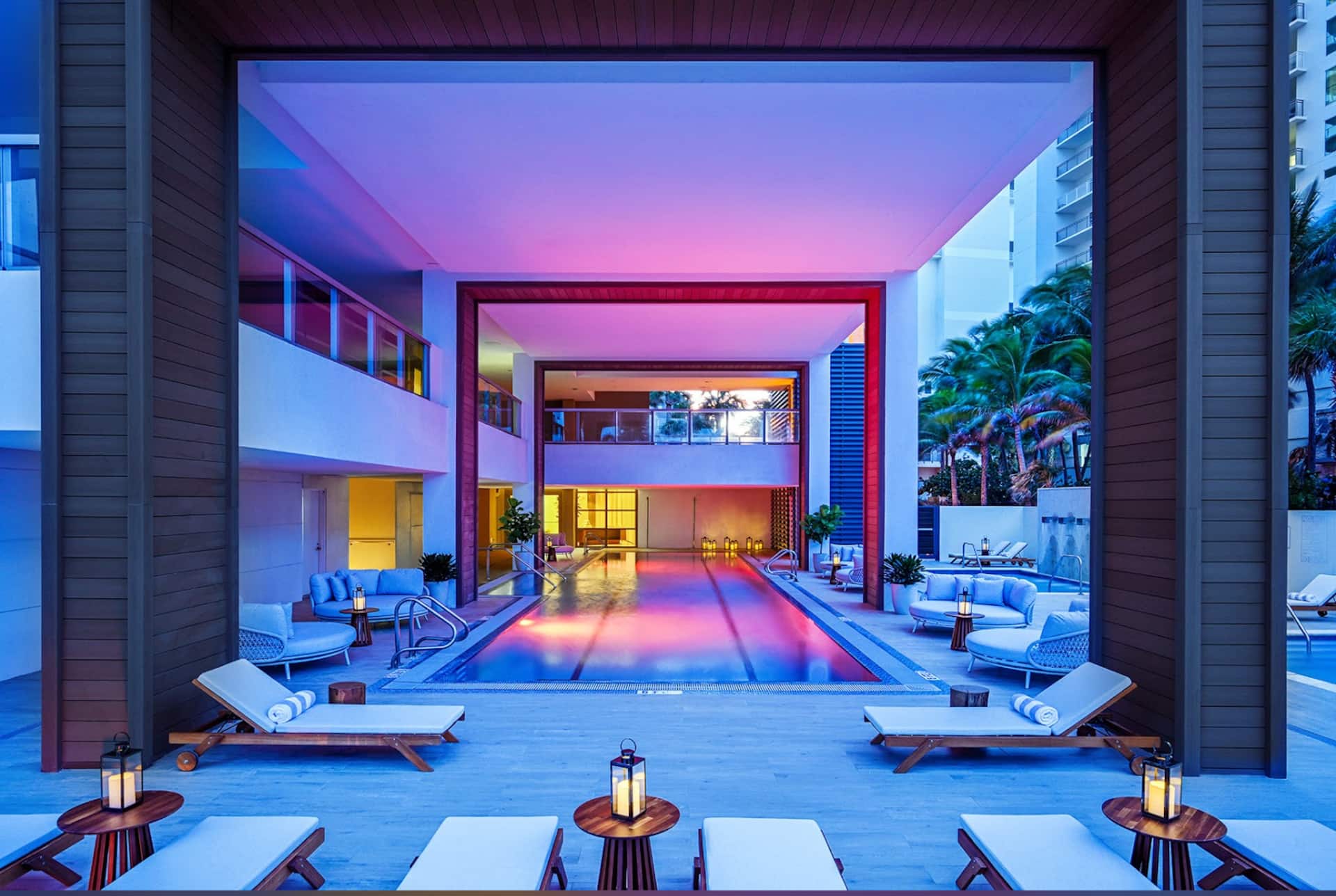
OASENA is a private two-bedroom home on the twelfth floor of the Happiness Tower — floor-to-ceiling ocean views, a sweeping balcony, and this entire wellness world an elevator ride below.
OASENA is a privately owned residence within Amrit Ocean Resort & Residences and is not operated by, affiliated with, or endorsed by the resort. See credits & notes.